

Sustainability Terms for Business: Introduction
Sustainability work often slows inside organisations for a basic reason. The language feels unclear, abstract, or detached from everyday decisions. When people are unsure what the terms mean, confidence drops and action stalls.
This A–Z series exists to make sustainability terms for business easier to understand and easier to use. Each article explains commonly used terms in plain language, with clear links to how organisations actually operate.
This article focuses on the letter B. The sustainability terms for business covered here appear frequently in conversations about measurement, credibility, nature, buildings, and long-term business strength. Understanding these terms helps teams connect sustainability with performance, risk, and continuity.

Baseline
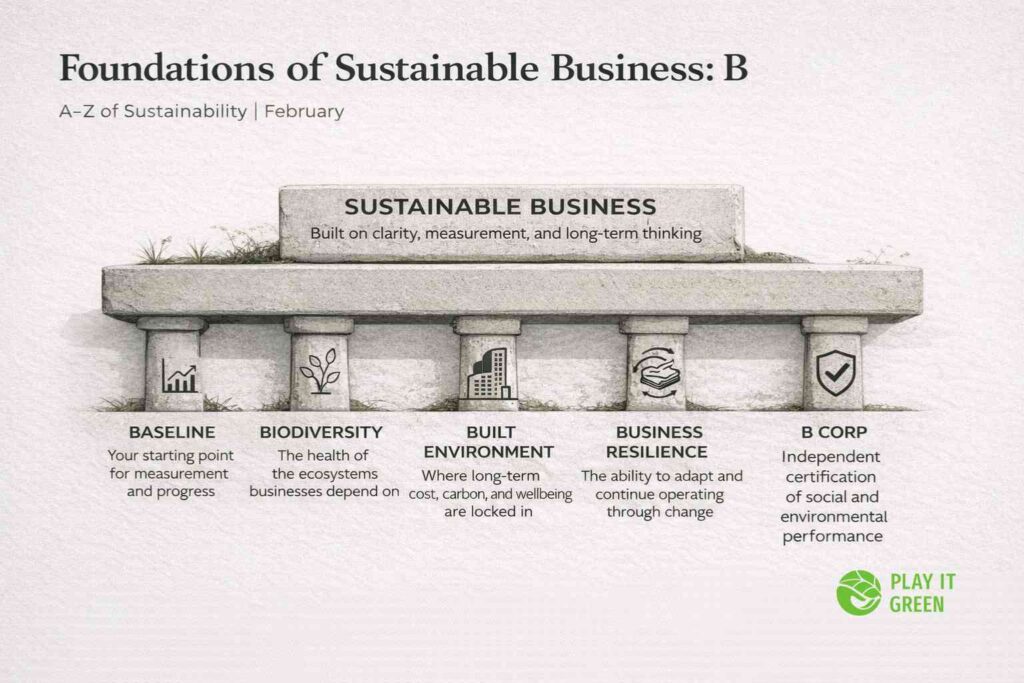
A baseline shows where an organisation stands today. It captures current performance across areas such as emissions, energy use, waste, or social impact. Without a baseline, progress cannot be tracked and improvement becomes guesswork.
A baseline does not rely on perfect data. It relies on consistency and honesty. Even an early snapshot highlights where the biggest impacts sit and where action will deliver meaningful results. Among sustainability terms for business, baseline matters because it turns intention into something measurable.
B Corp
B Corp certification recognises businesses that meet defined standards for social and environmental performance, accountability, and transparency. It looks across governance, workers, community, environment, and customers to provide an independent view of how a business operates.
Many organisations use the B Corp framework before pursuing certification. It helps identify gaps, supports clearer decision-making, and encourages long-term thinking. Within sustainability terms for business, B Corp often serves as a shared reference point for responsible business practice.
Get In TouchBiodiversity
Biodiversity refers to the variety of living species across ecosystems, including plants, animals, fungi, and microorganisms. Healthy biodiversity supports food systems, water quality, climate stability, and resilience to environmental stress.
For businesses, biodiversity links to land use, sourcing, construction, and nature repair. Action may include restoring habitats, supporting regenerative practices, or backing ecosystem recovery. Sustainability terms for business increasingly include biodiversity as organisations widen their environmental focus beyond carbon.
Built Environment
The built environment includes offices, warehouses, retail spaces, factories, and infrastructure. These spaces shape energy use, emissions, wellbeing, and long-term operating costs. Decisions made here often last for decades.
Improvements might include insulation, efficient lighting, renewable energy, ventilation, or better use of space. The benefits go beyond emissions reduction. Costs fall, comfort improves, and asset value strengthens. Within sustainability terms for business, the built environment shows how sustainability connects directly to operational outcomes.
Business Resilience
Business resilience describes an organisation’s ability to adapt and continue operating through environmental, social, and economic change. It reflects preparation, flexibility, and long-term thinking.
Sustainability supports resilience through stable supply chains, efficient resource use, and stronger stakeholder trust. These factors help organisations absorb disruption and maintain performance. Among sustainability terms for business, business resilience frames sustainability as protection of continuity rather than a separate initiative.
Blue Carbon
Blue carbon refers to carbon stored in ocean and coastal ecosystems such as mangroves, seagrass, and salt marshes. These ecosystems capture carbon efficiently while supporting biodiversity and protecting coastlines.
For organisations involved in nature repair, blue carbon connects climate action with visible environmental recovery. It features more often in sustainability terms for business as attention grows on marine systems and long-term carbon storage.

Bringing the Terms Together
These sustainability terms for business work best when viewed together. Baselines create clarity. B Corp supports accountability. Biodiversity broadens environmental responsibility. The built environment locks in long-term value and business resilience supports continuity, whilst blue carbon links climate action with ecosystem repair.
Together, they help organisations move from intention to action with confidence and credibility.
Sustainability Terms for Business: Wrap Up
The A–Z of Sustainability focuses on clarity for a reason. When teams understand the language, they participate more fully and make better decisions. The sustainability terms for business covered in the letter B support conversations about measurement, trust, nature, buildings, and long-term strength.
The next article will focus on the letter C, continuing to build a practical reference teams can return to whenever sustainability language appears in meetings, reports, or supplier discussions. Clear language supports confident action. Confident action supports stronger businesses.
If you enjoyed this article on the sustainability terms for business, why not become part of a community creating positive change by partnering with Play It Green?
We help you reduce your footprint, repair the planet, and regive to social causes that matter, all through simple, measurable actions that fit your business.

Modern employees, consumers, and investors want to see impact, not promises. With Play It Green, your sustainability journey becomes visible, credible, and rewarding.
Join us today and turn good intentions into lasting results.
Sign Up