
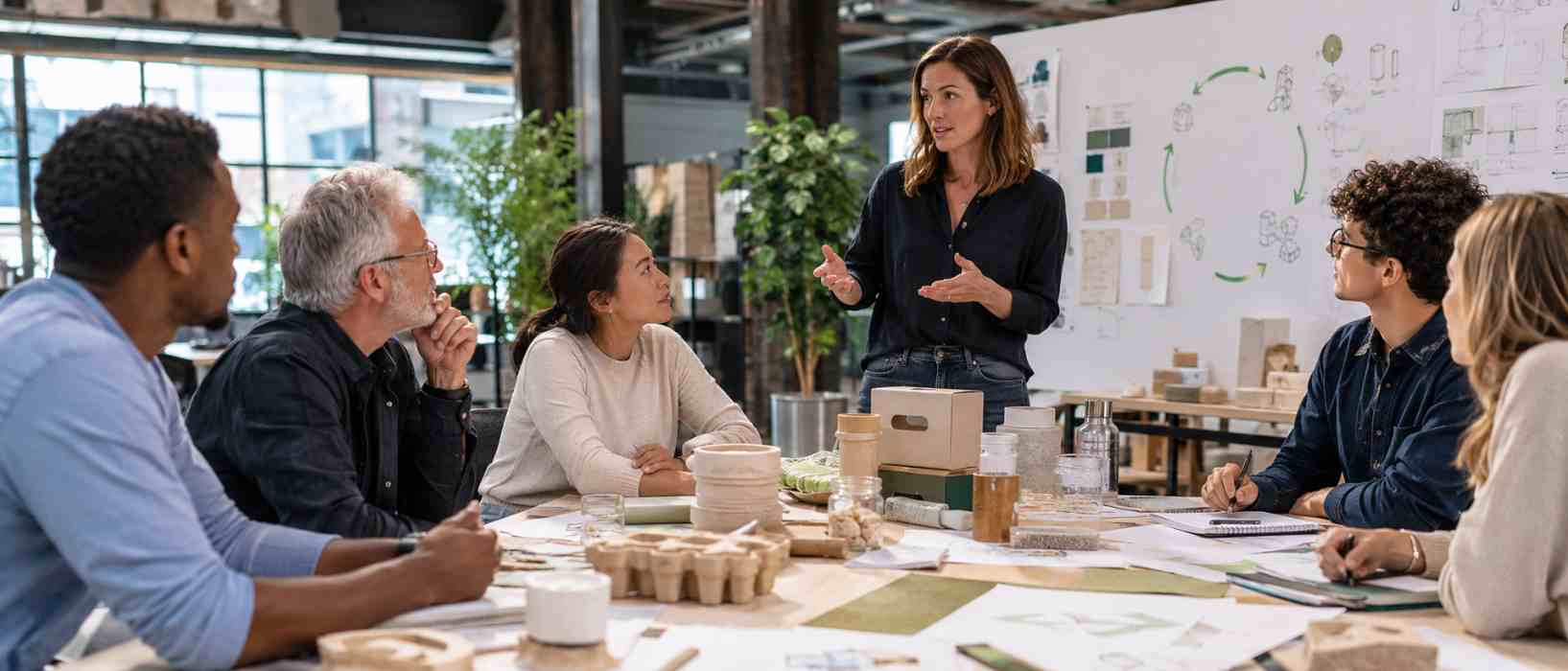
Circular Economy Collaboration: Introduction
A circular economy collaboration sits at the centre of this guest post from Rachel Sheila Kan, founder of Real Circularity™ and a leading circularity expert. Her latest piece looks beyond materials, recycling and product design. This month, her argument is clear: circularity only works when people build it together.
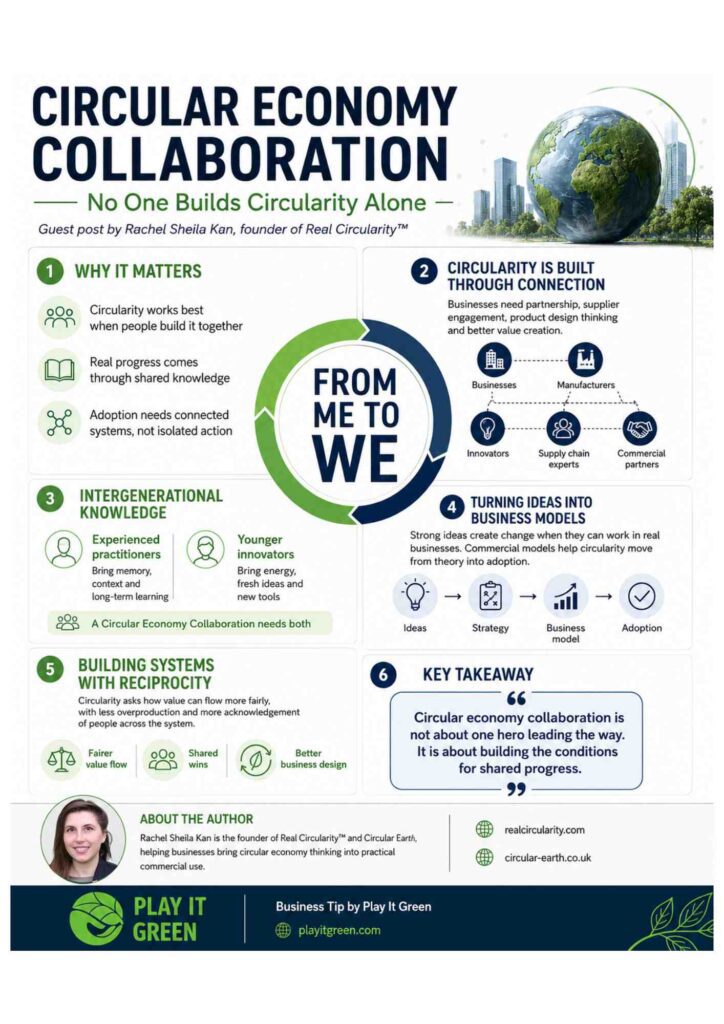
That means learning from those who helped shape the original circular economy movement, bringing in younger voices with fresh energy, and connecting businesses, manufacturers, innovators, supply chain experts and commercial partners.
There is no single hero in this work. Real progress comes through shared knowledge, shared credit and better systems for how value moves between people and businesses.

Circularity Is Built Through Connection
Circularity is often presented as a neat business idea: reduce waste, reuse materials, redesign products and keep resources in use for longer.
Those ideas matter, yet real adoption needs bigger change. Businesses need new forms of partnership, revenue sharing, supplier engagement, product design and value creation. That means circularity works best when people stop acting in isolation and begin working as part of a connected system.
This has always shaped Rachel’s work through Real Circularity™ and Circular Earth. The focus is not on one person holding every answer. It is about bringing the right people together so ideas can move from discussion into delivery.
The real work sits in the connections between businesses, systems, collaborators, innovators, alliances and specialist knowledge.
Why Intergenerational Knowledge Matters
Circularity is not new, and many of the ideas behind it have been tested, challenged and refined over decades.
Rachel’s business partner, Ken Alston, worked on applying circular economy thinking alongside the original Cradle to Cradle© pioneers. He has seen pilots develop over long timeframes and brings lived knowledge from years of practical application.
That experience matters, as circularity has gained attention, some of its original depth has been lost. The language can become trend-led, with too much focus on surface-level material swaps and too little focus on the full system.
Ken’s work brings a valuable reminder: circularity was never meant to be a branding exercise. It was created to rethink how materials, business models, production and human value work together.
Younger innovators bring energy, fresh ideas and new tools; older practitioners bring memory, context and long-term learning, and a circular economy collaboration needs both.
Turning Ideas Into Business Models
Circularity needs commercial thinking as strong ideas rarely create change if they stay trapped in reports, workshops or theory.
Rachel’s business partner, Simon Hedley, has helped model many of her new economic ideas and bring them into commercial reality through the agency. His work supports the bridge between big-picture systems thinking and the practical realities of business growth.
This becomes more relevant as AI changes how value is created, shared and measured. The old “time for money” model is under pressure, and businesses now need fresh thinking on contribution, ownership, acknowledgement and reciprocity.
Circularity can help shape that shift, but only when the commercial models are strong enough to be adopted.
New Voices Keep the Work Moving
Circular work should not stay locked around one founder, one expert or one generation.
Newer associates bring continuity and fresh thinking. They draw from existing books, tools, workshops, courses and frameworks, then bring their own insight, language and creative interpretation.
That matters for long-term change as every generation faces different business pressures, communication styles, technologies and customer expectations. A circular approach has to keep growing in response.
The strongest circular systems adapt, learn and bring more people into the work.
Get In TouchMoving From “Me” To “We”
One of Rachel’s core messages, shared in her TEDx talk, is the move from “me” to “we”.
Many current business systems train people to compete for limited space. Rachel often demonstrates this in workshops through a game based on musical chairs. At the start, people follow the rules of the current economy: isolated, competitive and focused on survival.
Then the rules begin to change: People share chairs, connect chairs and support each other to stay in the game. The shift is simple, physical and memorable, and it shows how deeply people are shaped by competitive systems, and how quickly behaviour can change when the system changes.
That is the lesson that sits at the heart of circular economy collaboration. Change is about better materials, better relationships, fairer value flows and shared benefits.

Building Systems With Reciprocity
The current economic model can create extreme winners and leave many others struggling inside the same system that created the wealth.
Circularity asks a different question: What would happen if business systems were built so that value flowed more fairly? What if overproduction were reduced, people received greater acknowledgement, and reciprocity became part of the structure from the start?
That is where circularity moves beyond waste reduction and becomes a practical route to better business design. And so it becomes clear that circular economy collaboration can create shared wins between innovators, manufacturers, suppliers, technology partners, academics and customers.
Circular Economy Collaboration: Wrap-Up
Circular economy collaboration is not about one hero leading the way; it is about building the conditions for shared progress.
Real circularity needs elders with lived experience, younger innovators with fresh ideas, commercial minds who can model new value, and businesses willing to work differently.
Rachel Sheila Kan’s work through Real Circularity™ and Circular Earth shows what circularity looks like when it moves beyond materials and into adoption, economics and business design.
The future of circularity will be shaped by connection: more “we”, less “me”, better systems, fairer value and stronger business.
About the Author
Rachel Sheila Kan is the founder of Real Circularity™ and Circular Earth. She works with businesses to bring circular economy thinking into practical commercial use, connecting brands, manufacturers, innovators, supply chain experts and strategic partners.
Find out more:
https://realcircularity.com/
https://www.circular-earth.co.uk/
If you enjoyed this article on circular economy collaboration, why not become part of a community creating positive change by partnering with Play It Green and receive these tips weekly straight to your inbox?
We help you reduce your footprint, repair the planet, and regive to social causes that matter, all through simple, measurable actions that fit your business.

Modern employees, consumers, and investors want to see impact, not promises. With Play It Green, your sustainability journey becomes visible, credible, and rewarding.
Join us today and turn good intentions into lasting results.
Sign Up