Circular Economy for Business: Introduction
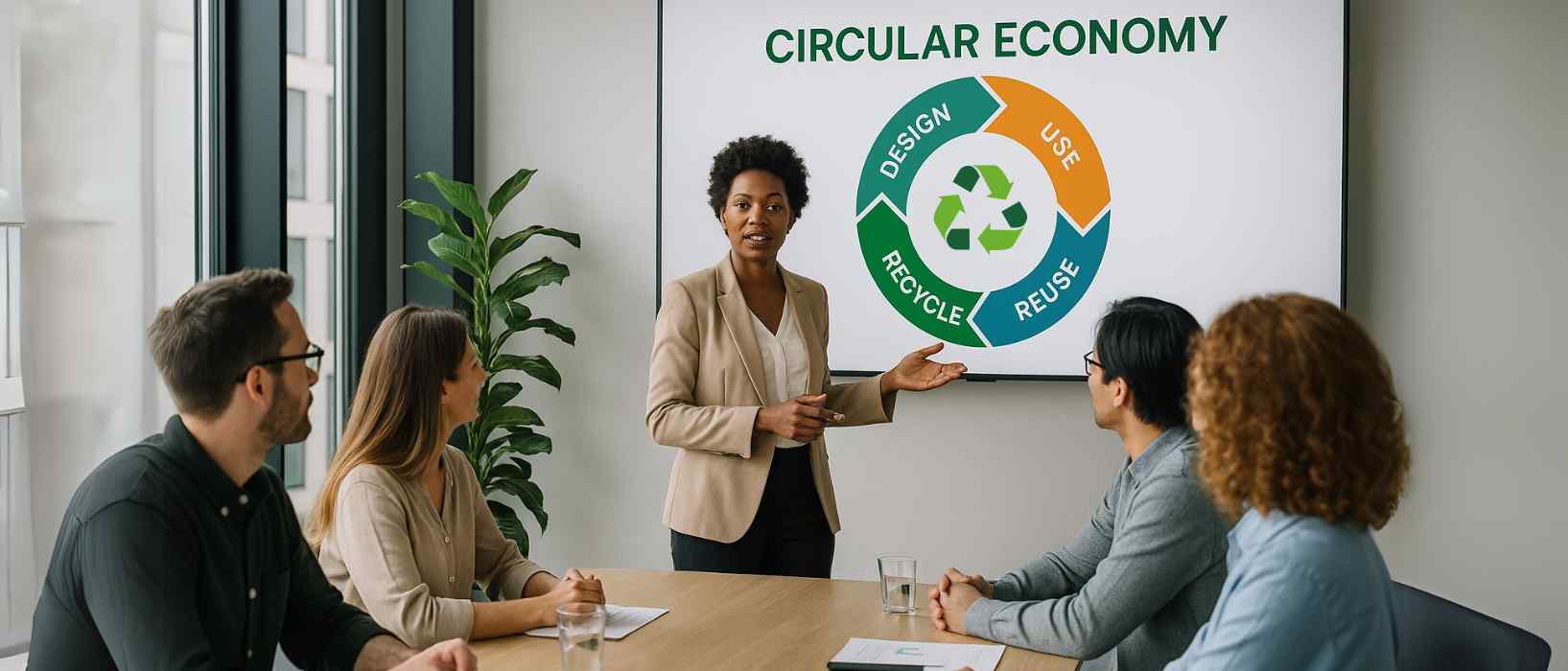
The circular economy offers businesses a practical route to reduce costs, cut waste, and boost resilience. By shifting away from the traditional take-make-dispose model, businesses can create closed loops that keep materials in use for longer, reduce reliance on raw materials, and meet growing regulatory and consumer expectations.
At Play It Green, we believe the circular economy for business isn’t just good for the planet. It’s good for business. Here’s how to make it work for yours.

Why Circular Thinking Matters
Every year, the global economy consumes 100 billion tonnes of materials. Only 6.9% is reused. That leaves over 93% of resources either wasted, lost or locked away. This is not just a climate and pollution problem, it’s a missed opportunity for efficiency, innovation, and growth.
Switching to circular systems helps reduce production costs (raw materials can account for up to 50% of costs), protects against supply chain shocks, and opens new revenue streams.
Circular thinking also helps future-proof your business against upcoming regulations and rising expectations from customers, investors, and staff. And it can significantly cut emissions, up to 45% of global emissions are tied to material use. Adopting a circular economy for business approach addresses these challenges head-on.
Ask Play It Green A QuestionCircular Models That Work
There are three main ways businesses are applying circular principles:
- Circular Design Create products that are built to last, easy to repair, and made from renewable or recycled inputs. IKEA, for example, aims for 100% circular products by 2030. Modular design and replaceable parts reduce waste and add value within the circular economy for business.
- Product-as-a-Service Sell access, not ownership. Leasing or renting models incentivise durability and allow companies to retain control of products at end of life. This supports refurbishment, reuse, and recycling.
- Resource Recovery Reclaim and repurpose waste. Toast Ale uses surplus bakery bread to brew beer. Others reuse manufacturing offcuts or introduce take-back schemes. These models turn waste into new product inputs and reduce disposal costs, boosting circular economy for business outcomes.

Start with a Circular Strategy
Circularity doesn’t happen by accident. It requires a clear plan:
- Audit your processes: Identify where waste occurs and where materials can be reused, recycled or recovered.
- Set measurable goals: Track recycled content, reuse rates, or packaging reduction.
- Update procurement: Prefer suppliers who offer recyclable inputs or take-back services.
- Pilot initiatives: Start small, test your approach, and scale what works.
- Use the 5Rs: Refuse, Reduce, Reuse, Repurpose, Recycle, in that order.
Digital tools like Life Cycle Assessments and traceability platforms help track progress and demonstrate impact.
Incorporating these steps into your circular economy for business framework not only improves sustainability but enhances transparency across the supply chain.

Policy Pressure and Market Demand
The EU and UK are introducing tougher circular economy regulations. From Extended Producer Responsibility to the Digital Product Passport, compliance will become non-negotiable. Businesses that move early will save costs and build brand trust.
At the same time, consumers are shifting. 70% want more sustainable options. Circular models meet that demand while cutting emissions and costs. A strong circular economy for business approach allows brands to stay relevant and profitable.
Common Challenges (And How to Solve Them)
Circularity often faces internal resistance, especially where redesign or system change is required. Consumer behaviour can also be a blocker. But these hurdles can be overcome:
- Get board-level buy-in, show the cost savings and brand value.
- Train staff and run co-creation workshops to build engagement.
- Offer suppliers longer-term contracts or preferred status for circular support.
- Embed circularity in KPIs to maintain momentum.
Case studies show it’s worth it. Azzurri Group achieved an 85% recycling rate and cut costs with a low-budget training campaign. Neville Johnson cut Scope 3 waste emissions by 81% with a new circular waste strategy. Both demonstrate the business value of embedding circular economy for business principles.
Circular Economy for Business: Wrap Up
The circular economy for business is about doing more with less. It’s a model for growth that cuts waste, reduces emissions, and makes you more resilient in a resource-constrained world.
If you’re looking to bring circular thinking into your business, Play It Green can help. From tips and training to policies and impact reporting, our Climate Impact Workforce subscription makes sustainability part of everyday operations.
Don’t just tick boxes. Make sustainability part of your business DNA.
Embrace the Circular Economy for Business with Play It Green
By partnering with Play It Green, you can integrate things like the circular economy, education, tree planting, mangrove restoration, seaforestation and social impact into your business operations. Whether it’s adding nature repair to your sales process, engaging employees, or strengthening your environmental credentials, the tools and support are there to make it simple.
Every action contributes to restoring the planet.
Sign UpWant more info before deciding? Click here.