

Climate Action and the SDGs: Introduction
Climate Action and the SDGs (sustainable development goals) sit at the centre of how modern business can thrive. They link social progress, environmental protection, and economic growth. Companies that understand this connection are building stronger operations and preparing for a future that rewards responsibility.
The United Nations created the 17 Sustainable Development Goals as a shared plan for peace, prosperity, and a healthy planet. Among them, SDG 13 focuses on Climate Action. It calls for efforts to limit global warming, strengthen resilience, and support adaptation. When businesses bring these ideas into their planning, they improve performance as well as their contribution to society.

Climate Action in Context
Every business depends on the natural world. Energy, water, food, and raw materials all rely on stable ecosystems and predictable weather. As those systems change, costs and supply chains become less certain. Climate Action and the SDGs help organisations respond with foresight rather than panic.
Reducing emissions often lowers bills and improves efficiency. Moving to renewable energy protects companies from fuel-price shocks. Working with suppliers to cut waste strengthens relationships and reduces risk. Each of these steps makes a business leaner, more resilient, and more attractive to customers and investors.
Climate Action and the SDGs provide a structure for linking short-term decisions to long-term stability. They turn environmental responsibility into practical management.
How the Goals Interlink
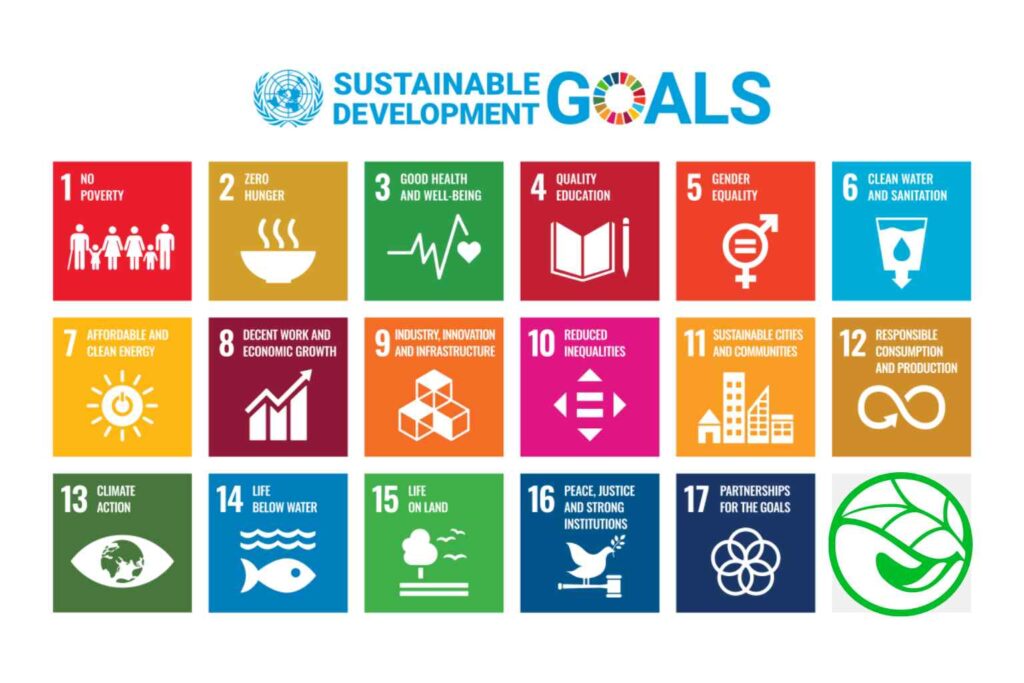
The SDGs were designed as a network, not a list. Progress in one area supports progress in others. For example, Climate Action (SDG 13) affects clean energy (SDG 7), clean water (SDG 6), and good health (SDG 3). Protecting forests and oceans supports food security (SDG 2) and decent work (SDG 8). Promoting equality (SDG 5) and education (SDG 4) helps communities adapt and recover from change.
When organisations plan with these links in mind, their efforts have a wider impact. A shift to low-carbon energy cuts pollution and encourages innovation. Improving resource efficiency protects natural assets and lowers operating costs. Fair pay and safe working conditions build a workforce ready to support sustainable growth.
Seeing Climate Action and the SDGs as connected parts of one framework helps leaders make decisions that create multiple benefits rather than isolated wins.
Ask Play It Green A QuestionThe Commercial Case
Climate risk now influences finance, insurance, and consumer behaviour. Floods, droughts, and heatwaves interrupt logistics and raise the cost of materials. Investors study how prepared companies are for these challenges before committing funds. Customers look for evidence that brands act with integrity.
Research suggests that aligning business strategy with the SDGs could unlock trillions in new market value. That opportunity comes from innovation, efficient use of resources, and greater public trust. Organisations that embed Climate Action into their planning are already ahead. They anticipate regulation, reduce exposure to shocks, and attract skilled people who want to work with purpose.
Sustainability is no longer a separate department. It is part of smart business management that protects value and opens new possibilities.
Turning Plans into Practice
Taking action begins with understanding where the biggest impacts lie. Measuring energy use, travel, and procurement gives a clear picture of what to change first. Once data is in place, it becomes easier to link improvements to the SDGs and set achievable goals.
Integration is key. Climate thinking should guide product design, finance, logistics, and communication. Collaboration within and beyond the organisation speeds up results and prevents duplication of effort. Reporting progress openly keeps everyone accountable and builds credibility.
People are the engine of change. When staff see how their everyday work supports Climate Action and the SDGs, they start to share ideas and spot new efficiencies. Small suggestions often lead to major savings and stronger culture.

Climate Action and the SDGs: Wrap Up
Climate Action and the SDGs offer a shared framework for long-term success. They show that profitability, fairness, and environmental care belong on the same page.
Businesses that plan with this understanding spend less on resources, adapt faster to challenges, and gain the trust of customers and communities. The link between doing good and doing well has never been clearer.
By using Climate Action and the SDGs as a guide, companies move from short-term reaction to steady, confident progress. They build futures that balance purpose with performance and prove that sustainability is not a cost but a source of strength.
Take Climate Action of Your Own!
If you enjoyed this article on Climate Action and the SDGs why not become part of the next positive story by partnering with Play It Green?
We help you reduce your footprint, repair the planet, and regive to social causes that matter, all through simple, measurable actions that fit your business.
Modern employees, consumers, and investors want to see impact, not promises. With Play It Green, your sustainability journey becomes visible, credible, and rewarding.
Join us today and turn good intentions into lasting results.
Sign Up