
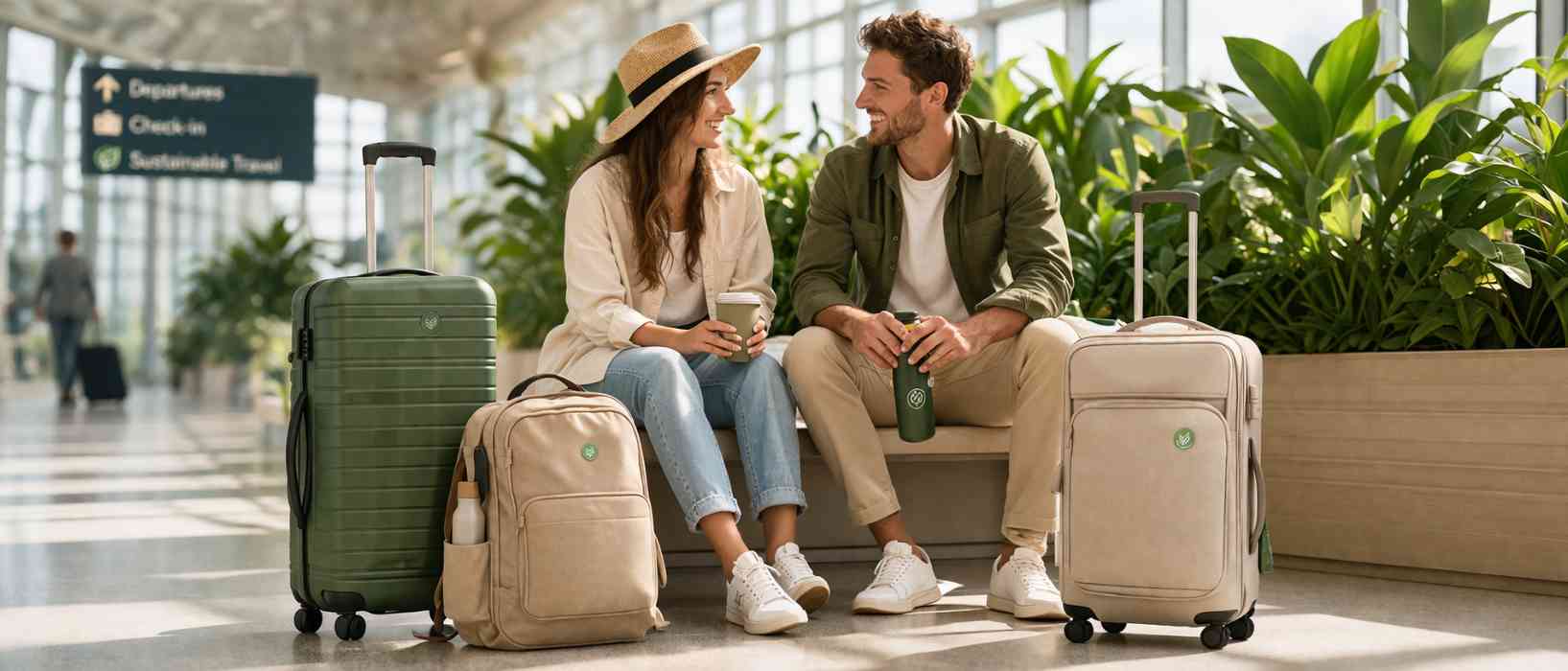
Eco-Friendly Luggage: Introduction
Eco-Friendly Luggage can sound faintly worthy, yet a suitcase has such a hard life that the idea quickly becomes practical. It gets dragged, dropped, overpacked, and shoved into spaces no object would choose willingly.
Unfortunately, most cases are made from plastics, synthetic fabrics, metal parts, and chemical finishes, so the materials matter, and the lifespan matters just as much. A cheap case replaced every few trips stops being cheap very quickly.
That is why Eco-Friendly Luggage is worth a closer look. This week’s tip covers the history of luggage, the footprint behind modern cases, what to look for in a better option, plus to make it easy to switch, we feature three brands worth knowing.

A Brief History of Luggage
Luggage began as something closer to furniture than travel gear. Early travellers used heavy chests and trunks built for long journeys by horse, rail, and ship, with protection and storage taking priority over convenience. The Victoria and Albert Museum’s travel history shows how central trunks became to long-distance travel.
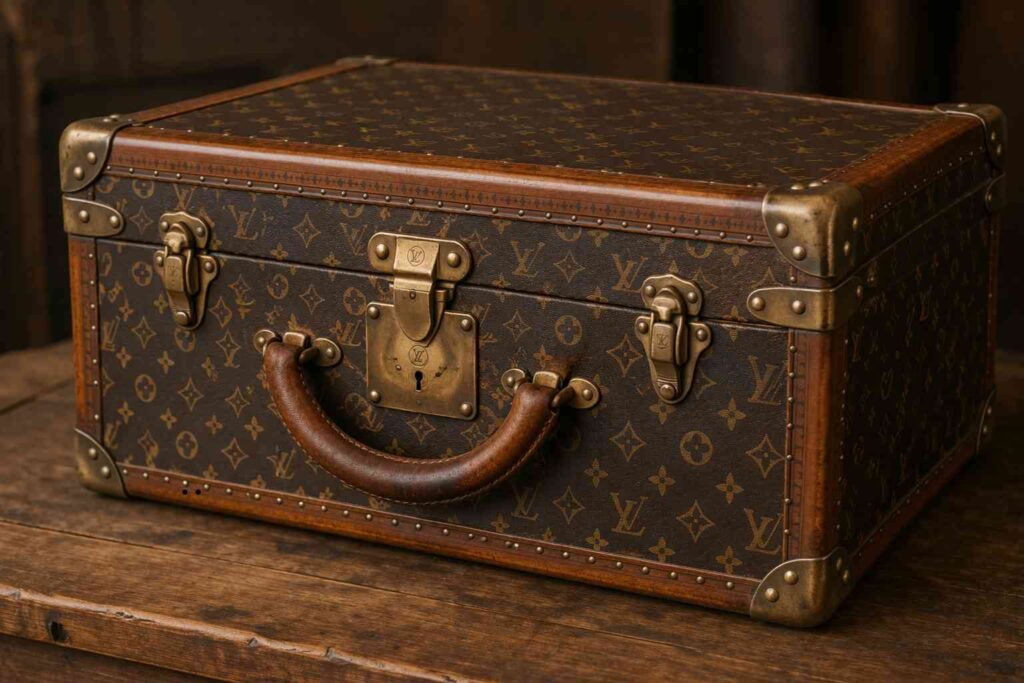
As travel expanded during the nineteenth century, luggage design changed with it. Early trunks often had curved tops to help water run off, though flat-topped trunks became more useful once travel systems needed stackable designs. Interestingly, it was Louis Vuitton that introduced the flat-topped trunk to the French market in 1858. This marked a major shift in practical travel design.
From there, travel gear became lighter and more portable, so suitcases gradually replaced the old trunk for most journeys. That made travel easier, yet it also pushed luggage into an era of synthetic fabrics, plastic shells, and faster replacement cycles, which is where the modern environmental story begins to get worse.
Get In TouchThe Environmental Impact of Non Eco-Friendly Luggage
Eco-Friendly Luggage matters since modern cases sit inside the wider problem of textile and plastic consumption. The European Environment Agency says textile consumption in Europe creates the fourth highest pressure on the environment and climate after food, housing, and mobility, and Europe is still buying and discarding more textiles than ever. Soft-shell luggage is part of that wider materials picture.
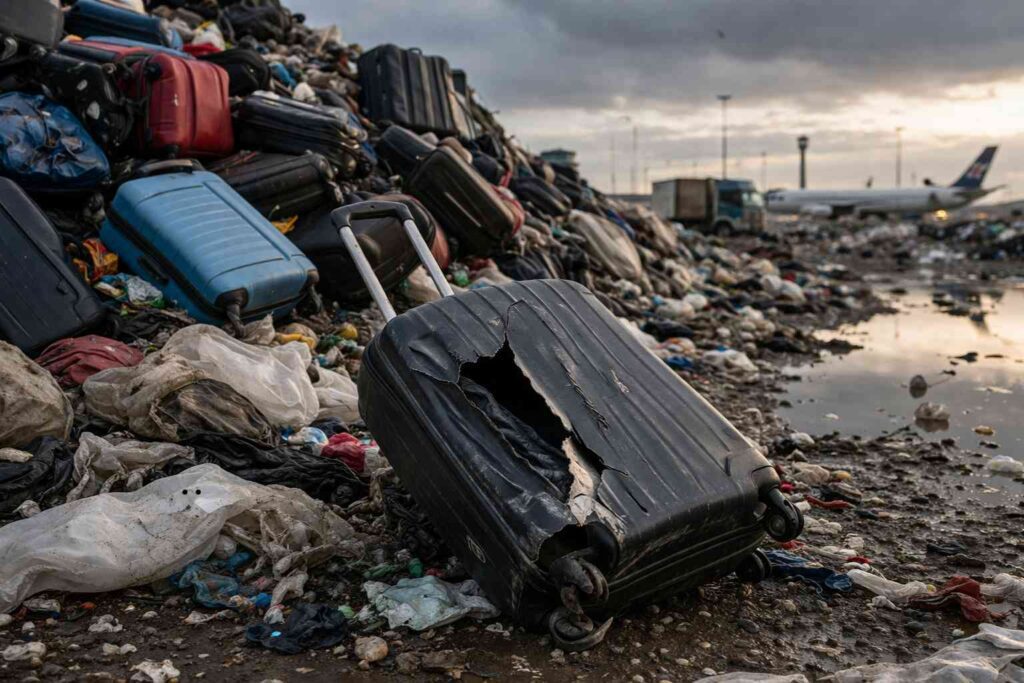
There is a microplastics angle too, as alarmingly, between 200,000 and 500,000 tonnes of microplastics from textiles enter the global marine environment each year. On top of that the European Commission estimated upto 61,000 tonnes of microplastics from textiles were unintentionally released into the EU environment in 2019.
Then comes the durability problem, which is often where the waste really comes from. A cheap case that breaks after a handful of trips carries a much heavier footprint per journey than one that survives years of travel. Eco-Friendly Luggage works best when recycled content turns up alongside strong wheels, dependable zips, and a case that does not give up at the first baggage carousel.
What to Look For in Eco-Friendly Luggage
Good Eco-Friendly Luggage starts with materials, though the label on its own is never enough. Recycled PET, recycled polypropylene, and clearly identified recycled linings are all worth looking for, especially when a brand explains exactly where those materials appear in the case. Some suitcases use recycled outer fabric, some use recycled interiors, and some combine both. That detail matters, since a product can sound greener than it really is if the description stays vague.
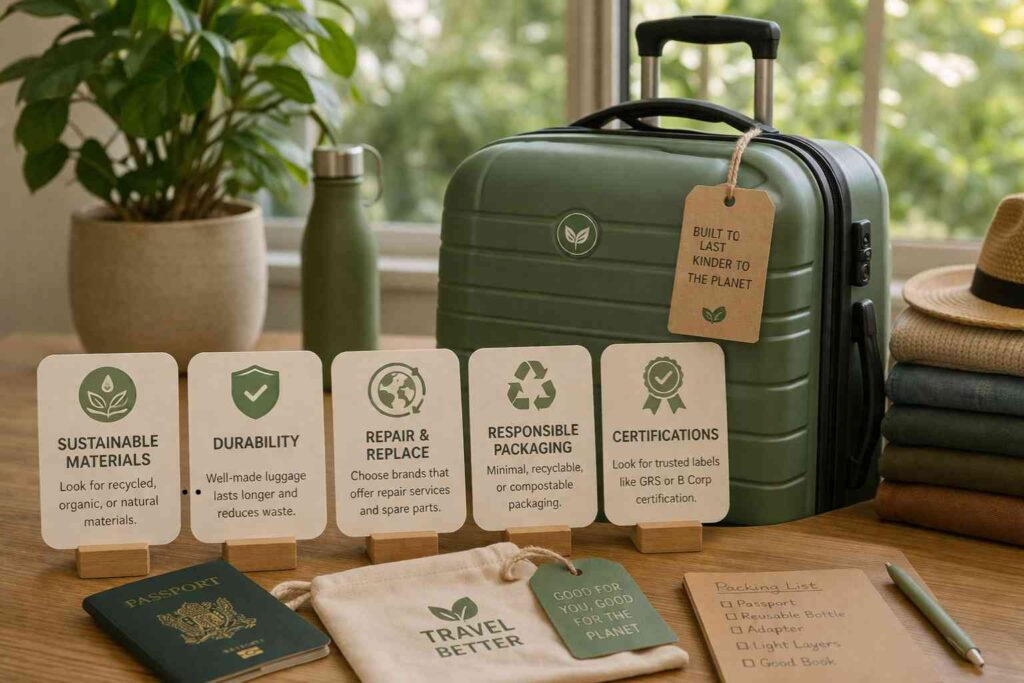
Certification helps sort the solid options from the marketing. Look for recognised standards such as GRS, which gives far more confidence than a vague eco claim and a leaf on the swing tag. It is worth checking whether the case uses certified recycled polyester in soft-shell designs or recycled polypropylene in hard-shell designs. That kind of evidence carries more weight and helps reduce demand for virgin plastic, which is where part of the benefit sits.
Then come the less glamorous details, which are often the ones that decide whether a suitcase lasts. Wheels, handles, corner protection, and zips take most of the punishment, so they deserve close attention. A warranty is useful, repair options are even better, and the right size matters more than people admit. Eco-Friendly Luggage should be built to survive real travel and chosen for journeys you will actually take, not bought in a rush and forgotten in a cupboard.

Three Eco-Friendly Luggage Brands Worth Knowing
Samsonite
Samsonite’s Respark range is a strong option for readers who want Eco-Friendly Luggage from a brand built around travel. The outer fabric is made from 100% post-consumer recycled PET by weight, and the interior lining is at least 95% recycled PET by weight. On the 79cm expandable spinner, Samsonite says this saves the equivalent of 30 plastic bottles from landfill, which gives the sustainability story some proper substance.
Sign up to their mailing list at samsonite.co.uk for 10% off your first order.
Aerolite
Aerolite is a good fit for readers who want Eco-Friendly Luggage at a more accessible price point. Its eco-friendly range includes travel bags and cabin luggage made from recycled materials, including products where the outer material is made from recycled plastic bottles. A number of items in the range come with a 10-year warranty too, which matters since durability is a big part of what makes luggage a better choice rather than just a greener-sounding one.
Use voucher code MSD5 at aeroliteluggage.co.uk for 5% off.
Tripp
Tripp stands out for giving shoppers a little more evidence behind the sustainability claims. The brand’s soft-shell sustainable luggage uses 100% GRS-certified recycled PET, and its Explore hard-shell range uses 51% GRS-certified recycled polypropylene. That makes Tripp a solid choice for readers who want Eco-Friendly Luggage with clearer verification.
Tripp currently has an up to 60% off sale at tripp.co.uk.
Eco-Friendly Luggage: Wrap-Up
Eco-Friendly Luggage is one of those rare swaps that makes sense from both a practical and environmental angle. Better materials, clearer sourcing, and stronger build quality can cut waste and spare you the misery of a suitcase collapse in public.
Travel will never be impact-free, and a suitcase will not fix that on its own. Even so, keeping one strong case for years is a smarter move than cycling through cheaper versions that were never built for the job in the first place.
At Play It Green, we believe small choices matter most when they stick. Eco-Friendly Luggage is a good example of that. If you got this far, please share the article with someone whose current case is one wheel away from retirement.
If you enjoyed this tip on Eco-Friendly Luggage, why not become part of a community creating positive change every day by joining Play It Green?
We help you reduce your footprint, repair the planet, and regive to social causes that matter, all through simple, measurable actions that fit your business.

Everyone wants to see impact, not promises. With Play It Green, your sustainability journey becomes visible, credible, and rewarding.
Join us today and turn good intentions into lasting results.
Sign Up