

Eco-Friendly School Uniform: Introduction
Thinking about an eco-friendly school uniform now can make the end of August rush easier for family budgets and gentler on the planet. Every garment faces playgrounds, paint, lunchboxes, lost-property piles and growth spurts that arrive without warning.
Clothing in circulation offers one of the smartest starting points. Hand-me-downs, school exchanges and pre-owned uniforms save money and keep useful garments in use. New pieces can still be important when children grow, or school rules demand them. This guide covers uniform history, hidden impacts and practical buying checks, showing how better choices can look smart, feel comfortable and return for another term, perhaps on another child.

A Brief History of School Uniform
British school uniform reaches back several centuries. Christ’s Hospital, founded in 1552, adopted its blue coat and yellow stockings soon afterwards. Pupils still wear a recognisable version, giving Britain one of its oldest surviving uniform traditions.
Early uniforms appeared mainly in charity schools, and clothing identified pupils, signalled membership and reflected the social attitudes of each period. Uniform later spread through boarding, grammar and charitable schools during the nineteenth century.

Many designs borrowed from military dress, naval clothing and formal tailoring. Blazers, caps, ties and pleated garments became familiar signs of discipline and belonging. Colours, badges and striped ties helped distinguish one school from another.
State schools adopted uniform more widely through the twentieth century. Mass production made garments cheaper, consistent and easier to wash, whilst synthetic fibres and blended fabrics promised fewer creases, longer wear and simpler care for busy households.
Uniform still carries identity and shared tradition across many schools. It can reduce visible differences between pupils and simplify morning choices for families, but its long history now meets modern questions about cost, waste, labour and material use. Those questions place Eco-Friendly School Uniform inside a tradition far older than polyester, online ordering and mysteriously vanishing PE socks in everyday life.
Get In TouchThe Environmental Impact of School Uniform
Eco-Friendly School Uniform is important since every garment uses fibres, energy, water, chemicals, transport and packaging before reaching a child. For example, polyester begins with fossil resources, and conventional cotton needs land, water and farm inputs.
A 2020 My Nametags survey estimated that British families discard 1.4 million wearable school-uniform items each year. Many garments are outgrown before their fabric fails, making much of this waste preventable.
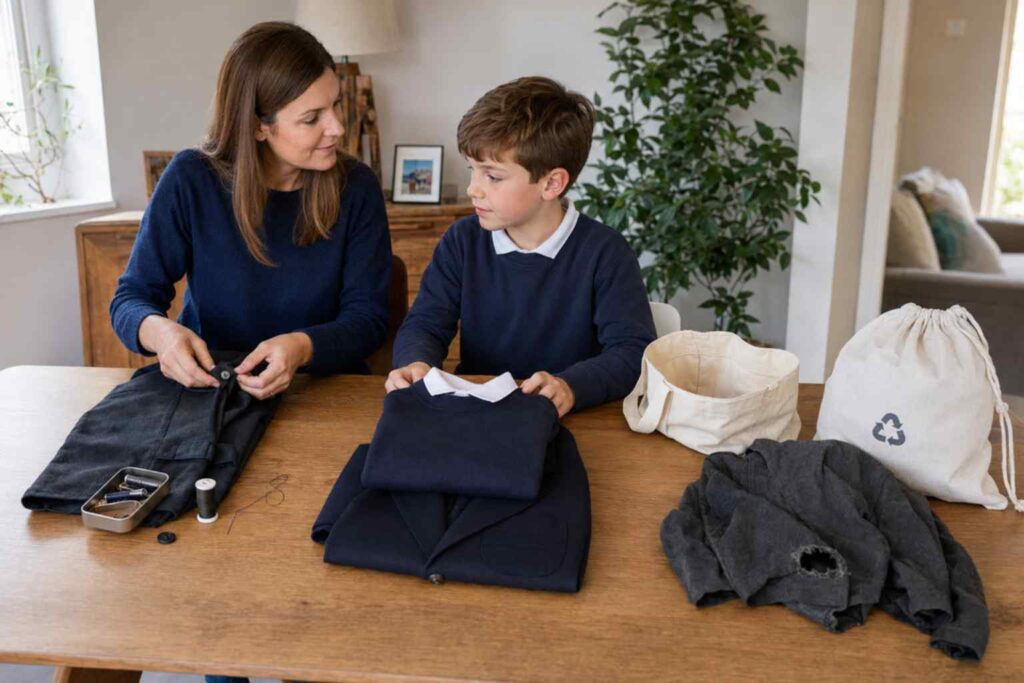
WRAP’s 2024 textiles report found that the UK generated about 1.45 million tonnes of used textiles during 2022. In 2021, 49% entered household bins or general-waste containers, and of those discarded textiles, 84% were incinerated for energy recovery, whilst 11% reached landfill.
Synthetic uniforms raise another concern during daily school life as polyester garments can shed microfibres during washing and normal wear. Recycled polyester reduces demand for virgin fossil material, yet fibre shedding still remains possible.
Replacement multiplies every earlier impact; for example, a weak blazer or jumper creates another round of manufacturing, packaging and delivery. Repairs, careful washing and reuse spread the original footprint across far more wears. A durable garment passed between children usually achieves greater savings than a new product carrying vague green wording. Eco-Friendly School Uniform works best when fewer items serve families for longer.
What to Look For in Eco-Friendly School Uniform
Begin your Eco-Friendly School Uniform search with last year’s clothes, hand-me-downs, school exchanges and resale schemes. Check hems, buttons, zips, knees and elbows before ordering replacements; plus, a repair can unlock another term.
For new items, examine stitching, weight and reinforced stress points. Adjustable waists, generous hems and spare buttons help garments accommodate growth. Colourfast fabric can withstand repeated washing and future owners.
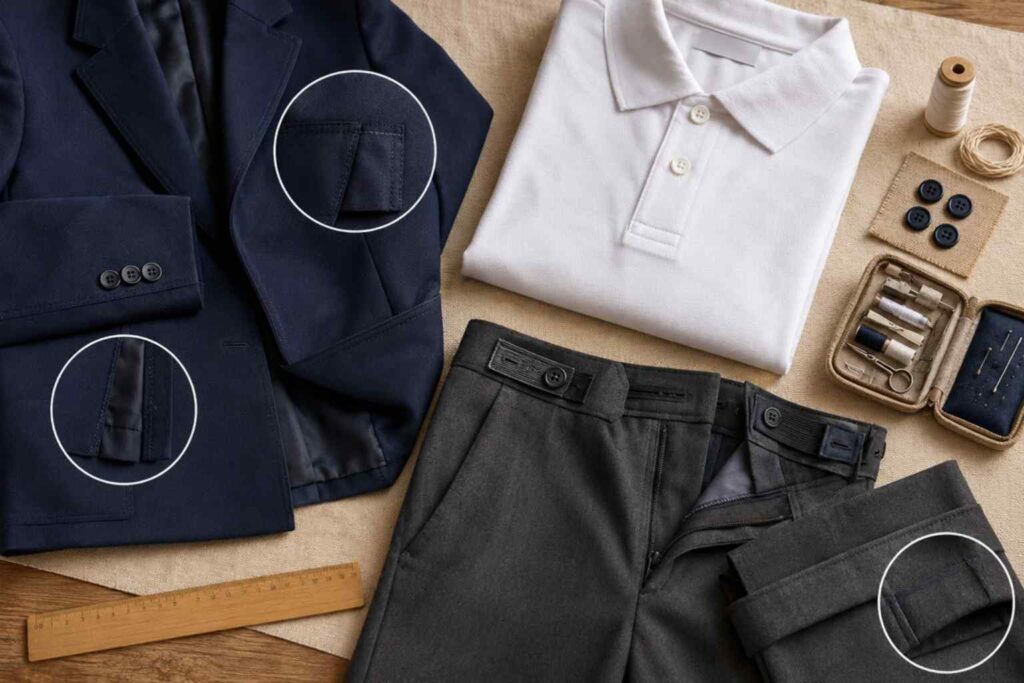
Material claims need evidence. GOTS covers certified organic fibres, restricted chemicals and social criteria across textile processing. The Global Recycled Standard verifies recycled content and production requirements, and OEKO-TEX STANDARD 100 tests finished textiles for harmful substances. Look for product-level certification, rather than vague language and promises.
Natural fibres may avoid synthetic microfibre shedding, yet farming carries its own impacts. Recycled polyester lowers demand for virgin material and can produce durable clothing, but construction, care and length of use remain central in both cases. Finally, cooler washing, air-drying and repairs can cut costs and keep every item useful for longer.
From September 2026, new rules are coming in. Schools in England must limit compulsory branded uniform and PE kit to three items. Middle and secondary schools may require a fourth item when one is a tie. Also, schools should make second-hand uniforms available and publish clear buying information.

Three Eco-Friendly School Uniform Brands Worth Knowing
EcoOutfitters
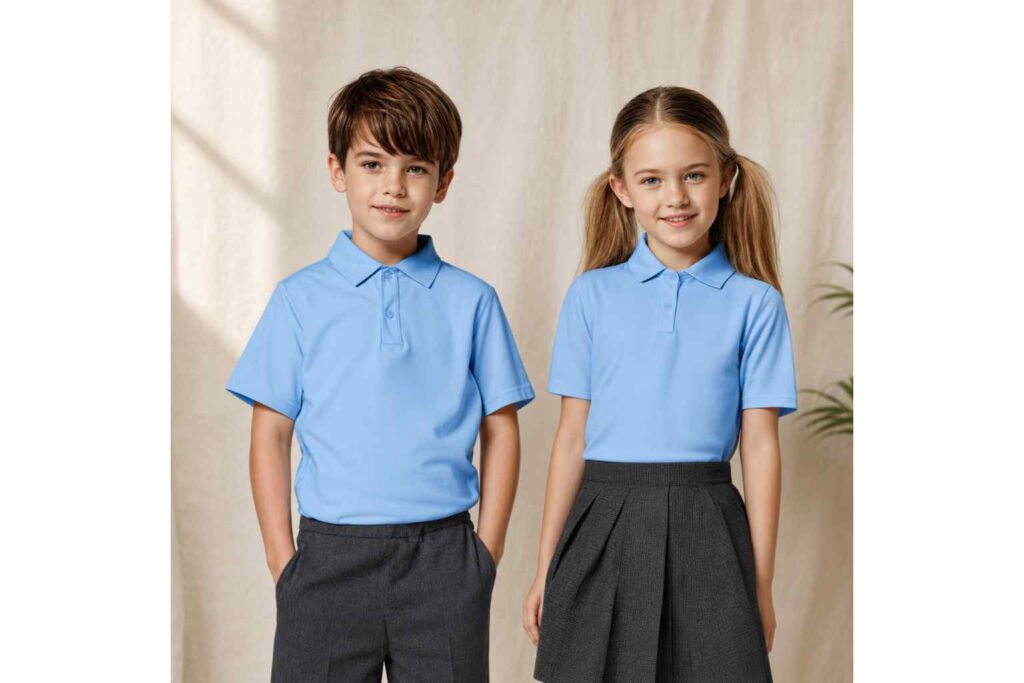
EcoOutfitters specialises in 100% GOTS-certified organic cotton school uniforms, offering families a natural-fibre alternative to conventional polyester-rich schoolwear. Many customers purchase EcoOutfitters’ plain garments and have them embroidered locally with their school’s logo, allowing them to meet their school’s uniform requirements while choosing natural fibres. All garments are GOTS certified, free from PFAS stain-resistant coatings, and manufactured to strict environmental and social standards. Their breathable organic cotton uniforms have become a popular choice for families looking for a healthier, more natural option for everyday schoolwear.
Head to their website and use voucher code PLAYITGREEN10 for 10% off your first order.
Offer ends 25th September 2026.
Website: Visit EcoOutfitters
Impressions School Uniform
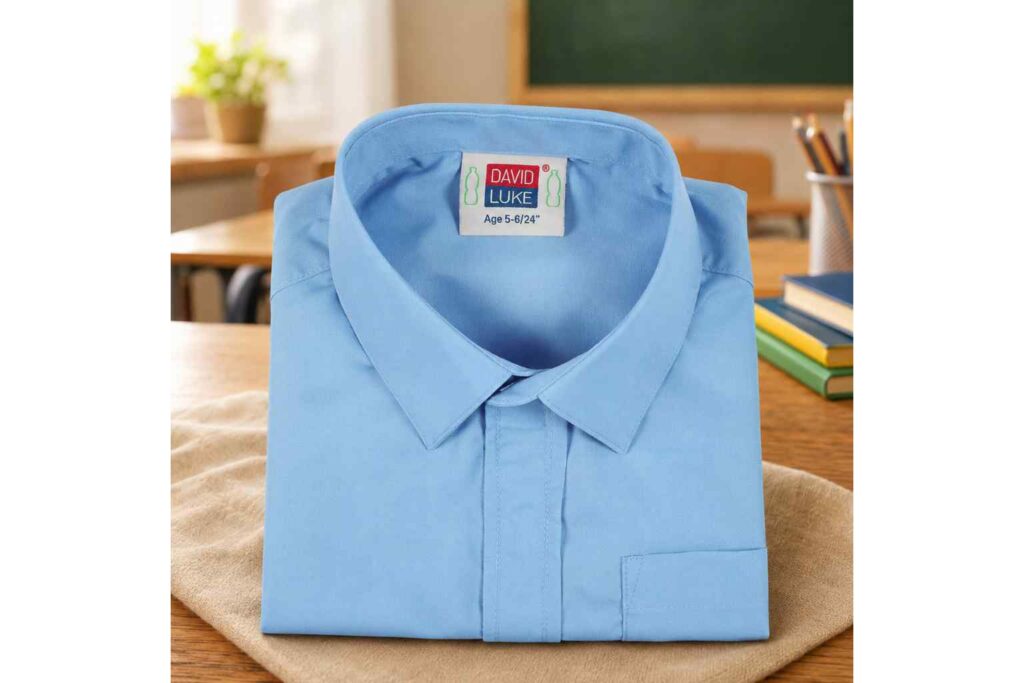
Play It Green customer Impressions School Uniform supplies school-specific clothing through its public online shop and stores throughout Lancashire. It chooses garments for quality and durability, helping families pass usable pieces to siblings, friends or other pupils. The business uses 100% renewable electricity, reuses packaging and has banned single-use plastic from its buildings. Its eco-schoolwear collection brings lower-impact options from established suppliers into a local and online service for families across participating schools each year.
Website: Visit Impressions School Uniform
Trutex
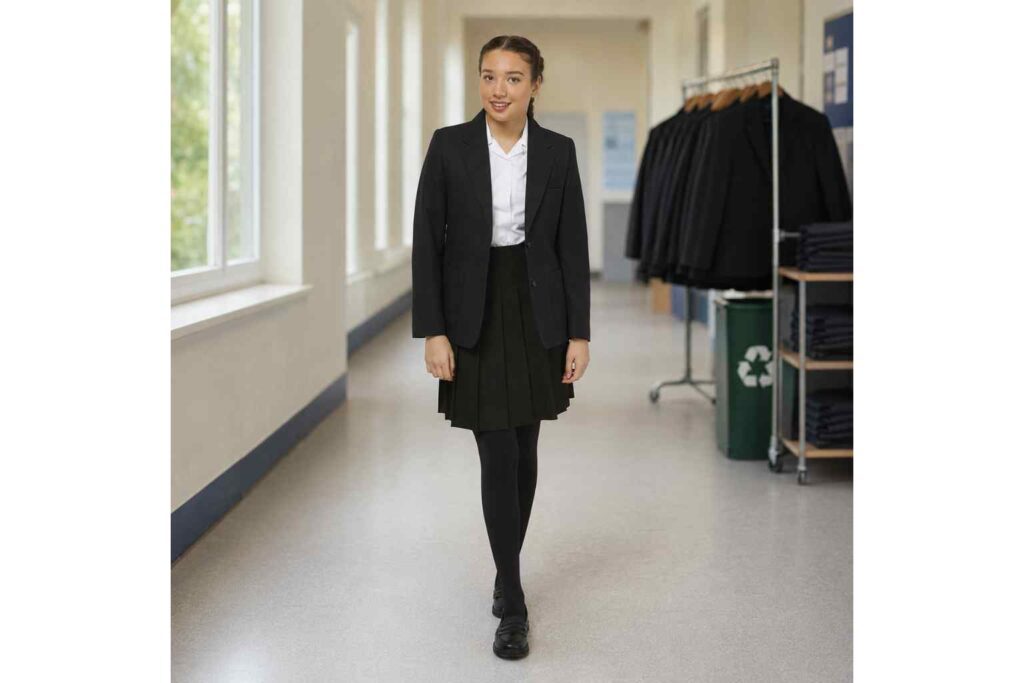
Trutex combines long-wearing schoolwear with recycled materials and a public online shop. Its Re-vive fabric uses certified 100% recycled post-consumer polyester yarn created from plastic bottles. Blazers, trousers and selected skirts use the material, reducing demand for virgin polyester. Trutex pairs this work with durable construction, reduced-plastic packaging and its Re:Wear recycling scheme. These features support longer use, easier hand-me-downs and fewer replacements across a child’s school years for busy, growing families across Britain.
Head to their website and use voucher code BSK10 for 10% off your first order (Until 30th September 2026).
Website: Visit Trutex
Play It Green members have a chance to win a garment of their choice from Eco Outfitters! Keep an eye out in your newsletter, and if you aren’t a member yet, now might be a great time to join us!
Eco-Friendly School Uniform: Wrap-Up
Eco-Friendly School Uniform begins with using what already exists, then choosing replacements built for repeated wear. No family needs another test besides the September shopping list.
Ask your school about pre-owned uniforms, repair small damage and check the evidence supporting material claims. England’s new branded-item limit should give families greater choice from this September.
Across the Play It Green community, thousands of everyday decisions can reduce waste and keep useful clothes circulating. Share this guide with another parent, school or PTA, then help one shirt, blazer or jumper return for another term. Repeated daily practical choices create meaningful collective progress.
If you enjoyed this tip on Eco-Friendly School Uniform, why not become part of a community creating positive change every day by joining Play It Green?
We help you reduce your footprint, repair the planet, and regive to social causes that matter, all through simple, measurable actions that fit your business.

Everyone wants to see impact, not promises. With Play It Green, your sustainability journey becomes visible, credible, and rewarding.
Join us today and turn good intentions into lasting results.
Sign Up