

Eco-Friendly Walking Boots: Introduction
Eco-Friendly Walking Boots can sound faintly earnest, yet the category gets practical very quickly once you remember what boots are put through. They get soaked, scraped, flexed, caked in mud and asked to survive the sort of weather forecast that often feels written by a prankster.
Most walking boots combine leather, rubber, synthetic textiles, foams, membranes and glue in one hard-working package, so the materials matter, and the lifespan matters just as much. A cheap pair that gives up after one soggy season rarely ends up being the clever option. This week’s tip looks at the history of walking boots, the footprint behind modern pairs, what to look for in a better choice, and three brands worth knowing.

A Brief History of Walking Boots
This week’s tip, Eco-Friendly Walking Boots, sit at the end of a long and fairly muddy footwear story. Long before hiking became a leisure pursuit, people needed sturdy boots for marching, farm work, rough ground and mountain travel. Shoe design can be traced back more than 3,000 years, and Roman footwear already shows how early shoes were built around grip, durability and repeated punishment underfoot.
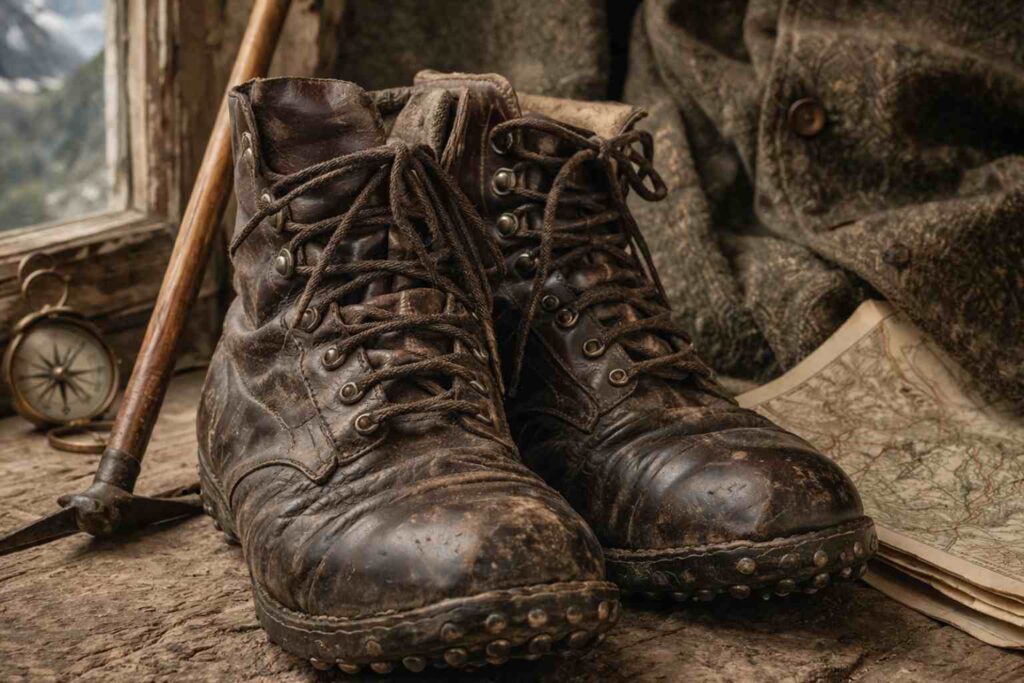
By the nineteenth and early twentieth centuries, mountain boots were made from heavy leather, stiff through the ankle, and often reinforced with studs or hobnails. They were built to last and built to protect, though comfort was clearly treated as a bonus rather than a design priority, and a long walk in them could build character, along with a decent collection of blisters.
Over time, walking boots changed with new sole technology, lighter uppers, padded collars and waterproof linings. That made them far more practical for everyday walkers, not just soldiers, climbers and the serious long-distance hikers. Yet it also pushed boot design into a world of mixed materials, synthetic fabrics, foams, membranes and glued construction.
Get In TouchThe Environmental Impact of Non-Eco-Friendly Walking Boots
Eco-Friendly Walking Boots matter since walking footwear sits inside a much bigger textiles and footwear problem. The European Commission says textile consumption in Europe creates the fourth highest pressure on the environment and climate after food, housing and mobility. Shoes are part of that wider picture, and footwear is especially awkward at end of life since many pairs combine many different materials held together with powerful adhesives.

Fashion for Good notes that some footwear is made with more than 40 materials, which helps explain why disassembly and recycling remain difficult at scale. Unfortunately, this means that around 95 per cent of used footwear still goes to landfill or incineration. Then there is microplastic pollution, as dust from the abrasion of shoe soles is an important source of microplastic leakage. This means the impact carries on long after the box has been thrown away.
That is why Eco-Friendly Walking Boots need more than a recycled lace and a cheerful swing tag. Durability, repairability and keeping one pair on your feet for longer usually matter far more than the marketing hanging from the eyelets.
What to Look For in Eco-Friendly Walking Boots
Good Eco-Friendly Walking Boots start with durability, as a boot that survives years of wet trails is usually the better choice than one replaced after a single hard season. Pay attention to the outsole, upper, stitching, rand and lace hardware, since these areas usually show whether a pair was built properly or simply styled well.
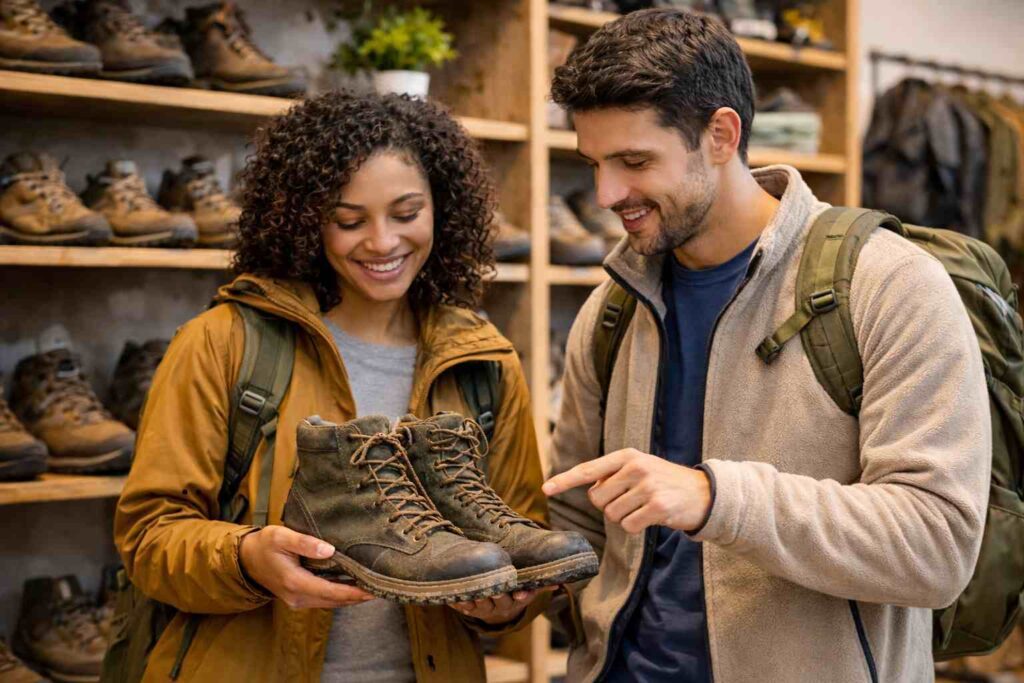
Repairability matters too, and resole options, repair services and replaceable parts help spread the footprint across far more miles. That is a much stronger outcome than treating boots like fast fashion in disguise, which is a sentence that really should not exist and yet somehow does. A resoling programme is a good example of the sort of thing worth looking for.
Materials also count. Recycled textiles, responsibly sourced leather, and clearer supply-chain information are all worth looking for, though honesty matters just as much as the materials themselves. The strongest brands explain what is recycled, what is repairable and how they are trying to improve, rather than pretending one green detail solves everything.

Three Sustainable Walking Boot Brands Worth Knowing
LANX
LANX has men’s and women’s hiker-style boots, plus its 365 Vibram collection, which it describes as built to withstand all terrains and conditions. What makes LANX especially interesting is the aftercare side. Through RE-LANX, it offers repairs, refurbishment and trade-in, with the work carried out in Whalley, Lancashire. That combination of sturdy outdoor styling and repair-led thinking means it is a great choice for the eco-conscious.
Use code PLAYITGREEN10 at checkout on their website for 10% off your first order.
Scarpa
Scarpa is a great fit here for serious walking boots. Its range covers proper hiking and hill use, and its long-life thinking and design gives the company real credibility. The big strength is durability, along with Scarpa’s emphasis on repair and resoling, which matters far more than any token eco claim on a swing tag. For readers wanting boots built for real miles, that will last for years and years. Scarpa is a strong option.
Use code SIGNUP865 at checkout on their website for 10% off your first order.
Vivobarefoot
Vivobarefoot takes a different route, with lighter, flexible hiking boots rather than traditional bulky designs. What makes this brand stand out is its honesty. The brand openly says it does not make fully sustainable footwear yet, and then backs that honesty by doing the next best thing, with repairs, take-back schemes and ReVivo resale. It might not suit every foot, but it is one of the most transparent names in this category.
Use code HONEY15 at checkout on their website for 15% off your first order.
Eco-Friendly Walking Boots: Wrap-Up
Eco-Friendly Walking Boots make sense for the same reason good waterproofs do. You buy them hoping not to think about them again for quite a long time. Better materials, stronger construction and repair-friendly design reduce waste and spare you the familiar misery of a sole giving up somewhere inconvenient and scenic.
At Play It Green, we believe small choices matter most when they stick. Eco-Friendly Walking Boots are a good example of that. Buy better, wear them properly, clean them occasionally, and resist the temptation to treat every fresh scuff as a reason to get a new pair!
If you enjoyed this tip on Eco-Friendly Walking Boots, why not become part of a community creating positive change every day by joining Play It Green?
We help you reduce your footprint, repair the planet, and regive to social causes that matter, all through simple, measurable actions that fit your business.

Everyone wants to see impact, not promises. With Play It Green, your sustainability journey becomes visible, credible, and rewarding.
Join us today and turn good intentions into lasting results.
Sign Up