

Ethical Winter Coats: Introduction
Ethical winter coats can help you stay warm while making better choices around materials, durability, repair and how long clothing stays in use. Before buying something new, however, it is worth checking what is already hanging in your wardrobe.
That is particularly relevant in Britain, where clothing and textile waste remains substantial. WRAP estimates that the UK generates around 1.45 million tonnes of used textiles annually. Around 711,000 tonnes of used textiles are discarded in household bins and general waste containers, equivalent to almost half of all used textiles, and these end up in landfill.
Keeping a coat in use for another winter is therefore worth considering before replacing it. This week, we explore how winter coats developed, where their environmental impact comes from and, when you need one, what to look for when buying.

A Brief History of Winter Coats
Humans have been finding ways to stay warm and dry for thousands of years, using the materials available locally. Arctic Indigenous communities developed sophisticated clothing systems from animal skins and furs, while wool became an important cold-weather material across Europe.
As tailoring developed, coats increasingly combined protection with fashion and status. Military clothing influenced enduring designs including greatcoats and trench coats, while duffle coats moved from practical maritime clothing into everyday wardrobes.

Waterproofing changed considerably during the nineteenth century, when in 1823, Charles Macintosh used rubber dissolved in naphtha between layers of fabric to create waterproof material. The early version had limitations, including becoming stiff in cold conditions and sticky when warm, but it helped establish the principle behind modern waterproof outerwear.
The twentieth century brought synthetic fabrics, lightweight insulation and increasingly technical waterproof membranes. These developments made warm, weather-resistant coats more widely available, although cheaper mass production also helped turn clothing into something we replace far more frequently and gave coats a much bigger footprint.
Find Out MoreThe Environmental Impact of Winter Coats
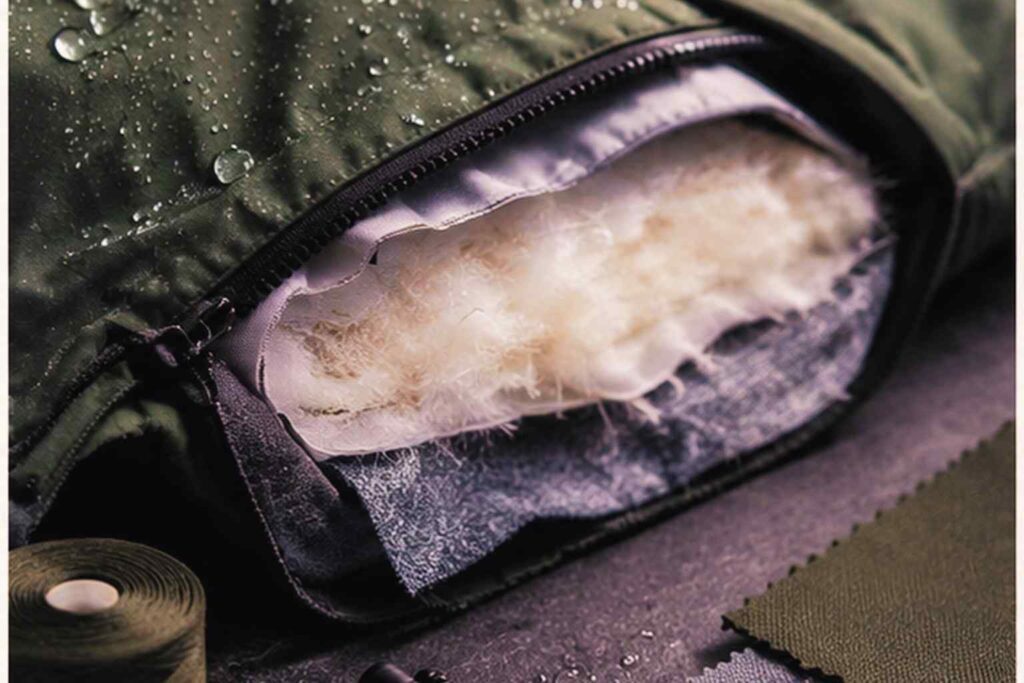
A modern winter coat can be surprisingly complicated as the outer fabric, membrane, lining, insulation, zips, fasteners and water-resistant treatments can all have separate supply chains. This makes the impact difficult to judge from a single label.
Recycled polyester and nylon can reduce demand for virgin synthetic fibres, although they remain plastic-based materials. Natural alternatives have trade-offs too. For example, wool is durable and insulating but comes with land-use and animal-welfare considerations, while down provides excellent warmth for its weight but needs careful sourcing.
The bigger issue is how much clothing we consume. The latest UK Textiles Pact progress figures from WRAP found that participating brands had reduced carbon impact per tonne by 6% compared with 2019. However, they placed 17% more textiles on the market, contributing to a 10% increase in their overall carbon footprint. This is a bit counterintuitive.
Keeping clothing working for longer can therefore be powerful, and you can see this as research found that 82.2% of repairs and 64.6% of preloved purchases displaced a new purchase. We think that the best ethical winter coats combine responsible materials with durability, repairability and years of useful wear.
What to Look For in Ethical Winter Coats
For an ethical winter coat, it’s best to start with the coat you already own, because a damaged zip, small tear or tired waterproof finish does not necessarily mean it needs replacing. Cleaning, repairing or reproofing can often extend its life, while second-hand is worth considering if you genuinely need another coat.
When comparing ethical winter coats, it makes sense to think about how you will use them. Someone commuting through a British winter needs something very different from somebody spending hours outdoors in severe weather, so buying unnecessary technical performance can mean paying for materials and features you rarely use.
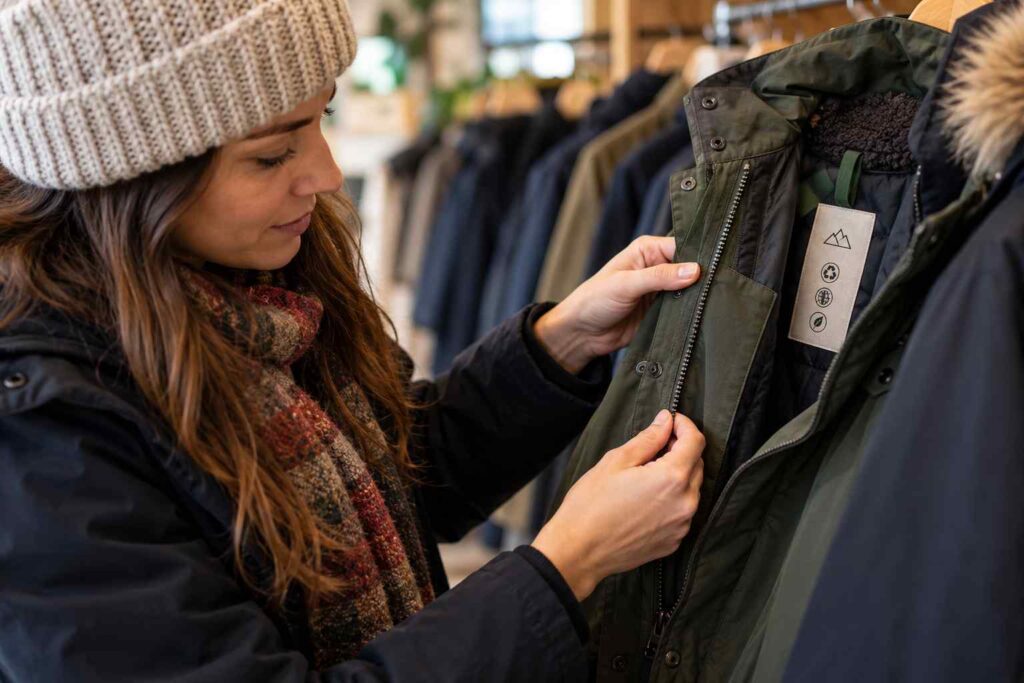
For down insulation, the Responsible Down Standard from Textile Exchange prohibits live plucking and force-feeding and uses third-party certification alongside chain-of-custody requirements. Recycled fibres, organic materials and waterproof treatments made without intentionally added PFAS can provide other useful indicators, depending on the type of coat.
Finally, look at construction. Strong stitching, good zips, replaceable components and repair services may be less exciting than a green label, but they can determine whether a coat lasts three winters or ten. A style you genuinely like enough to keep wearing counts too.

Three Ethical Winter Coat Brands to Know
The three ethical winter coat brands we have selected take quite different approaches to better outerwear, from repair services and technical performance to local manufacturing and reclaimed materials.
WAWWA

Manchester-based WAWWA makes the Roam Raglan Jacket in its own city, with workers paid the Real Living Wage. The current jacket uses 100% organic cotton with a water-resistant dry-wax finish and is designed as a lightweight, unlined shell. It is a layering option rather than a heavily insulated winter coat, but its local manufacturing and longevity-focused construction make it particularly interesting.
Website: WAWWA
Use code PLAYITGREEN15 for 15% off your first order. Offer lasts six weeks from publication date.
Finisterre
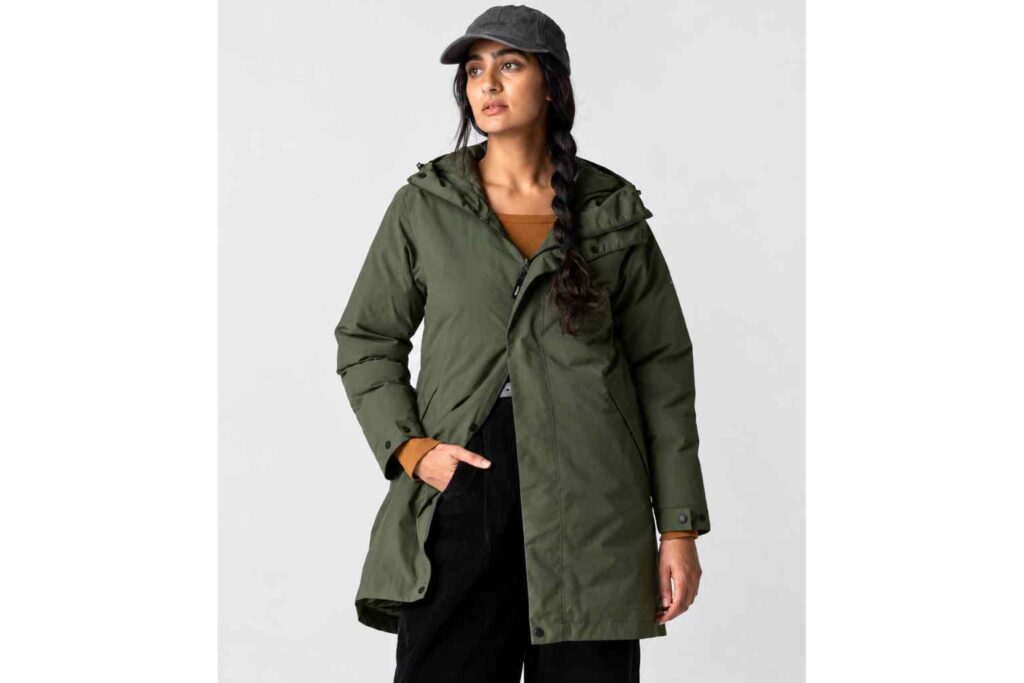
Cornish B Corp Finisterre provides a strong example of designing for longer use. Alongside outerwear made using recycled, organic and natural materials, its Lived & Loved programme offers UK repairs including patches, seams, zips and reproofing. A broken zip can therefore become a repair rather than the end of an otherwise useful coat, while its takeback and resale services provide another route for older Finisterre clothing.
Website: Finisterre
Use code WELCOME10 for 10% off your first order. Offer lasts six weeks from article publication.
TOBEFRANK

Independent British brand TOBEFRANK takes another approach by turning existing materials into new clothing. Its Made in England range uses recycled fabrics, thread, lining and buttons, with garments produced in its Stoke Newington factory. Its Trench Coat in Ecru is made in England from 100% recycled fabric, with recycled lining and labels, demonstrating how reclaimed materials and UK manufacturing can come together in outerwear designed for layering through cooler weather.
Website: TOBEFRANK
Ethical Winter Coats: Wrap-Up
Choosing an ethical winter coat starts with asking whether you need another coat at all. Cleaning, repairing or reproofing the one you own could give it several more winters, while preloved outerwear can be a great option when you need something different.
If buying new is the right choice, look beyond broad sustainability claims and consider materials, sourcing, construction, repair options and whether you genuinely like the coat enough to keep wearing.
A good winter coat should come back out year after year. Keeping it warm, waterproof and in use for longer is one of the simplest ways to make that purchase count.