
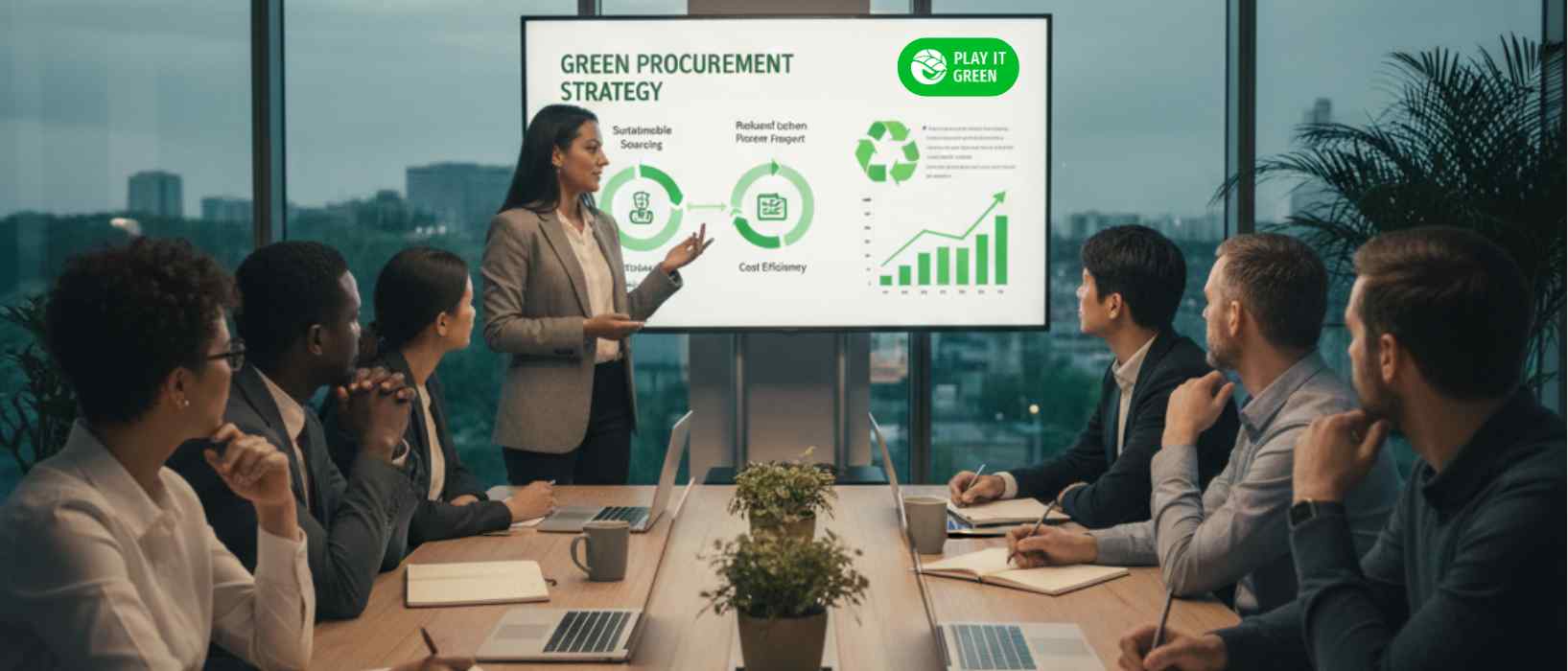
Green Procurement: Introduction
Green Procurement has just taken a major step forward. The World Economic Forum, in partnership with Kearney, has released the new Green Procurement Playbook, a practical guide to help Chief Procurement Officers and business leaders turn sustainability targets into measurable action.
With supply chains responsible for over 90% of corporate emissions, procurement has become the biggest opportunity to cut carbon, reduce exposure to risk, and build long-term business resilience. Green Procurement is not about spending more; it is about buying smarter.

The Business Case for Change
Traditional procurement focused on price and efficiency. Those priorities remain, but they now sit alongside new challenges: climate targets, investor pressure, regulation, and changing customer expectations.
Businesses that fail to adapt face rising costs from carbon taxes, supply disruption, and reputational damage. Those that lead see sustainability as a driver of value.
Integrating sustainability into procurement stabilises costs through stronger supplier relationships, reduces waste, and allows companies to anticipate regulation before it arrives. It also provides a competitive edge when tendering for contracts or attracting investment. ESG performance is now part of every serious investor’s checklist.
A New Blueprint for Procurement
The WEF Green Procurement Playbook, published in October 2025, reframes procurement as a source of measurable environmental and financial value.
It provides a practical framework built around eight action areas, from supplier collaboration and governance to innovation and financing. Instead of treating sustainability as an extra task, it integrates it directly into supplier selection, contracts, and data systems.
Procurement leaders now ask new questions. What is the carbon footprint of this supplier’s materials? How transparent is their data? Can we work together on low-carbon innovation rather than just negotiate on price?
Companies following this approach are already seeing results. Those that prioritise sustainability are cutting energy costs, improving supply stability, and reducing exposure to volatile material prices.
Ask Play It Green A QuestionTurning Policy into Practice
Antonio Vizcaya Abdo, sustainability advisor and LinkedIn Top Voice, describes this shift as a structural transformation that connects strategy, governance, and performance to business resilience.
Sustainability must now be embedded from the earliest stages of the procurement cycle. During planning, businesses map where emissions occur and identify high-impact categories. When requests for quotations are issued, they include sustainability weighting and carbon footprint disclosure, ensuring suppliers are compared on both cost and impact.
Contracts are changing too. Many include measurable sustainability targets and reporting clauses, making them tools for accountability rather than just legal protection. Once partnerships are in place, performance is reviewed through dashboards, audits, and supplier training.
The result is a system that drives progress rather than a static compliance exercise.
Real-World Results
For large organisations, Green Procurement is already proving its worth. Unilever has cut supply chain emissions by more than forty percent since 2010 by working closely with suppliers on renewable energy sourcing and material efficiency.
HP reports annual savings of over one million tonnes of CO₂ through supplier energy-efficiency programmes built into its procurement process. Siemens collaborates directly with strategic suppliers to create low-carbon materials, achieving reductions of around thirty percent in key manufacturing categories. IKEA has achieved similar success by supporting its top suppliers to switch to renewable energy, cutting production emissions by a fifth in just five years.
These examples show that when sustainability becomes a procurement priority, the results are tangible. Waste falls, supply security improves, and the relationship between buyer and supplier becomes a partnership built on shared value rather than short-term cost.
For smaller businesses, even modest steps make a difference. Sourcing recycled materials or choosing suppliers who provide verified emissions data can strengthen resilience, reduce costs, and attract new customers who value transparency.
The biggest change is cultural. Procurement teams now see themselves as strategic partners, not administrators. They help shape how the company grows, invests, and delivers on its promises.

Building a Resilient Future
Green Procurement is not a one-time project. It is a continuous process that builds trust and transparency across supply chains.
By aligning procurement with sustainability goals, businesses reduce their environmental footprint and protect themselves from shocks such as raw material shortages or tighter climate regulation. In an uncertain world, that becomes a real strategic advantage.
Forward-thinking companies are already using procurement as a platform for innovation, inviting suppliers to co-develop low-carbon products and services that benefit both sides. Collaboration replaces confrontation, and shared value replaces cost cutting.
Green Procurement: Wrap-Up
Green Procurement is proving that sustainability and commercial success can reinforce each other. By making environmental performance part of every purchasing decision, businesses can cut costs, lower risk, and build stronger foundations for growth.
Procurement has evolved into a strategic force that shapes how companies compete and create value. Those who act now will not only meet their climate goals but will secure a lasting advantage in a market that rewards responsibility and transparency.
The shift has already started. The leaders will be the ones who treat procurement as the key to a cleaner, stronger, and more resilient future.
Join the Community Making Change
You can receive weekly education like this business tip on the Green Procurement, receive net zero support, repair the planet and support a good cause monthly by joining Play It Green for just £5 per person per month.
Whether it’s adding nature repair to your sales process, engaging and educating employees, or strengthening your environmental credentials in a clear and measured way, we make it simple, transparent and cost effective.
Sign Up