
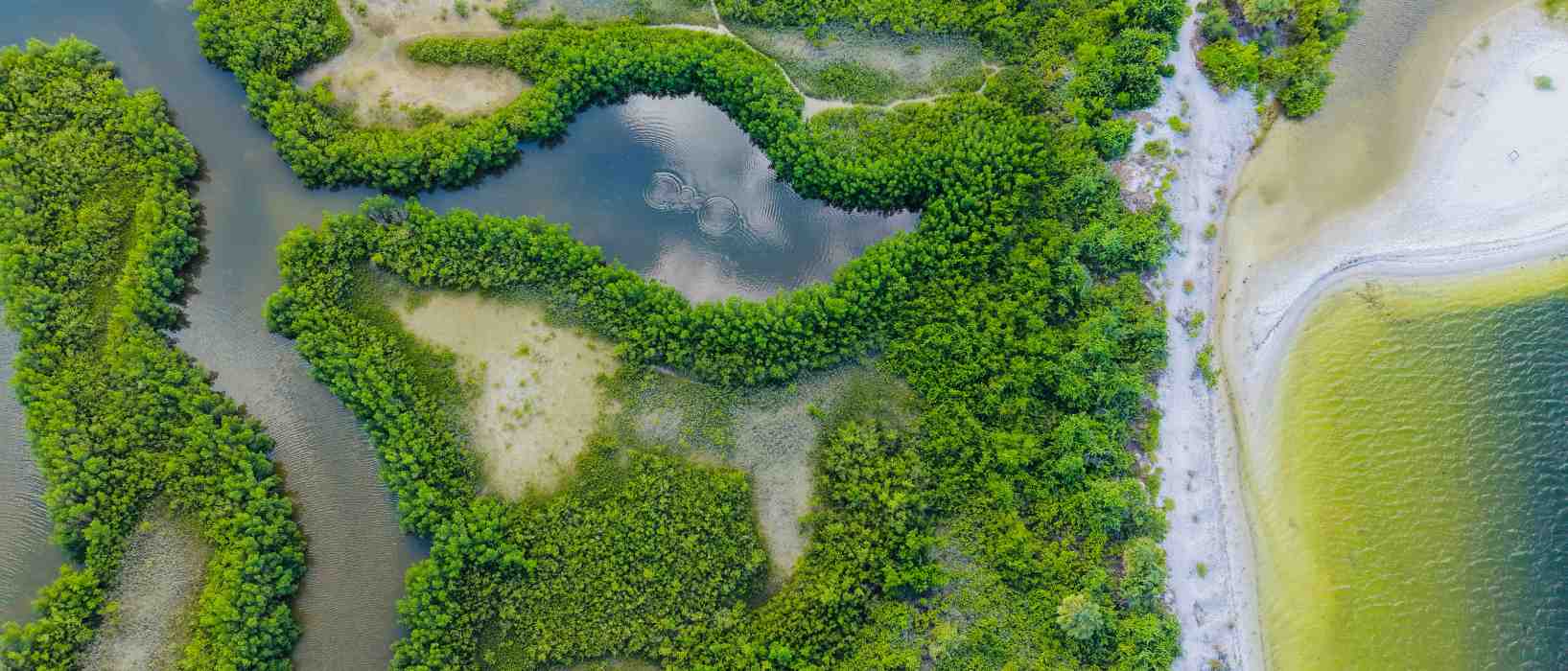
Nature-based solutions are often discussed through the lens of carbon. For many businesses, that is where the conversation begins and ends. Yet ecosystems do far more than absorb emissions, and the strategic implications extend well beyond carbon accounting.
In this guest contribution, Dr Silvia Pineda-Munoz draws on her background in palaeontology and ecology to explain why biodiversity, integration, and natural infrastructure matter for long-term business resilience. Her perspective challenges us to think beyond offsets and consider the systems that underpin economic stability.
Ecological Systems as Networks
As a palaeontologist and ecologist, I’ve spent years studying ecosystems that operated long before humans began shaping the planet at industrial scale. Whether ancient forests, coastal wetlands, or reef systems, they all tell a consistent story. When ecological systems function as networks rather than isolated parts, they regulate climate, stabilise landscapes, and support life in ways that no single intervention could replicate.
That perspective is helpful when we talk about nature-based solutions.

Beyond Carbon Metrics
The conversation around nature-based solutions often starts, and usually ends, with carbon. Forests absorb carbon dioxide. Mangroves and seagrasses store significant amounts of blue carbon in their sediments. Reforestation and restoration projects can contribute meaningfully to climate mitigation.
But carbon sequestration is only one dimension of what these systems do. If we focus exclusively on carbon metrics, we risk missing the broader value that makes nature-based solutions strategically powerful for businesses.
A restored forest is not just a carbon sink. It improves water retention, reduces soil erosion, moderates local temperatures, and supports biodiversity. It creates habitat for pollinators that agricultural systems depend on. It can generate local employment and strengthen relationships with surrounding communities.
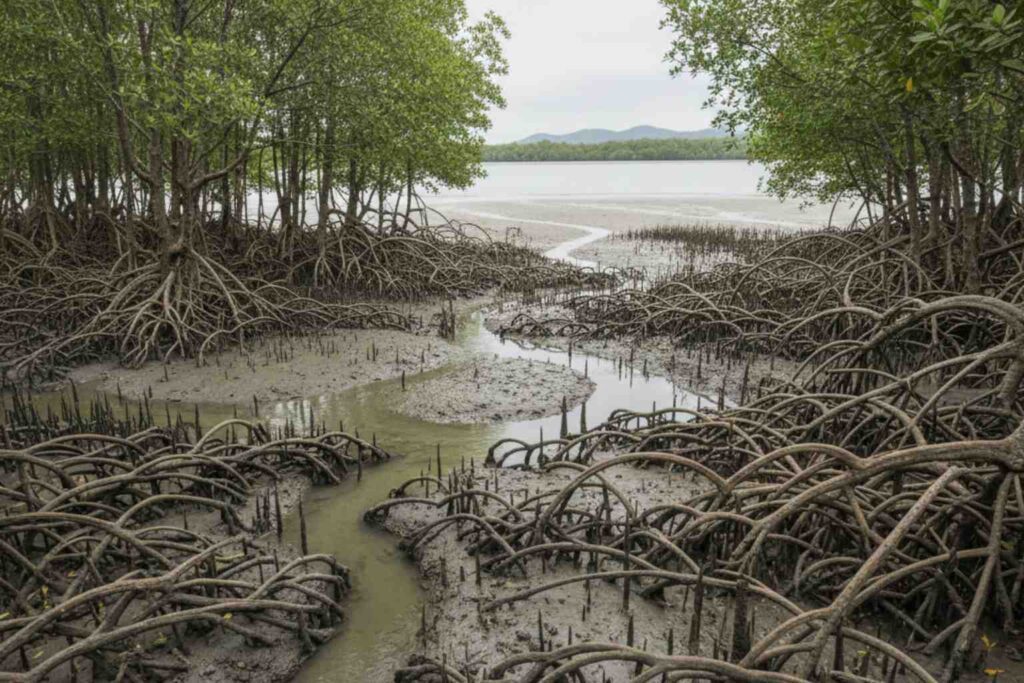
Similarly, mangrove restoration protects coastlines from storm surges, supports fisheries, and reduces long-term infrastructure risk in coastal regions.
These are layered benefits. From a business perspective, layered benefits mean layered resilience.
Biodiversity and System Stability
The fossil record offers countless examples of what happens when ecosystems lose diversity. Systems that become simplified and homogenised are more vulnerable to shocks. When environmental stress increases, they tend to collapse more quickly and recover more slowly.
By contrast, diverse ecosystems distribute risk across multiple species and functions. If one component fails, others can compensate.
Biodiversity is not ornamental. It is structural.
When businesses invest in nature-based solutions, they are indirectly supporting the stability of the ecological systems their supply chains depend on. Agriculture relies on healthy soils and pollinators. Fisheries depend on intact marine habitats. Infrastructure in coastal cities benefits from natural buffers like wetlands and mangroves.
Even sectors that appear far removed from nature ultimately rely on climate stability, freshwater availability, and functioning landscapes somewhere along their value chain.
Get In TouchFrom Offsetting to Integration
For many years, corporate sustainability focused primarily on efficiency by reducing waste, lowering emissions, or optimising energy use. Those steps remain necessary. A more mature approach recognises that sustainability is not only about minimising harm. It is about reinforcing the systems that enable long-term growth.
Nature-based solutions shift the framing from “How do we offset impact?” to “How do we strengthen the natural systems that underpin our economy?”
Offsetting implies compensation after the fact. Strengthening implies integration. It acknowledges that businesses operate within ecosystems, not outside them.
Forests, wetlands, and marine habitats are not abstract environmental assets. They are forms of natural infrastructure. They regulate water cycles, buffer extreme weather, store carbon, and support food production. They have been performing these functions for millions of years.
Nature-Based Solutions and Their Strategic Value for Business
From a long-term strategic perspective, investing in natural infrastructure can reduce exposure to climate volatility and regulatory risk. It can strengthen brand credibility in a marketplace increasingly attentive to environmental performance. It can contribute to social stability in regions where businesses operate by supporting local employment and community resilience through restoration projects.
Well-designed nature-based initiatives often create co-benefits that purely technological solutions do not. A restored wetland stores carbon, filters water, reduces flooding, and provides habitat. An urban greening initiative can improve air quality, lower urban heat, and support mental well-being.
These outcomes are difficult to capture in a single metric, yet they represent real value.
None of this suggests that nature-based solutions replace the need for decarbonisation or systemic change. Emissions reductions remain non-negotiable. Integrating restoration and ecosystem support into business models simply expands the toolkit. Climate mitigation, biodiversity protection, and social resilience are interconnected challenges.

Resilience Through Integration
In Earth’s history, systems that survived major environmental transitions were those with adaptive capacity and interconnected feedbacks. They were not the simplest systems; they were the most flexible and diverse.
While today’s challenges differ in scale and context, the principle holds. Resilience emerges from integration, not isolation.
Businesses that recognise this are beginning to see sustainability not as a compliance requirement but as a strategic advantage. Aligning growth with ecological restoration is not a concession. It is an investment in stability, reputation, and long-term viability.
Nature-based solutions work because they are rooted in processes that predate human industry. Photosynthesis, soil carbon storage, and coastal buffering are not experimental ideas. They are established mechanisms refined over geological time. When companies support and scale these systems, they are partnering with infrastructure that has already proven its effectiveness.
Carbon matters. So do biodiversity, water security, community resilience, and climate adaptation. Nature-based solutions sit at the intersection of all of them.
For businesses looking ahead rather than reacting to the present, that intersection is strategically sound.
About the Author

Dr Silvia Pineda-Munoz is a palaeontologist, ecologist, and founder of Climate Ages. Climate Ages is a science storytelling platform that bridges research with the wider world. After years of leading international research teams, teaching, and advising conservation nonprofits, she now helps scientists and organisations communicate their work in ways that inspire action. Her writing has reached thousands of readers worldwide, turning complex science into stories that connect and drive change.
Learn more at climateages.com
If you enjoyed this guest article on Nature-based solutions, why not become part of a community creating positive change by partnering with Play It Green?
You receive access to all our content in a weekly newsletter, and we’ll help you reduce your footprint, repair the planet, and regive to social causes that matter, all through simple, measurable actions that fit your business.

Modern employees, consumers, and investors want to see impact, not promises. With Play It Green, your sustainability journey becomes visible, credible, and rewarding.
Join us today and turn good intentions into lasting results.
Sign Up