
Nature Repair Report August 2026: From Order to Outcome
The Nature Repair Report August 2026 answers a question our customers often ask: what actually happens after they fund nature repair? A number on a dashboard is useful, but most people want to see the process behind it. They want to know where their contribution goes, who carries out the work and how we know it happened.
That is why Play It Green places so much focus on verification and monitoring. Every extra check lowers the risk of double counting, poor evidence or claims that stretch beyond the facts. Monitoring then follows the work after planting, helping teams spot problems and improve future activity.
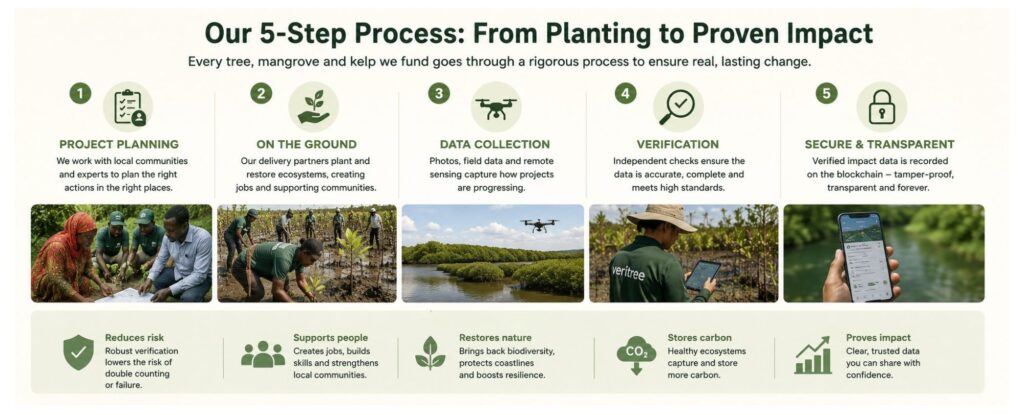
This month, in our Nature Repair Report August 2026, we take the Play It Green community through that process step by step. We follow an order from the moment it is recorded through project planning, local delivery, evidence checks, blockchain and ongoing monitoring. The aim is simple: to show how we protect customer trust and support better nature repair.
Our community can be very proud that, at the time of writing this report, they have funded 1,207,679 nature-based solutions across Madagascar, Senegal, Kenya, Tanzania and Canada!

How an Order Becomes a Real Project
An order might come from a workforce subscription, a product sale, a booking or a customer contribution. Play It Green records that action, then allocates the funded unit to a planned restoration programme.
Nobody rushes outside with one tree every time an order arrives. That might look good on video, but it would be terrible project management, so orders are grouped into programmes that support nurseries, local teams and planned work.
Planning comes first. Teams need suitable species, healthy nursery stock, safe site access and the right planting season, plus they must consider local soil, tides, weather and the needs of nearby communities.
Our restoration partner, veritree, manages this process with local delivery teams. The work covers agroforestry in Senegal, mangroves in East Africa and sea kelp in Canada, and each place needs its own plan and timetable.
Get In TouchHow We Know the Work Happened
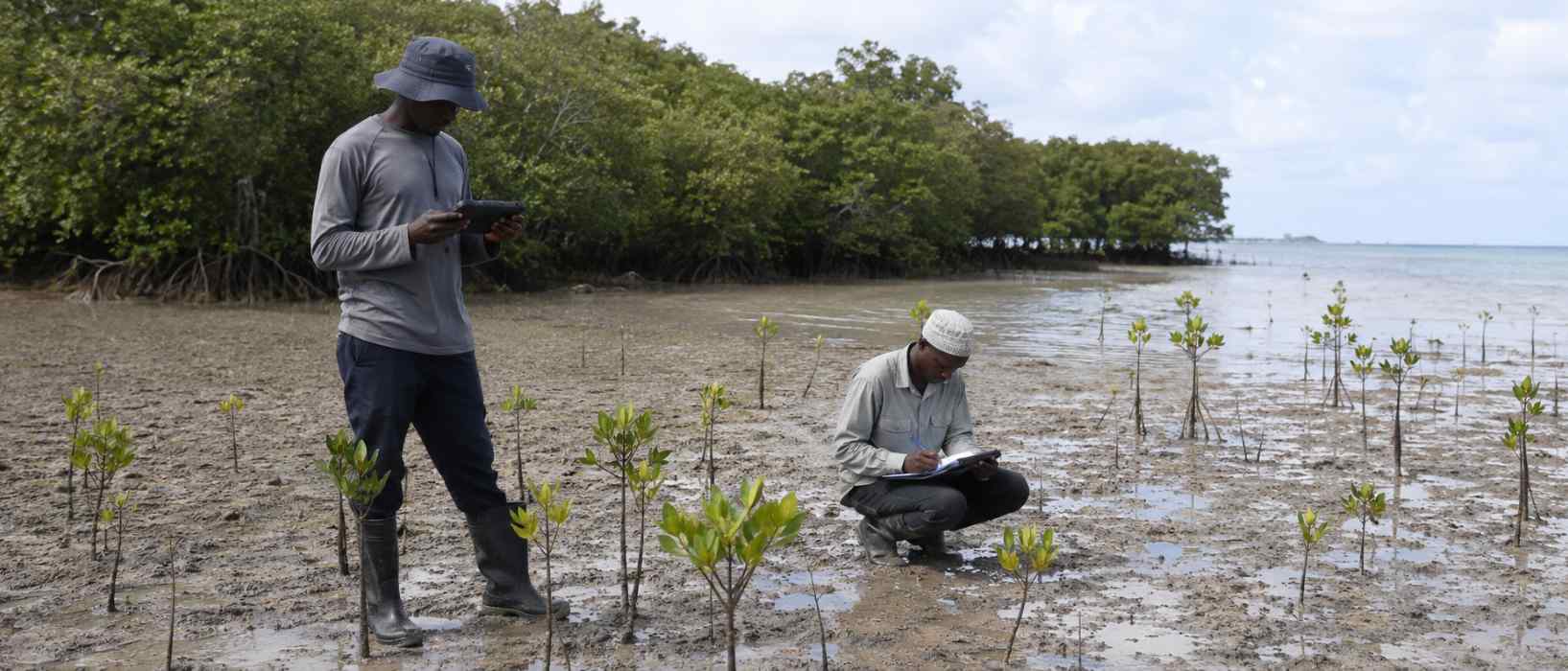
Once work begins, local teams collect evidence from the site, which can include photographs, videos, planting records, mapped routes and the boundaries of each restoration area.
Many records are geotagged, meaning they include a location, as that helps connect the evidence with the place where the work happened, whilst teams can collect data offline, then upload it later.
Projects may use satellites, drones, survival checks and sound-recording equipment. Each tool answers a different question: Satellites show wider changes, and ground checks give a closer view of plants and habitats.
Each different habitat also needs its own checks, as Kelp needs different monitoring, for example, from mangroves or farms. But the aim remains the same: to build a clear trail from the original order to real work on the ground.
What Blockchain Actually Does
Blockchain sounds more complicated than it needs to. At its simplest, it is a shared digital record that becomes very difficult to change after information is added.
A plain-English guide from NIST describes blockchain as a shared, tamper-resistant digital ledger. In normal language, several computers hold matching copies, so quiet changes become much harder.
In our process, project data enters the blockchain after it has been checked. This protects the record and helps reduce double counting, duplicate allocations and changes made after the event.
Think of blockchain as a locked filing cabinet for verified data. It protects the record, but it does not check whether a tree survived…Field evidence and monitoring still do that job.
Why Monitoring Comes Next
Planting day is the start of restoration, not the finish. Weather, tides, grazing, disease and weak growth can all affect results, and regular checks help teams see what is happening after the first visit.
Oxford’s Nature-based Solutions Guidelines recommend clear goals, useful measures and changes based on what the evidence shows. They cover nature and people, rather than treating carbon as the only result. This is a methodology we wholeheartedly subscribe to and the data we receive from veritree is representing this more and more.
Additionally, the FAO’s Framework for Ecosystem Restoration Monitoring provides projects with shared tools and methods for monitoring restoration. This helps teams compare progress and learn from work in different places.
Monitoring can reveal poor survival, damaged areas, erosion or changes in the site. These findings give teams a chance to respond rather than discovering problems much later.
Teams can change planting times, species choices, site care or replacement plans, which means better information can improve future work and help funding support the methods that perform well.

What Businesses Can Safely Say
For the Nature Repair Report August 2026, the final question is simple: what can a business safely say? Clear wording protects trust and makes the evidence easier for customers and staff to follow.
A business can say it funded verified nature repair and explain where the work took place. It can share the delivery process, the evidence collected and the checks used.
A planting record cannot support a carbon-neutral, offset or net-zero claim on its own. Those claims need separate calculations, boundaries and evidence.
Play It Green keeps each part clear: Science supports the carbon calculation (if needed), site records show delivery, blockchain protects checked data, and monitoring follows what happens next.
Nature Repair Report August 2026: Wrap Up
The Nature Repair Report August 2026 shows the full route from an order to a checked restoration record. The Play It Green community starts that process through regular, practical action, through our workforce subscription, tying nature repair into commercial growth or rebalancing and reducing their footprint. Then, local teams deliver the work, evidence records it, verification checks it, and blockchain protects the final record; then monitoring helps teams learn from the results.
Each part has a clear job, and together, they make nature repair easier to follow, safer to report and more useful for future decisions.
Let us keep supporting work that can be seen, checked and improved.
If you enjoyed the Nature Repair Report August 2026, why not find out about becoming part of a community creating positive change by partnering with Play It Green?
We help you reduce your footprint, repair the planet, and regive to social causes that matter, all through simple, measurable actions that fit your business.

Modern employees, consumers, and investors want to see impact, not promises. With Play It Green, your sustainability journey becomes visible, credible, and rewarding.
Speak to us today and learn how to turn good intentions into lasting results.
Find Out More