
Nature Repair Report for January 2026: Introduction
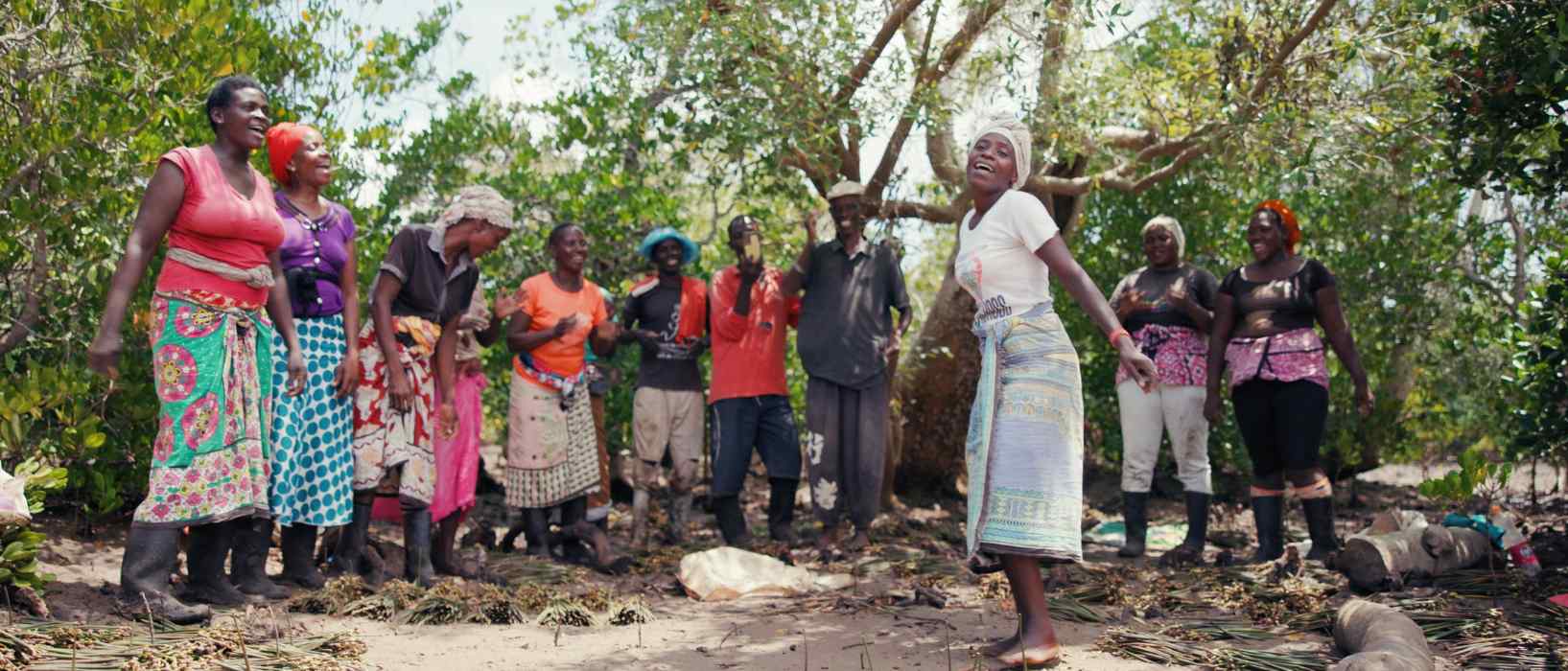
The Nature Repair Report for January 2026 marks a defining moment for the Play It Green community as we launch our first mangrove restoration site in Tanzania. This expansion builds directly on the momentum you have helped create across East Africa, West Africa, and the Pacific coast of Canada. A recent site visit, captured on video, brings this new project to life and signals a strong start to the year ahead.
Across every country we work in, the principle remains the same. Nature repair must restore ecosystems and improve lives together. This report brings those two outcomes into clear focus.

Launching Mangrove Restoration in Tanzania
Our new mangrove repair sites in Tanzania focus on restoring degraded coastal ecosystems that protect shorelines, support fisheries, and store significant amounts of blue carbon. Mangroves are among the most effective natural systems for coastal resilience, especially in regions exposed to rising sea levels and stronger storms.
The project has been designed with long-term community involvement at its core. Local teams are trained and employed to manage nurseries, planting, and ongoing care. Early activity has centred on seed collection, nursery preparation, and mapping priority restoration areas where ecological recovery can deliver the greatest benefit.
This launch also strengthens regional resilience. By expanding mangrove restoration across East Africa, we reduce reliance on a single location, share learning between sites, and build a stronger regional network of restoration expertise. For the Play It Green community, this means deeper impact delivered with greater confidence and transparency.
Get In TouchOngoing Mangrove and Social Impact Work in Kenya
In Kenya, our coastal mangrove projects in Kwale and Kilifi continue to deliver measurable environmental and social outcomes. In February 2025, we worked with our local planting partner to survey over 95% of team members, giving us a clearer view of how restoration is affecting daily life.
There are currently 486 people employed across the project. Women hold 53% of full-time roles and are increasingly represented in leadership, with women now leading nursery teams and overseeing planting operations. These roles provide reliable income and open pathways to long-term financial stability.
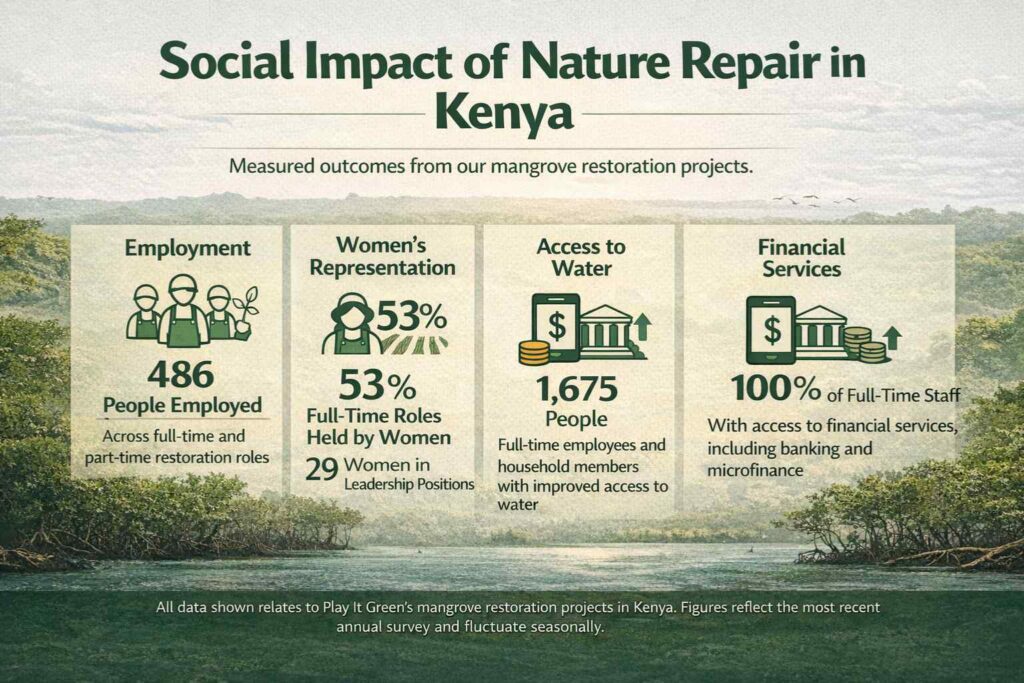
Improved access to essential services is a key outcome of stable employment. Around 1,675 people now benefit from improved water access, measured using international standards for safe collection times. Health insurance coverage extends to approximately 1,686 people across employees and their households, offering reassurance that was previously unavailable. All full-time workers also have access to financial services, enabling participation in microfinance groups, access to credit, and the ability to plan ahead.
Ecological monitoring reinforces these social gains. Bioacoustic data has recorded species such as the Eurasian Curlew, Osprey, and Black-crowned Night-Heron, confirming that restored mangroves are supporting birdlife, including threatened species. These findings show biodiversity recovery progressing alongside community wellbeing.
Agroforestry in Senegal and Kelp Restoration in Canada
In Senegal, our agroforestry work continues to restore degraded land while supporting farming families. Integrating trees into agricultural systems improves soil health, strengthens crop resilience, and creates additional income opportunities. This approach supports food security while reducing pressure on surrounding forests.
Off the Sunshine Coast of Canada, sea kelp restoration is rebuilding underwater forests in partnership with Indigenous communities. Kelp plays a vital role in marine ecosystems, supporting biodiversity, improving water quality, and capturing carbon. Restoration here strengthens coastal food webs while respecting cultural knowledge and stewardship.
Together, these projects represent a balanced portfolio of land and marine restoration across continents and ecosystems.

Nature Repair Report for January 2026: Wrap Up
With your support, Play It Green has now planted well over one million trees, mangroves, and kelp. Our next goal is clear. Another million nature-based solutions within the next twelve months. This ambition is grounded in experience, strong partnerships, and robust data.
Each project is monitored and reviewed over time. Social data helps us understand how lives are changing. Ecological data show how habitats respond and recover. Transparency remains central, so the Play It Green community can see real outcomes rather than promises.
As this Nature Repair Report for January 2026 shows, the year begins with momentum, expansion, and purpose. Thank you for continuing to help repair ecosystems, support communities, and prove that nature repair can scale with integrity and care.

If you enjoyed this Nature Repair Report for January 2026, why not become part of a community creating positive change by partnering with Play It Green?
We help you reduce your footprint, repair the planet, and regive to social causes that matter, all through simple, measurable actions that fit your business.
Modern employees, consumers, and investors want to see impact, not promises. With Play It Green, your sustainability journey becomes visible, credible, and rewarding.
Join us today and turn good intentions into lasting results.