
Nature Repair Report July 2026: Introduction
The Nature Repair Report July 2026 looks at the water connection running through land, coast, sea and people. Water rarely gets top billing in nature repair, yet it shapes soil health, food systems, coastal protection, marine habitats and daily life for local communities.
At Play It Green, the community helps fund verified nature repair that reaches far beyond planting numbers. This month, we are looking at water as the thread connecting work across Senegal, Kenya, Tanzania and Canada, with the latest available 2025 social impact data included as a snapshot until the updated 2026 figures arrive.
This month, the total number of nature-based solutions planted with the support of our amazing community (at the time of publication) stands at an incredible 1,189,853 trees, mangroves and sea kelp! Thank you!

Water and Land
Healthy land needs water, and healthy soil helps hold it. In Senegal, agroforestry brings trees back into farming areas through mixed planting, giving soil, crops and local food systems a better chance to recover together.
For local families, that recovery can support stronger growing conditions, more food choices and more varied income routes. The benefits build over time, so soil recovery needs care, patience and local involvement rather than a quick planting claim.
In the Nature Repair Report July 2026, we can see that land repair is closely linked to water. Stronger soils can help farming areas cope better with dry spells, heavy rain and changing local conditions, which makes agroforestry part of a wider resilience story.
Water and Coastlines
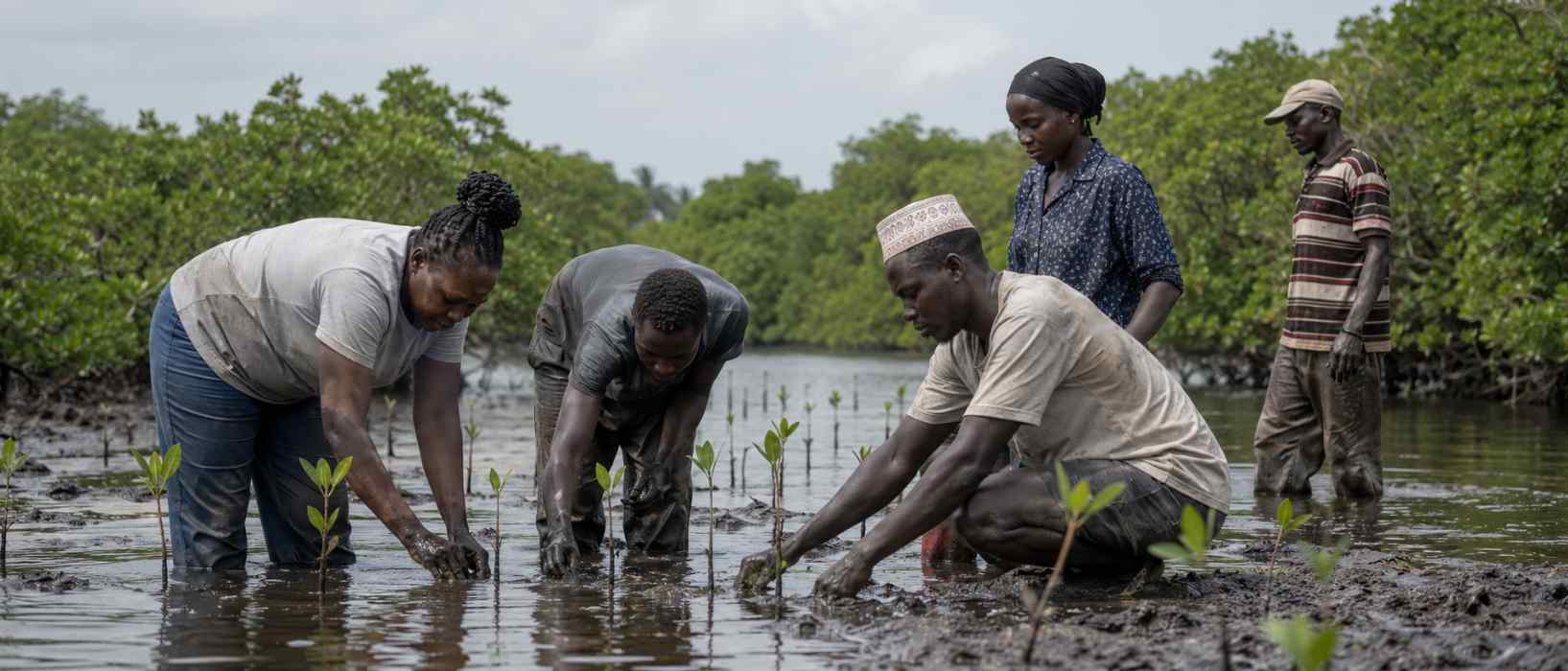
Mangroves grow where land and water meet, which makes them one of nature’s most useful coastal systems. They help protect shorelines, trap sediment, support fish nurseries and store carbon in rich coastal soils, creating benefits that reach both people and wildlife.
Across Kenya and Tanzania, mangrove restoration helps repair habitats that local communities rely on for food, work and protection. Healthier mangroves can support fisheries, reduce erosion and create more stable conditions for people living close to the shoreline.
The latest available social impact data we have for the Nature Repair Report July 2026 is from 2025, and we are waiting for the updated 2026 figures. In Kenya, the data showed 486 employees involved in restoration work, with women making up 53% of full-time staff and 29 women in leadership roles.
In Tanzania, the data showed 205 employees involved in restoration work, with women making up 64% of full-time staff and eight women in leadership roles. These figures shift with planting seasons, but they give a useful snapshot of how restoration work connects coastal repair with employment and opportunity.
Water and Oceans
The ocean belongs in every serious nature-repair conversation, since it regulates the climate, supports food systems, and holds immense biodiversity value. In Canada, kelp restoration helps rebuild underwater habitats, supports marine life and brings blue nature repair into the wider story.
Kelp forests provide shelter for marine species and support coastal waters, which means ocean repair should sit beside land and coastal restoration. For businesses seeking credible sustainability action, tree planting has a role, yet nature repair should never be reduced to one headline number.
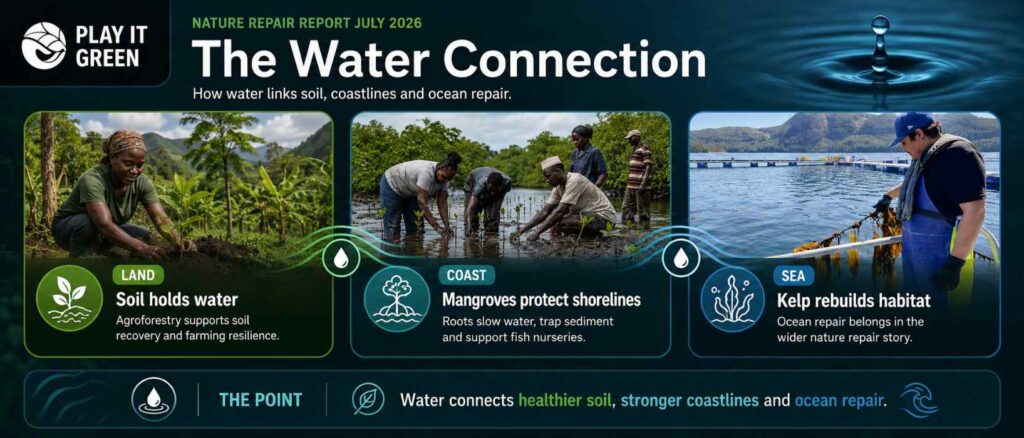
The Nature Repair Report July 2026 shows how water is the link between land-based repair, coastal restoration and ocean recovery. Each ecosystem adds something different, and each one needs care, checked data and long-term thinking.
There is a useful test: Could you explain your climate claim to a customer, investor or team member without hoping they move on quickly? If not, tighten the claim.
Get In TouchWater and People
Water access is one of the clearest ways nature repair connects to daily life. In Tanzania, the 2025 data showed 230 full-time employees and households with access to water, based on the latest available social impact reporting.
The Tanzania data was gathered in 2025 through a household survey developed with our planting partner in East Africa. More than 95% of full-time and part-time team members contributed, giving a stronger picture of the socioeconomic conditions linked to the restoration sites.
Access to health insurance reached 198 full-time employees and households in the 2025 Tanzania data, giving families greater stability and peace of mind. Sixteen full-time employees had access to financial services, helping them join microfinance groups, access credit and plan more confidently for the future.
For many workers across restoration sites, steady employment can replace temporary jobs with greater stability. That can create room for healthcare access, savings, loans, small businesses and stronger family planning.

Nature Repair Report July 2026: Wrap-Up
The Nature Repair Report July 2026 shows water running through soil, food, coastlines, oceans, employment, health and household security. It connects environmental repair with the lives of people working closest to the projects.
The Play It Green community helps make this work possible through steady monthly action. Every member supports verified repair that connects ecosystems with people, and the 2025 social impact data from Kenya and Tanzania gives a useful snapshot as we wait for the updated 2026 figures.
If you enjoyed the Nature Repair Report July 2026 article, why not become part of a community creating positive change by partnering with Play It Green and receive these tips weekly straight to your inbox? All whilst planting trees, mangroves and sea kelp and supporting a charity of your choice!
We help you reduce your footprint, repair the planet, and regive to social causes that matter, all through simple, measurable actions that aren’t hard to do.

Modern employees, consumers, and investors want to see impact, not promises. With Play It Green, your sustainability journey becomes visible, credible, and rewarding.
Join us today and turn good intentions into lasting results.
Sign Up