
Nature Repair Report: Introduction
At Play It Green, we’re excited to share a landmark moment in our mission to repair the planet. With your support, we’ve planted 390,415 mangrove trees in Madagascar and a further 123,632 mangroves in Kenya. These projects sit alongside our ongoing agroforestry work in Senegal and kelp restoration off the coast of Canada, forming a growing global network of nature repair.
This milestone is about much more than numbers. It represents resilience, community empowerment, and a commitment to doing things properly. Every mangrove planted strengthens a coastline, stores carbon, supports marine life, and provides jobs for local people. And for us, that’s what real impact looks like.

From Madagascar to Kenya: Scaling Up for Coastal Resilience
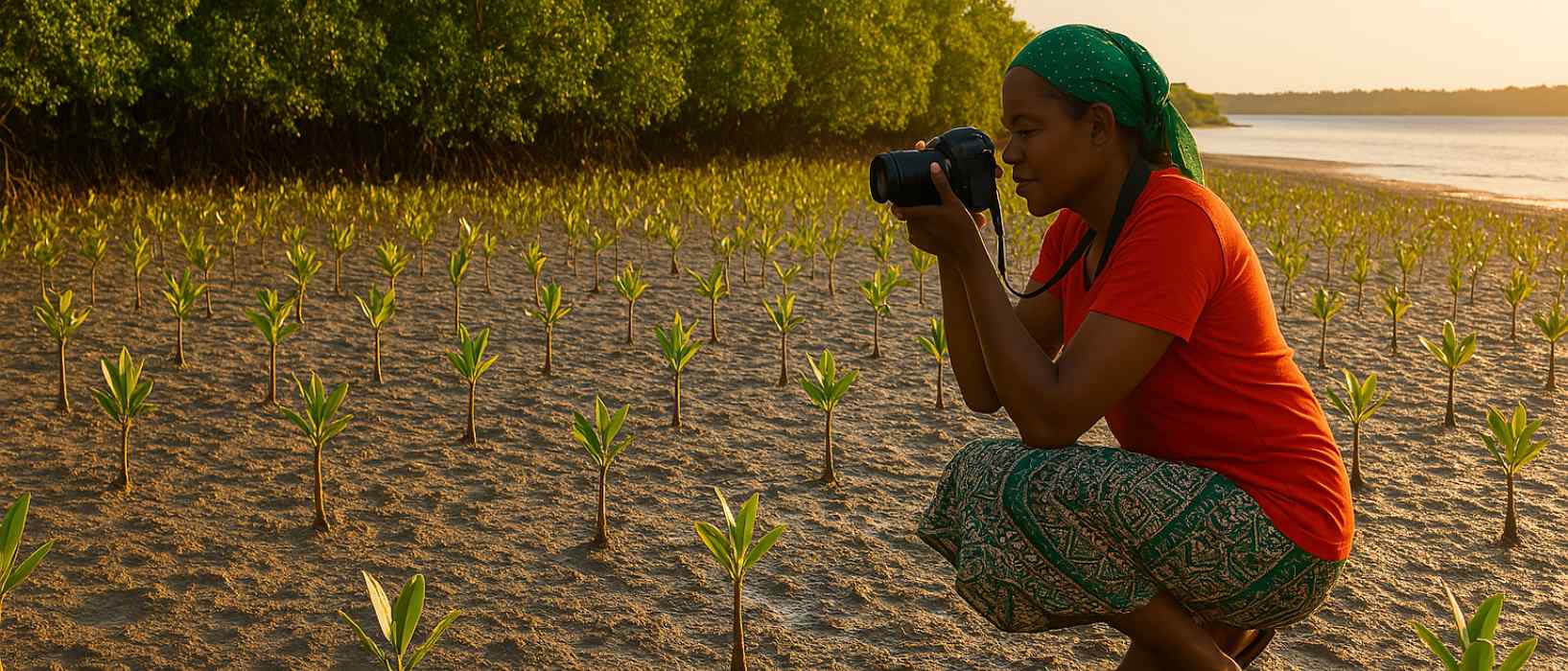
Our mangrove restoration journey began on the shores of Madagascar. Over time, we planted more than 390,000 mangroves, working alongside local communities to restore degraded estuaries. The success of that work gave us the confidence to scale our efforts into Kenya, where over 123,000 mangroves have now been planted across the counties of Kwale and Kilifi.

These trees do more than green the landscape. Their complex root systems act as natural sea walls, shielding coastlines from storms and erosion. They stabilise soil, reduce flooding, and provide essential breeding grounds for countless species of fish, crabs, and birds. Local fisheries benefit, food security improves, and biodiversity begins to return.
But what makes this especially powerful is that every tree planted has been part of a local solution. Jobs have been created. Women have been empowered. Coastal communities have become partners in environmental restoration, not just beneficiaries. Our projects are about working with nature and people, hand in hand.
Ask A QuestionPlanting Is Only the Start: Why Monitoring Matters
It’s easy to plant a tree and move on. But we believe in doing it properly. That’s why we’re so excited that a full-scale monitoring programme has launched at the project sites in Kenya. We’re not just tracking survival rates or tree height. We’re listening to the land.
The strategy focuses on using birds as indicators of ecosystem health. Their presence, calls, and behaviour tell us a huge amount about the recovery of the area. If diverse birdlife is returning, we know the ecosystem is on the mend. If it’s silent, we know something’s missing.

The first set of recordings are already collected. In them, you can hear a growing chorus of returning birds, some of which haven’t been heard in the area for years. Their calls are a beautiful, real-time sign that the work we’re doing is restoring more than just greenery. It’s bringing life back to where it was lost.
This approach also allows us to adapt. If a species isn’t returning, we can examine why and adjust our planting methods or support structures. It’s a loop of listening, learning, and improving. And it’s all part of our wider commitment to transparency and proper stewardship.

Restoration Beyond the Forest Edge
While mangroves are a major part of our impact, they’re not the whole story. In Senegal, our agroforestry projects are reviving degraded farmland through the planting of fruit trees. These trees not only restore soil health and increase biodiversity but also provide income and nutrition for farming families. It’s practical, long-term change that helps communities thrive.
Further north, beneath the chilly waters off the coast of Canada, we’re restoring kelp forests in partnership with Indigenous communities. These underwater forests are vital ecosystems. They provide shelter for marine life, act as powerful carbon sinks, and have deep cultural importance. By planting kelp sporophytes and nurturing new growth, we’re helping to regenerate coastal life above and below the waterline.
Each project has its own flavour, but all share the same principle. Nature repair must benefit both people and planet. It should be thoughtful, community-driven, and built to last.

Nature Repair: Wrap-Up
This Nature Repair Report celebrates more than the planting of half a million mangroves. It’s about the return of birdsong. The rebirth of marine nurseries. The creation of jobs. And the idea that healing the planet is a shared responsibility.
The Play It Green community continues to show what’s possible when we come together. From Madagascar’s estuaries to the Kenyan coast, from Senegal’s farms to Canada’s kelp beds, your support is making a real difference. And the best part? We’re only getting started.
By planting the right trees in the right places and backing it up with proper monitoring, we’re showing that sustainability is more than good intentions. It’s smart, science-backed, and community-led. And we couldn’t be prouder.
Let’s keep this going. Let’s keep rebalancing the world.
Repair the Planet with Play It Green
By partnering with Play It Green, you can integrate sustainable action, education, tree planting, mangrove restoration, seaforestation and social impact into your life and business operations. Whether it’s adding nature repair to your sales process, engaging employees, or strengthening your environmental credentials, the tools and support are there to make it simple.
Every action contributes to restoring the planet.
Sign Up