
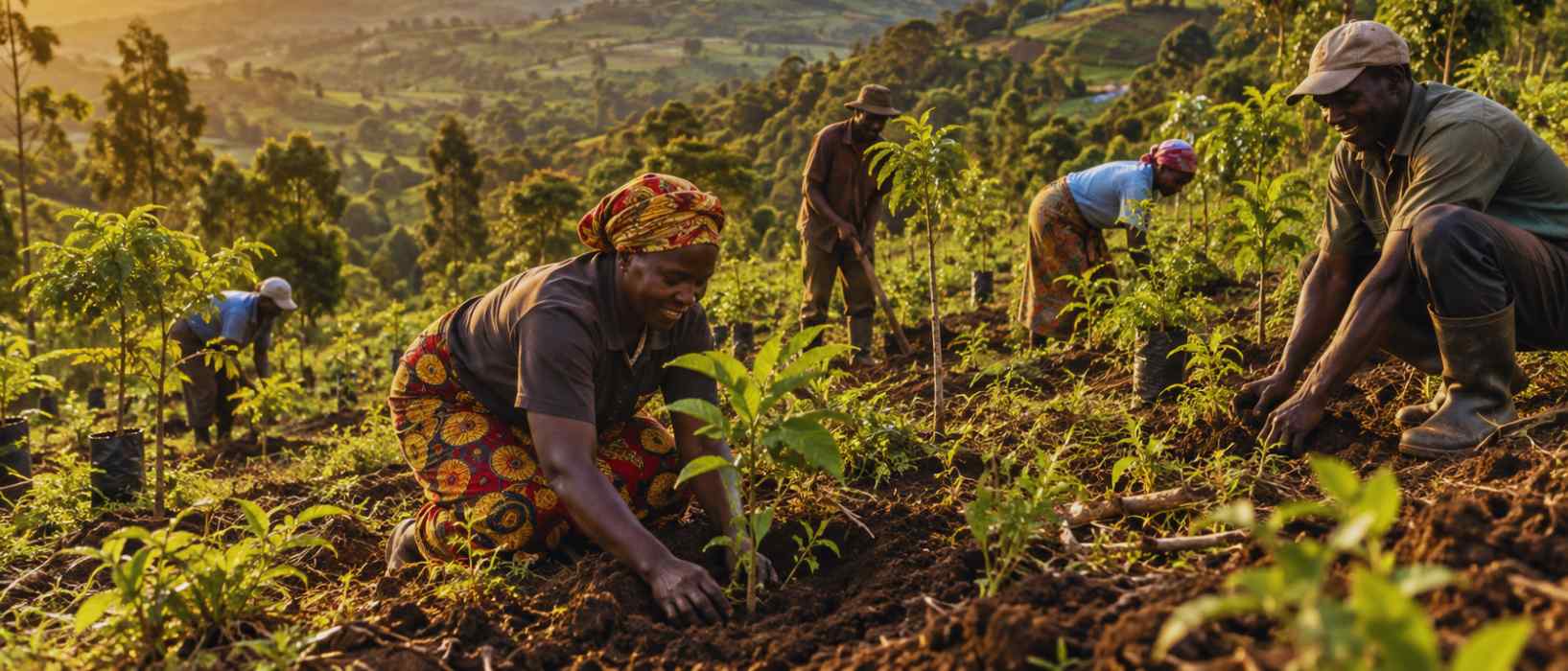
Nature Repair Report September 2026: Introduction
In recent months, we have explored mangroves, agroforestry, monitoring and verification. For the Nature Repair Report September 2026, we are focusing on another part of the picture, because successful restoration also depends on the people living alongside these landscapes and whether they can help that recovery last.
The Play It Green community has now funded more than 1.2 million trees through verified nature repair projects across a growing range of landscapes and ecosystems. Each Nature Repair Report looks beyond that total to understand what the work involves on the ground and what it can achieve over time.
This month takes us to Kenya and to the story of Solomon Serem. More than 20 years ago, Solomon watched a local hillside being stripped for charcoal. Today, he chairs the community group helping to restore that landscape, with a clear ambition that the benefits should be shared across the community rather than concentrated within one household. His story offers a useful way into a much bigger question: what helps restoration endure once the planting has been done?

A Landscape Shaped by Memory and Change
Solomon’s connection with the area stretches back long before restoration began. He left school at 13 when his family could no longer afford the fees, although years later he returned to education and eventually earned both a theology diploma and a bachelor’s degree while raising four children. Today, he leads a community group involved in restoring a hillside he remembers losing trees to charcoal production more than two decades ago.
That local perspective adds something important. People who have lived beside a landscape for years understand how it has changed, how resources are used and which pressures remain. When they become involved in restoration, that knowledge becomes part of the recovery process.
Nature Repair Report September 2026: Why Local Ownership Matters
There is growing evidence that community involvement can influence long-term forest recovery. Research published in Nature Climate Change found that local participation and formal community management were linked with stronger outcomes across biodiversity, carbon and livelihoods. It does not predict what will happen at any one site, although it helps explain why local leadership deserves attention alongside planting and monitoring.
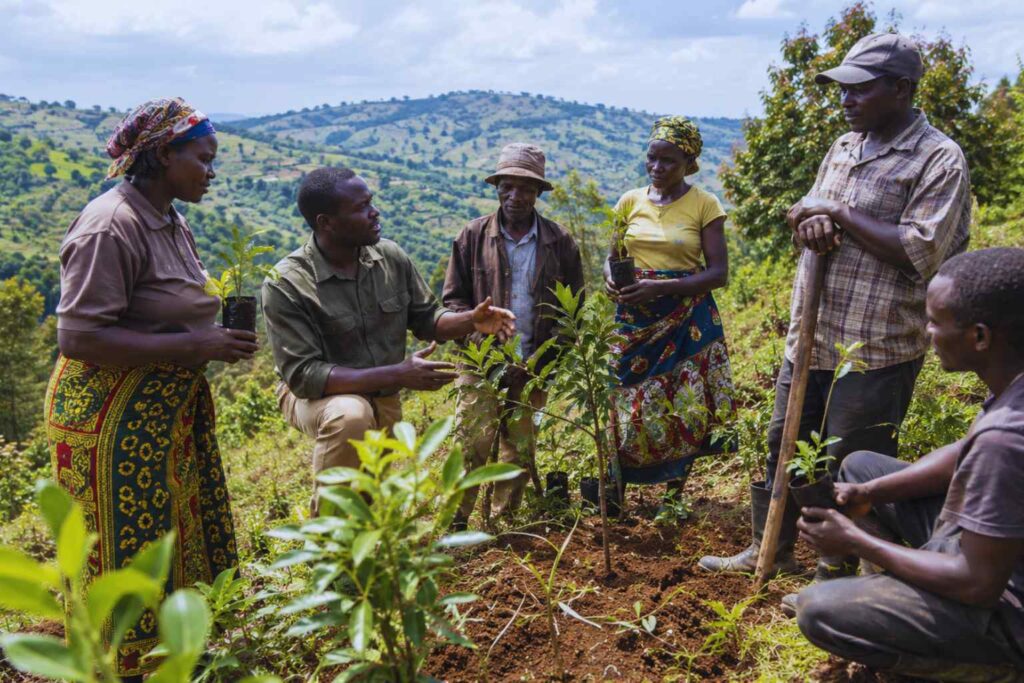
A forest takes years to recover, and the ecological benefits people hope for do not appear overnight. Because of that, restoration needs more than a successful planting day. It needs people nearby who have a reason to care what happens next, who understand the land and who can help protect what is being restored during the long period between one monitoring visit and the next.
Kenya is recognising that principle too. Through the AFR100 programme, support has expanded for locally led restoration that connects environmental recovery with livelihoods and land management. That wider context places Solomon’s story within a broader shift towards community-led restoration.
Get In TouchRestoration Has to Work for People as Well as Places
Community ownership becomes harder when protecting nature conflicts with the need to earn an income. Charcoal production, timber harvesting and other pressures are often tied to economic reality, so lasting restoration has to consider livelihoods as well as ecology.
That principle sits within the work delivered by EarthLungs, our restoration partner in Kenya. Its wider Kenya terrestrial restoration programme connects forest recovery with food security, natural regeneration and income opportunities, while communities can also benefit from paid work linked to restoration and care for the land.
The social outcomes need measuring too, because employment alone does not prove that a community is becoming more secure. veritree’s wider social impact monitoring tracks employment, water access, healthcare, financial services and women’s participation, helping build a fuller picture over time.
Looking Beyond the Planting Day
For businesses supporting nature repair, stories like Solomon’s should sit alongside verification. Human experience helps explain what restoration means locally, while field data and transparent reporting show what is happening to the landscape.
Across our Kenya work, we combine community-led restoration with project verification, and we include aims such as natural regeneration, food security and income creation alongside forest recovery. That kind of transparency strengthens reporting rather than weakening it.

Nature Repair Report September 2026: Wrap-Up
The Nature Repair Report September 2026 shows how field teams, monitoring, community knowledge and local involvement can work together. When communities help shape decisions, earn meaningful livelihoods and see value returning to the land around them, restoration has a stronger chance of lasting.
For Play It Green members, supporting verified nature repair means contributing to work that combines environmental recovery with people and evidence. More than 20 years after Solomon watched trees disappear from the hillside, he is now helping his community put them back. The real measure of success will come over the years ahead, as the forest develops and the benefits for people and nature become clearer.
Create Commercial Value with Play It Green
Play It Green helps businesses make sustainability practical, measurable and commercially sensible.
Our members learn through simple weekly content like this Nature Repair Report September 2026, reduce their footprint with support and expert signposting, repair nature across land, coast and sea, and create social impact through our 10% revenue giveback to good causes.

That gives your business credible action you can share with employees, customers and other stakeholders, backed by transparent reporting and measurable impact.
If you want to cut costs, reduce risk, attract great people and build stronger customer loyalty through sustainability, including measurement and reduction, nature repair and social impact, speak to Play It Green.
Find Out More