

Reef-Friendly Sunscreen: Introduction
Reef-Friendly Sunscreen is a smarter summer swap for anyone heading to the beach, pool, park, or garden chair with misplaced faith in British weather. Sunscreen protects our skin, which must always come first. The issue is that some formulas can wash off into rivers, seas and coral reef areas, adding pressure to already stressed marine life.
The wording matters too, as “Reef-friendly” should never be treated like a magic badge, as no sunscreen leaves zero trace. However, better choices still exist.
This week, we are looking at how sunscreen became normal, where the environmental concern sits, what to check before buying, and we bring you three brands taking a more honest approach.

A Brief History of Sunscreen
Humans have protected their skin from the sun for thousands of years, long before factor 30 became a suitcase staple. Ancient Egyptians used plant extracts, oils and rice bran to reduce sun exposure. In other cultures, clay, mud, clothing and shade were used as practical barriers.

Modern sunscreen began to take shape in the twentieth century. In the 1930s and 1940s, chemists developed early commercial products for mountaineers, soldiers and outdoor workers. These formulas were basic by today’s standards, but they marked a shift from shade and clothing to bottled sun protection.
The SPF rating system arrived later, giving shoppers a clearer way to compare products. By the late twentieth century, sunscreen had become a mainstream holiday item, sold in lotions, sprays, sticks and creams.
As travel grew, sunscreen followed people into oceans, lakes and coastal resorts. The product solved one serious problem, skin protection, but created new questions around ingredients, water pollution and packaging, which is where Reef-Friendly Sunscreen enters the conversation.
Get In TouchThe Environmental Impact of Non Reef-Friendly Sunscreen
Non reef-friendly sunscreen can affect marine life through wash-off, wastewater and packaging, especially in busy coastal areas where tourism concentrates product use. Some chemical UV filters, including oxybenzone and octinoxate, have been linked with harm to corals and other aquatic life. Hawaii banned the sale of sunscreens containing those two ingredients from 1 January 2021, except where prescribed by a licensed healthcare provider.

The scale becomes more concerning when set against wider reef pressure. The International Coral Reef Initiative cites estimates that 6,000 to 14,000 tonnes of sunscreen lotion may enter coral reef areas each year. Sunscreen is not the main threat to reefs, with warming seas, acidification, pollution, overfishing and coastal development causing far greater damage. Even so, avoidable chemical pressure still matters, particularly around popular swimming and snorkelling sites.
Packaging adds another problem. Many sunscreens use mixed plastic tubes, caps, pumps or aerosol cans that are difficult to recycle. Sprays can waste product too, with part of the formula landing on towels, sand or air rather than skin.
Reef-Friendly Sunscreen is not perfect, but better filters, clearer claims and lower-waste packaging can reduce avoidable harm.
What to Look For in Reef-Friendly Sunscreen
Choosing Reef-Friendly Sunscreen should begin with protection, then move into impact claims and packaging. You still need broad-spectrum UVA and UVB cover, a suitable SPF for your skin, and clear reapplication guidance. A product with greener packaging is not a better choice if it leaves you poorly protected.
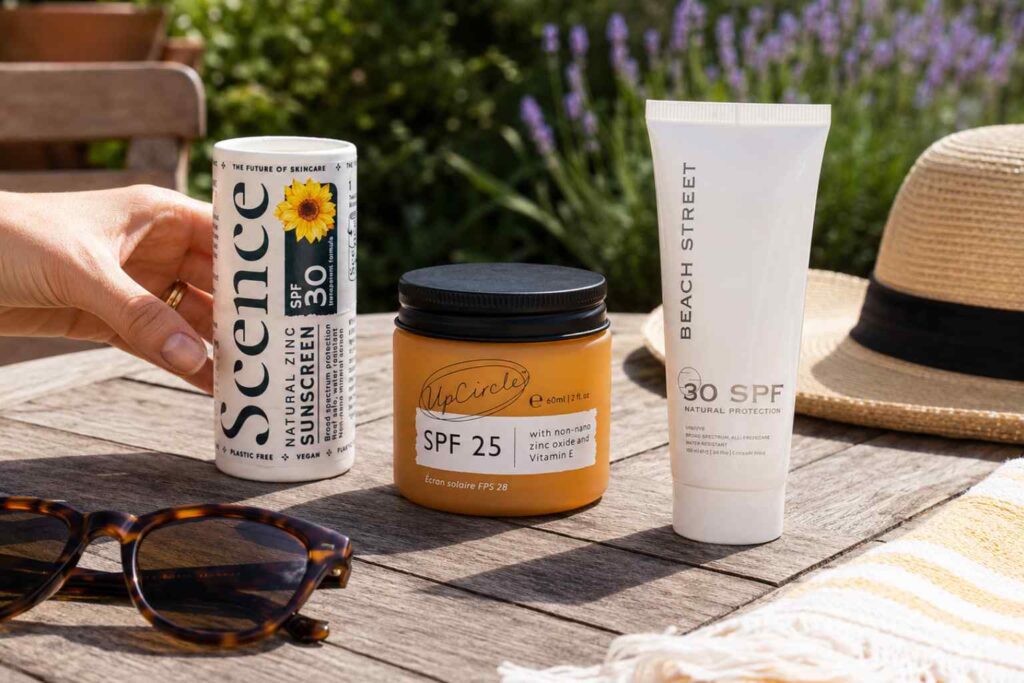
Mineral filters such as non-nano zinc oxide and titanium dioxide are usually a stronger starting point for beach use. They sit on the skin and reflect UV rays, rather than relying on chemical absorption. For swimming, snorkelling or coastal holidays, avoid oxybenzone and octinoxate, since both have been restricted in some reef-sensitive places.
Packaging deserves the same level of scrutiny as the formula. Aluminium tins, glass jars, cardboard tubes and plastic-free sticks can reduce waste compared with mixed plastic tubes, pumps or aerosol sprays. Creams and balms can make application more controlled, so less product drifts into the air or lands on sand.
The best Reef-Friendly Sunscreen brands explain their ingredients, disposal routes and claim limits in plain language. Be wary of labels that sound absolute, especially where the brand gives no detail behind the wording. Reef-friendly should mean a better-informed choice, not a perfect promise.

Three Favourite Reef-Friendly Sunscreen Brands
BEACH-STREET

BEACH-STREET is an ocean-focused skincare brand creating high-performance, ReefTox-tested sun care. Its mineral SPF formulas combine non-nano zinc oxide and titanium dioxide with biomarine actives to protect and care for the skin, without leaving a white cast. The brand is vegan, cruelty-free and free from microplastics, with recyclable aluminium packaging, and donates 1% of gross sales to Coral Gardeners through the We The Reef programme. Honest, effective and ocean-conscious sun protection.
Use voucher code PLAYITGREEN10 for 10% off your first order until July 31st.
Website: https://beach-street.com/en-eu
UpCircle
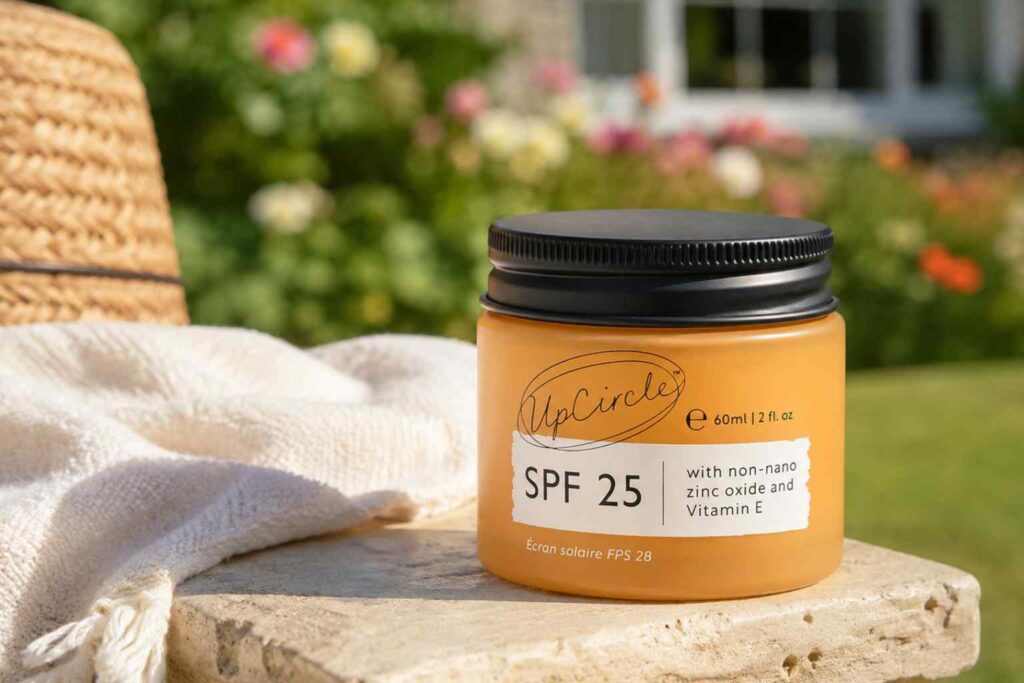
UpCircle is best suited to readers looking for a face-focused, Reef-Friendly Sunscreen from a highly credible circular beauty brand. Their SPF 25 Mineral Sunscreen uses non-nano zinc oxide and upcycled raspberry seed oil. The business is a certified B Corp and certified Plastic Negative, with a wider model built around rescued ingredients, recyclable packaging and refill thinking. It is not the cheapest option, but the ethics are stronger than most.
Use voucher code GREENCIRLCE15 for 15% off your first order. Voucher code lasts 30 days from publication.
Website: https://upcirclebeauty.com
Scence
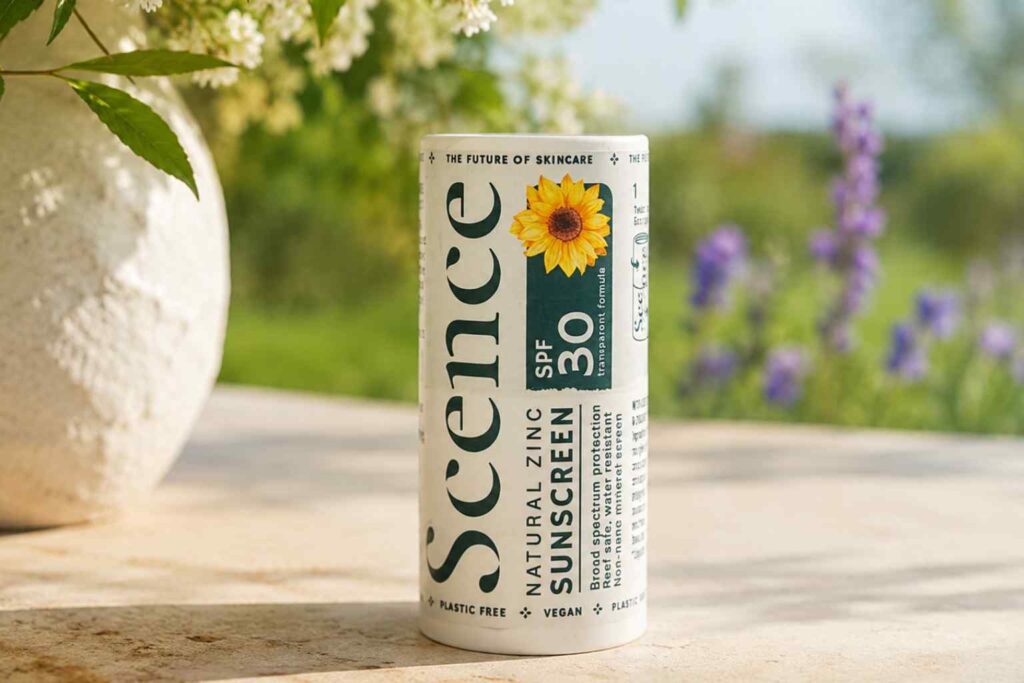
Scence is a strong UK choice for Reef-Friendly Sunscreen. The brand makes its skincare in Falmouth, Cornwall, and focuses on vegan, plastic-free products with paper-based packaging. Its Natural Zinc Sunscreen SPF30 uses a non-nano mineral formula and comes in a plastic-free tube, making it a good fit for readers who want a practical beach option without a standard plastic bottle. The brand feels clear, simple and refreshingly unshowy.
Website: https://www.scence.co.uk
Reef-Friendly Sunscreen: Wrap-Up
Reef-Friendly Sunscreen should be treated as a careful improvement, rather than a perfect answer. Skin protection still comes first, so choose a suitable SPF, apply enough, reapply properly and use shade, hats and UV clothing when the sun is strong.
Better choices come from mineral filters where suitable, fewer concerning ingredients, lower-waste packaging and brands that explain their claims clearly. No sunscreen can repair the ocean on its own, yet more careful buying decisions can reduce avoidable harm.
At Play It Green, we believe everyday changes work when they are honest, realistic and easy to repeat. That is progress worth packing in your beach bag.
If you enjoyed this tip on the Reef-Friendly Sunscreen, why not become part of a community creating positive change every day by joining Play It Green?
We help you reduce your footprint, repair the planet, and regive to social causes that matter, all through simple, measurable actions that fit your business.

Everyone wants to see impact, not promises. With Play It Green, your sustainability journey becomes visible, credible, and rewarding.
Join us today and turn good intentions into lasting results.
Sign Up