

Sustainability News for March 3rd: Introduction
Welcome to this week’s Sustainability News for March 3rd, where we explore groundbreaking solutions driving a more sustainable future.
From invisible solar panels that could turn skyscrapers into energy generators to offshore wind growth pushing global clean energy goals forward, and fashion giants tackling footwear waste, these stories prove that innovation is key to sustainability.
At Play It Green, we love highlighting these successes because every step forward inspires action. Let’s get into it!

Invisible Solar Panels – A Clear Path to Renewable Energy
Scientists at UNIST in South Korea have unveiled transparent solar panels, a breakthrough that could turn windows, skyscrapers, and even phone screens into energy sources. Unlike traditional solar cells, these panels capture ultraviolet and infrared light while remaining completely see-through, maintaining aesthetics while generating power.
With a 15.8% power conversion efficiency, these panels were successfully tested to power a smartphone using only sunlight. The technology works by placing electrical contacts on the back of the cell, eliminating visible wiring. A modular design also allows these panels to function without gaps, ensuring seamless integration into urban environments.

One of the biggest limitations of solar expansion has been space constraints. Roofs and open land are finite, but with transparent panels, entire glass-covered buildings could generate electricity. Bus stops, train stations, and even car windows could contribute to clean energy without altering design.
Challenges remain—efficiency is still lower than traditional solar, and large-scale production remains costly. But with continued development, transparent solar panels could reshape how cities harness energy, offering a sustainable and unobtrusive solution to global power needs.
A future where every glass surface produces electricity is no longer just a concept and might be just round the corner!
Get In TouchOffshore Wind Power Soars 15% in One Year
Global offshore wind capacity has surged 15% in the past year, reaching 80.9GW of operational power, according to RenewableUK’s EnergyPulse report. An additional 22.7GW is under construction, showing that offshore wind remains a key driver of the clean energy transition.
China continues to lead the expansion, adding 6.9GW in the past 12 months, while the Netherlands contributed 1.7GW. The UK remains a global offshore wind leader, with 96GW in development, maintaining its position as the second-largest pipeline worldwide.
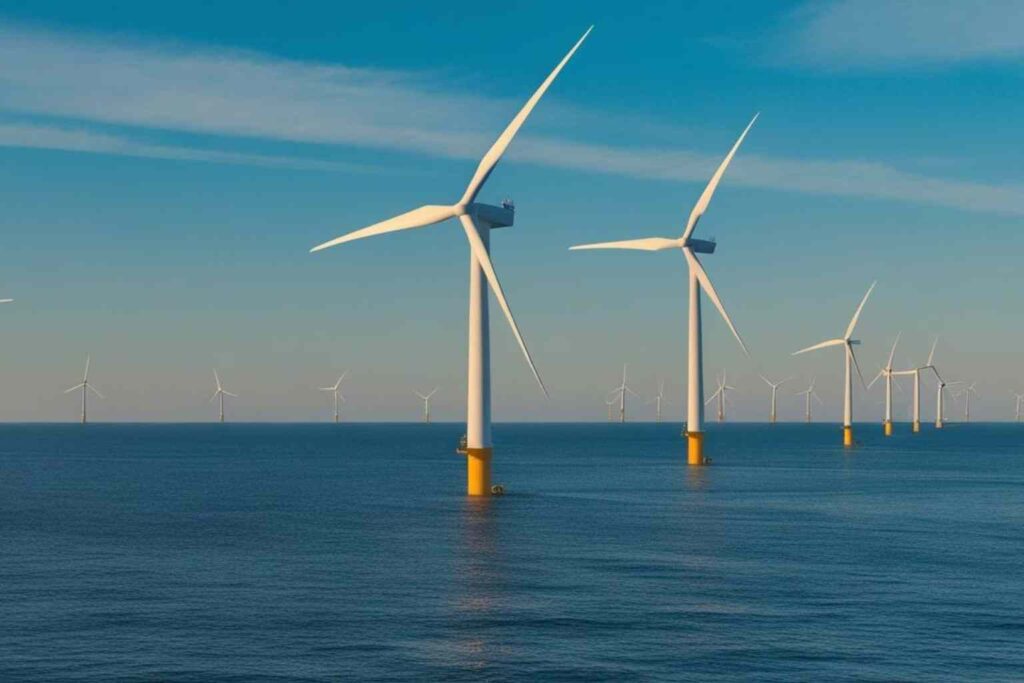
Offshore wind has faced rising material costs and supply chain disruptions, but new reports suggest that the cost of wind energy will drop by 4% in 2025, thanks to technological advancements and economies of scale. However, industry experts warn that trade restrictions and tariffs on wind components could impact global deployment, particularly in non-Chinese markets.
Despite these hurdles, the offshore wind sector is set to continue rapid growth, with over 1,500 projects in the pipeline. More nations are investing in renewable infrastructure, ensuring offshore wind will play a vital role in reducing emissions and transitioning away from fossil fuels in the coming decade.

Fashion Giants Join Forces to Fight Footwear Waste
The footwear industry produces an astonishing 24 billion pairs of shoes annually, yet 90% end up in landfills The footwear industry produces an astonishing 24 billion pairs of shoes annually, yet 90% end up in landfills or incinerated due to complex material compositions that make recycling nearly impossible. Now, 13 global fashion brands—including Dr Martens, Adidas, and Puma—have launched a new initiative to change that.

The project, called ‘Closing the Footwear Loop’, is led by Fashion for Good and aims to create a circular economy for shoes by:
- Mapping Europe’s footwear waste streams to identify disposal patterns and recycling challenges.
- Developing a roadmap for sustainable shoe design, focusing on durability, recyclability, and material selection.
- Testing innovative recycling solutions, with new sustainable materials expected to launch by 2026.
The biggest problem with footwear recycling is that most shoes contain over 60 different materials, making them difficult to break down. The initiative hopes to redesign footwear from the ground up, using fewer, more sustainable materials that can be easily separated and reused.
If successful, this could set a new industry standard, ensuring that future shoes are designed with recyclability in mind. This is one of the most ambitious sustainability efforts in fashion history, proving that collaboration is key to solving global waste problems.

Sustainability News for March 3rd: Wrap-Up
Sustainability isn’t just about big ideas—it’s about real-world solutions that make a difference.
This week, invisible solar panels could turn skyscrapers into power plants, offshore wind is expanding at record speed, and fashion brands are tackling footwear waste head-on. These breakthroughs prove that when innovation meets commitment, progress follows.
At Play It Green, we celebrate the solutions that bring sustainability to life. Every action, big or small, moves us toward a greener future. Let’s keep pushing forward—together.
Not a member yet?
Sign UpJoin our community and learn how to be more sustainable. We’ll also plant a mix of 10 trees, mangroves and sea kelp monthly for you. All for £5 per person per month! Plus we give 10% back to a charity of your choice. So what are you waiting for? Time to act and be the change!
Want more info before deciding? Click here.