

Sustainability Terms I Edition: Introduction
Sustainability Terms I Edition continues our monthly guide to the language increasingly appearing in tenders, supplier questionnaires and business decisions. Some expressions sound complicated, although understanding them can reveal opportunities to reduce costs, manage risk and improve environmental and social performance.
This month, we explore eight terms beginning with I, covering everything from carbon pricing and resource efficiency to protecting ecosystems and respecting Indigenous communities.
Whether you run a small business or manage sustainability for a larger organisation, these explanations will help you understand the terminology and recognise where the ideas could benefit your business.
Impact Materiality

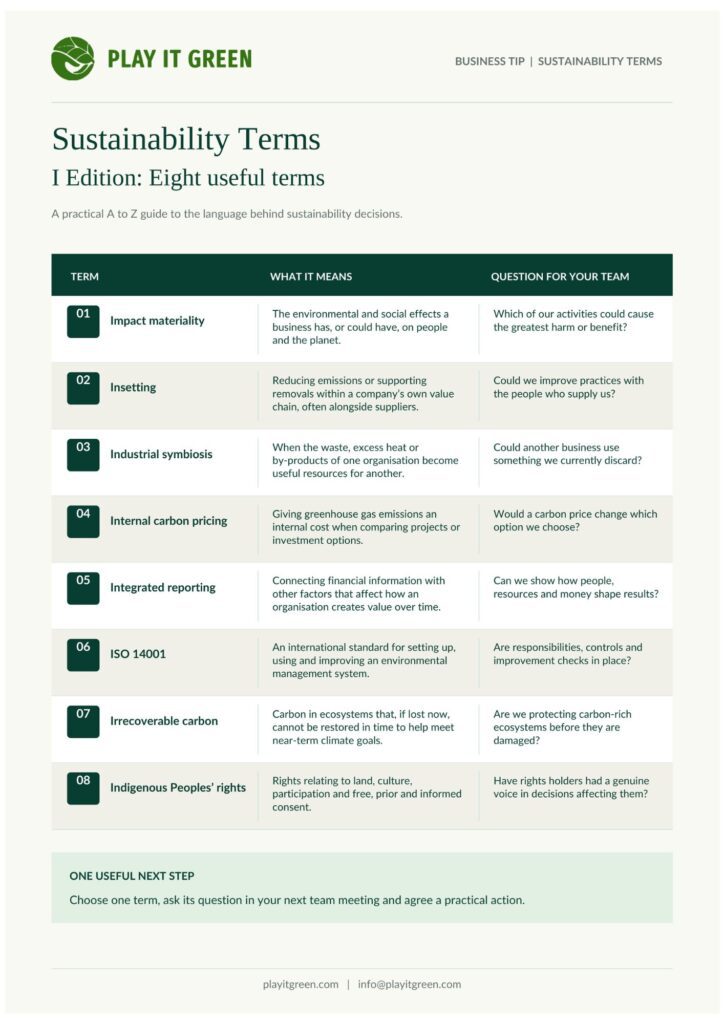
The first term for sustainability terms I edition, is Impact materiality, which identifies the most significant effects a business has, or could have, on people, the environment and the economy. These impacts can be positive or negative and may arise directly or through suppliers and other business relationships.
The concept forms part of the Global Reporting Initiative’s approach to sustainability reporting, helping organisations decide which environmental and social issues deserve the greatest attention. A hotel might focus on energy, water and working conditions, while a manufacturer could prioritise materials, pollution and supply-chain practices.
Smaller businesses can use the same approach without producing a formal report. Start by identifying where your activities have the greatest effects, then speak with employees and suppliers to understand potential improvements. This helps concentrate resources on meaningful action rather than trying to address every sustainability issue simultaneously.
Insetting

Our second term in Sustainability Terms I Edition is Insetting, which involves investing in climate and nature action within a company’s own value chain, often through projects involving its suppliers, agricultural producers or the landscapes it depends upon. Activities might include reducing emissions, restoring ecosystems or improving soil management.
The International Platform for Insetting supports this approach, connecting environmental improvements with the businesses and communities involved in production. A food manufacturer, for example, might help its farmers adopt practices that reduce fertiliser emissions while improving soil health and long-term productivity.
These partnerships can strengthen supply-chain resilience and create shared benefits, although reliable measurement remains essential. Companies must demonstrate genuine emissions reductions or removals, understand how results can be reported and avoid double claiming. Clear agreements between participating organisations can make insetting a valuable part of a wider sustainability strategy.
Industrial Symbiosis
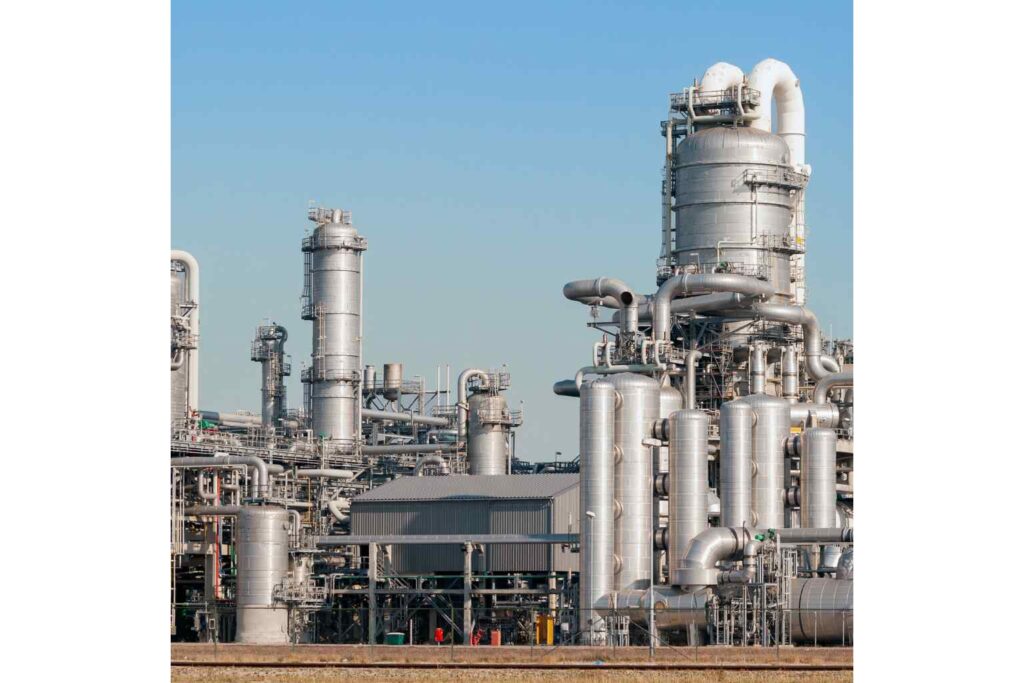
The third term for Sustainability Terms I edition is Industrial symbiosis, which happens when businesses collaborate to put resources that would otherwise be wasted to productive use. Materials, water, energy, or manufacturing by-products from one organisation can become valuable inputs for another, supporting a more circular economy.
Imagine a food producer supplying surplus organic materials to a nearby agricultural operation, or a factory sharing waste heat with another business. These arrangements can reduce disposal costs, lower demand for new materials and create additional commercial opportunities. UK government research also highlights the potential benefits and practical barriers to successful collaboration.
Businesses can explore opportunities by reviewing what they regularly discard, identifying unused resources and speaking with neighbouring organisations. Quality requirements, transport costs and reliable supply all need consideration, but sharing information can be the beginning of a commercially worthwhile partnership.
Internal Carbon Pricing

Next in Sustainability Terms I Edition is Internal carbon pricing, which gives greenhouse gas emissions a financial value when businesses assess investments, purchasing decisions and operational changes. It helps decision-makers understand potential climate-related costs alongside more familiar measures such as energy spending and maintenance.
A shadow carbon price adds an assumed emissions cost to investment calculations, while an internal carbon fee creates an actual charge within the organisation. When comparing two heating systems, for example, including the cost of emissions may reveal that the more efficient option offers better long-term value.
Smaller businesses can apply this thinking when considering vehicles, equipment or property improvements. Estimating the emissions associated with different options, then applying a consistent carbon price, provides another useful measure alongside purchase and running costs. The approach can help identify investments that reduce environmental impacts and future financial exposure.
Integrated Reporting

Integrated reporting follows in Sustainability Terms I Edition, and it connects financial performance with the wider resources and relationships that support a company’s long-term success. These include employees, knowledge, infrastructure, suppliers, customers and natural resources, alongside the financial information already used to measure business performance.
The Integrated Reporting Framework encourages organisations to explain how their strategy, governance and performance influence value creation over time. This can reveal connections between issues that are often considered separately, such as employee retention, energy efficiency, supplier reliability and profitability.
Smaller organisations can benefit without producing a complex corporate report. Bringing financial, environmental and operational information into the same management discussions helps leaders understand how different decisions affect one another. This broader perspective can support better investment choices, stronger risk management and a clearer picture of long-term business performance.
ISO 14001

ISO 14001 is an internationally recognised standard for environmental management systems, giving organisations a structured approach to identifying environmental impacts, setting objectives and improving performance. The latest version, ISO 14001:2026, was published in April 2026, replacing the previous 2015 edition.
The standard helps businesses manage environmental responsibilities consistently, covering areas such as resource consumption, waste, legal compliance and operational risks. Its updated guidance reflects current environmental priorities while encouraging organisations to demonstrate measurable improvements through effective management practices.
Companies of different sizes can use ISO 14001, with independent certification available where appropriate. Certification demonstrates that an environmental management system meets the standard’s requirements, although it does not guarantee that every activity is environmentally harmless. For businesses considering adoption, reviewing existing responsibilities and identifying management gaps provides a practical starting point.
Irrecoverable Carbon

Irrecoverable carbon describes carbon stored in natural ecosystems that, if released through human activity, could not be restored by 2050. These reserves have often accumulated over centuries, making their protection particularly important for climate action.
According to Conservation International, natural ecosystems contain more than 139 billion tonnes of irrecoverable carbon, much of it stored in peatlands, mangroves, old-growth forests and marshes. Destroying these habitats can release carbon that newly planted trees cannot quickly replace, while also damaging biodiversity and ecosystem health.
For businesses, understanding irrecoverable carbon can inform sourcing decisions, development planning and investment in nature projects. Protecting existing ecosystems can prevent substantial emissions and preserve the benefits those habitats provide. It also demonstrates why effective nature strategies should consider conservation alongside restoration.
Indigenous Peoples’ Rights

The final term for sustainability terms I edition is Indigenous Peoples’ rights, which recognise the ability of Indigenous communities to protect their cultures, traditional lands, resources and ways of life. These rights are particularly relevant when business activities or environmental projects affect territories connected to Indigenous communities.
An important principle is free, prior and informed consent, recognised through the United Nations Declaration on the Rights of Indigenous Peoples. It enables communities to give, withhold or withdraw consent to projects affecting them, with meaningful participation in decisions about how activities are planned and delivered.
Businesses involved in agriculture, forestry, infrastructure or nature restoration should understand whose rights and livelihoods may be affected. Early engagement, respect for traditional knowledge and fair arrangements for sharing benefits can strengthen relationships and prevent harm. Responsible environmental action depends on respecting the people connected to the landscapes being protected or restored.

Sustainability Terms I Edition: Our Thoughts
This month’s sustainability terms I edition brings together ideas that can improve business efficiency, strengthen decision-making and support environmental and social responsibility.
Industrial symbiosis and internal carbon pricing offer practical opportunities to reduce waste and understand costs, while impact materiality and integrated reporting can help businesses identify priorities and connect sustainability with commercial performance.
Irrecoverable carbon and Indigenous Peoples’ rights also highlight the importance of considering the lasting consequences of business decisions.
You do not need to implement every concept; simply choosing one relevant idea and exploring how it could improve an existing business practice is a useful place to begin.