
Sustainable Bed Linen: Introduction
Sustainable Bed Linen sounds faintly worthy, yet anyone who has wrestled a hot synthetic sheet in July knows this is not a niche concern. Bed linen sits against your skin for hours every night, so the fabric choice matters for comfort, durability and the footprint behind it.
Cheap blends can pill, trap heat and wear out fast, which is annoying enough before you get to the water, chemicals and plastic involved in making them. This week’s tip looks at where bed linen came from, why modern bedding can create more impact than most people realise, what to look for in better options, and three brands worth knowing.

A Brief History of Bed Linen
Bed Linen has a longer story than most bedroom trends. Linen made from flax is one of the oldest textile fibres humans used, and fine linen has been found in ancient Egyptian tombs. Long before fitted sheets and duvet covers arrived, flax linen was valued for strength, breathability and the simple fact that it could survive years of use.

A surviving linen bed sheet from the early eighteenth century, now linked with the Museum of London, is a reminder that bedding was once made to last and often kept for decades. Then the textile trade changed. Mechanised production during the Industrial Revolution made cotton cloth far cheaper and more available, so bedding became less of a treasured household item and more of a mass product.
Later came blends and synthetics, which cut prices again and made easy-care marketing irresistible. That sounds convenient, and some of it is, yet it moved bed linen further away from its original logic: durable fabric, natural fibres and long use.
Get In TouchThe Environmental Impact of Non-Sustainable Bed Linen
Modern Sustainable Bed Linen matters since textile choices add up fast. The European Environment Agency says textile consumption in Europe has the fourth highest pressure on the environment and climate after food, housing and mobility. It is the third highest area for water and land use, and household textiles are part of that picture, including the bed sheets we sleep in.
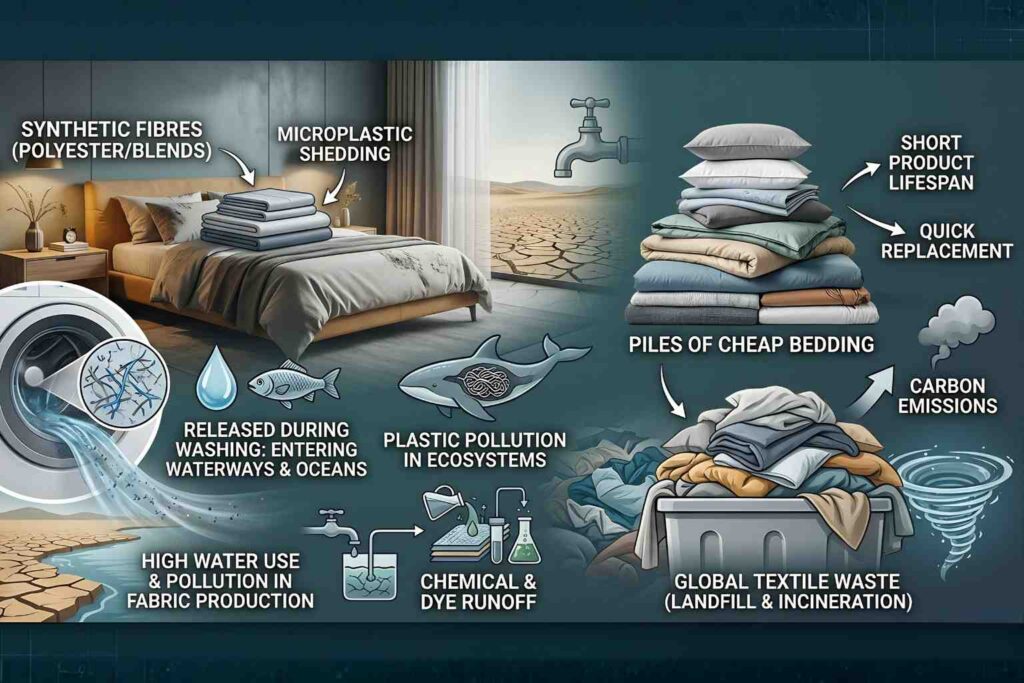
Synthetics bring another problem. 70 per cent of household textiles are made from synthetic fibres, and between 200,000 and 500,000 tonnes of microplastics from textiles enter the marine environment each year. Cheap polyester bedding may feel practical at the till, yet it starts with fossil fuels and keeps shedding long after the first wash.
Natural fibres are not impact-free either. Producing 1 kilogram of cotton requires about 10 cubic metres of water, much of it outside Europe. So the issue is not simply natural versus synthetic. It is short-life, low-quality bedding versus pieces you will wash, use and keep for years.
What to Look For in Sustainable Bed Linen
Good Sustainable Bed Linen should feel comfortable, wash well and last longer than a season of “new bedroom” enthusiasm. Start with fibre choice. Linen, organic cotton, traceable wool and lyocell all have stronger cases than cheap polyester blends, especially if you want breathability and a fabric that improves with age rather than going bobbly and sad.
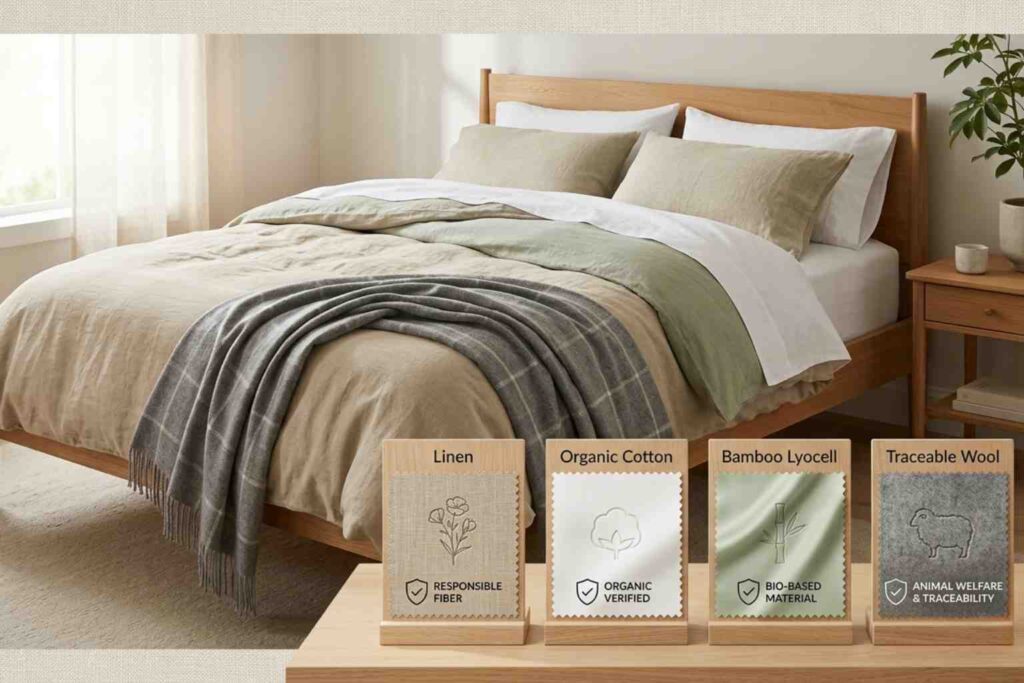
Certifications help cut through the marketing. GOTS covers organic fibres and sets environmental and social rules through processing. OEKO-TEX Standard 100 checks finished textiles for harmful substances, and bed linen sits in its direct-skin-contact class, which is exactly where you want proper scrutiny.
Then look at the unglamorous bits, since they are often the telling ones. Is the brand clear about fibre origin? Can you see how it was dyed, finished and packaged? Does it rely on plastic trims, or is it trying to strip them out? And will you still want it on the bed in three years? That last question is not very sexy, yet it is usually the one that saves the most waste.

Three Sustainable Bed Linen Brands Worth Knowing
Panda London
Panda London is a strong option for people who want bedding that feels smooth, breathable, and modern without falling back on synthetic blends. Its Signature+ bamboo lyocell bedding uses a closed-loop process, Panda says up to 98% of water and solvent are reused, and the range is presented as 100% plastic free, including the buttons.
Sign up to their mailing list at pandalondon.com for 10% off..
Woolroom
Woolroom takes a more natural route, built around traceable British wool through its Wool ID programme. The brand says its wool can be traced back to the farm, it works directly with British farmers, and its wider bedding offer is backed by certifications including GOTS and OEKO-TEX. That makes it a good fit for readers who want natural fibres, transparency, and a clearer supply story.
Sign up to their mailing list at thewoolroom.com for 10% off.
Piglet in Bed
Piglet in Bed is a better fit here since it is properly rooted in bed linen. The brand says most of its pieces are made from natural, responsibly sourced fibres, that the majority are OEKO-TEX Standard 100 certified, and that most of its collections are crafted in Portugal. Its pure linen bedding is made from 100% European flax, which makes it a strong option for readers who want breathable, natural bedding without the synthetic feel and short life of cheaper blends.
Use voucher code TEXTPIGLET15 at pigletinbed.com for 15% off.
Sustainable Bed Linen: Wrap-Up
Sustainable Bed Linen is one of those rare swaps that makes sense from every angle. Better fabric can feel nicer, last longer, wash well and cut the churn of cheap bedding that never quite survives the year. You spend a huge part of life in bed, so it is hardly outrageous to expect the sheets to be comfortable and less wasteful.
At Play It Green, we believe small choices count more when they stick. Read the full article, share it with someone who still buys scratchy bargain sets, and join the Play It Green community making positive change together.
If you enjoyed this tip on Sustainable Bed Linen, why not become part of a community creating positive change every day by joining Play It Green?
We help you reduce your footprint, repair the planet, and regive to social causes that matter, all through simple, measurable actions that fit your business.

Everyone wants to see impact, not promises. With Play It Green, your sustainability journey becomes visible, credible, and rewarding.
Join us today and turn good intentions into lasting results.
Sign Up