
Sustainable Business Growth: Introduction
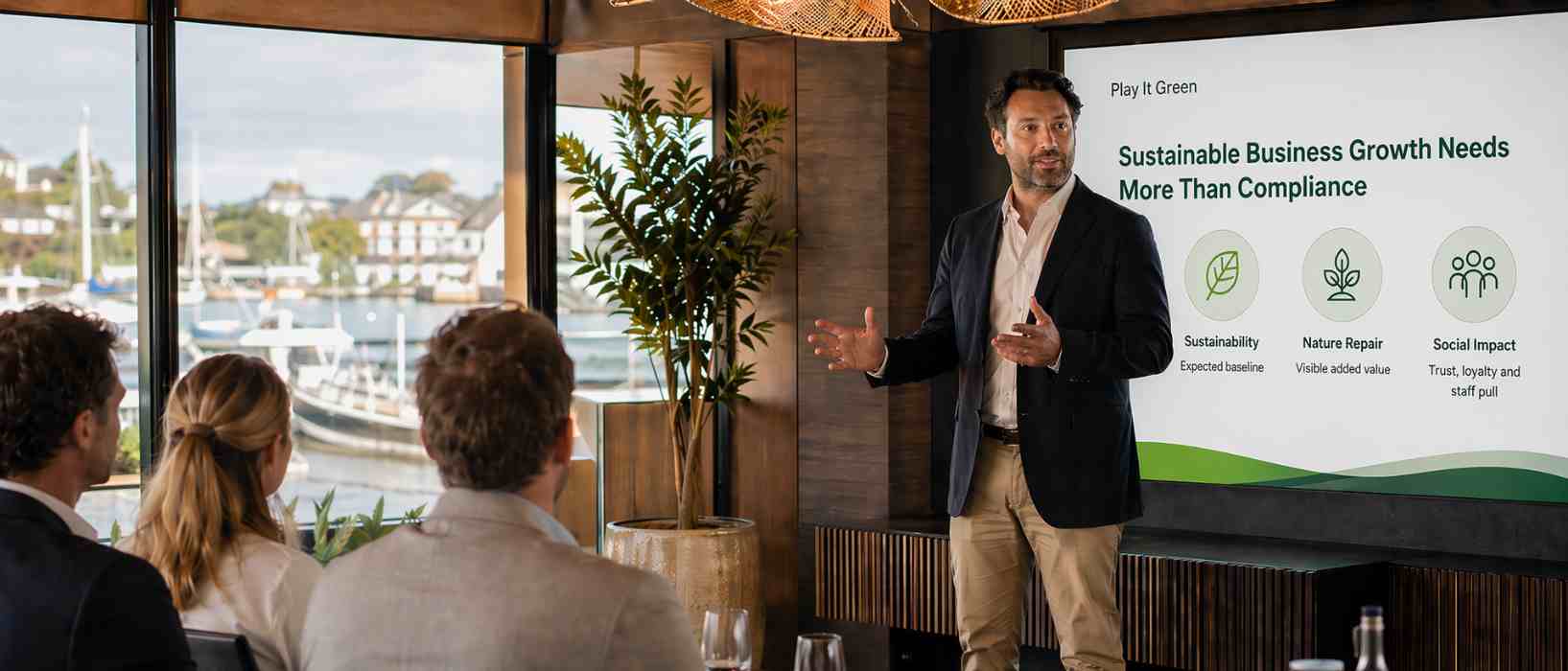
Sustainable Business Growth is getting harder to separate from what a business stands for, how it behaves, and what people feel when they spend money with it. Sustainability is moving into the expected standard as buyers ask for it, guests assume it, and legislation is heading in that direction. That matters, but it is only the starting point as the bigger commercial upside comes from nature repair and social impact, where a business can build trust, loyalty, and a stronger reason to choose it.

Sustainability is now the minimum standard
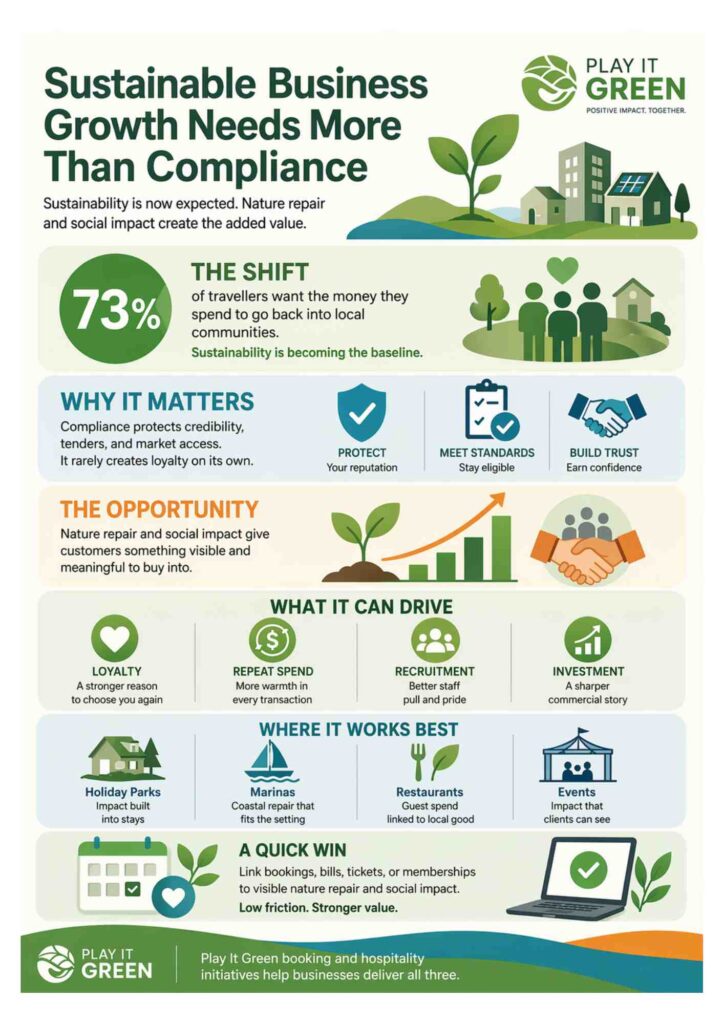
Sustainability has moved much closer to basic business hygiene, which means doing the minimum well matters, yet it rarely creates much emotional pull on its own. In fact, Booking.com found that 53% of travellers are now conscious of tourism’s effect on communities as well as the environment, and 69% want to leave places better than they found them. Cvent’s March 2025 EMEA data found that 64% of planners or clients have a sustainability policy for events. A business that still treats sustainability as an optional extra risks looking behind the market rather than ahead of it.
Sustainability still matters as it protects credibility, supports tenders, helps with procurement, and keeps a business aligned with future rules. Yet decent standards rarely create much emotional pull on their own and that’s where sustainable business growth can be adapted to have more commercial value.
Nature repair creates added value
The commercial story of sustainable business growth gets stronger once nature repair enters the picture, since it gives customers something visible, tangible, and easier to care about. The World Economic Forum says around $44 trillion of economic value generation is moderately or highly dependent on nature, and nature-positive transitions could unlock up to $10.1 trillion in annual business value by 2030. That turns nature repair into a serious business issue.
Nature repair works well in customer-facing sectors since people can picture it. A booking linked to tree planting, kelp restoration, or coastal repair is easier to grasp than a broad claim about being greener. It gives customers a visible outcome and a better story to attach to their spend.
Social impact builds loyalty and trust
Social impact adds another layer of value to sustainable business growth, since it changes how people feel about spending with a business and working for it. Booking.com found that 73% of travellers want their spending to benefit local economies, whilst Deloitte found that 45% of Millennials in the UK have rejected a potential employer over values and beliefs. People are making commercial decisions through a values lens far more than many businesses admit.
If spending with a business supports communities, charities, or better livelihoods, the transaction feels warmer and more human. If working for a business means being part of something that gives back, recruitment and retention get easier. Social impact can help build loyalty, word of mouth, staff pride, and trust.
Why hospitality and leisure have the clearest opening
This matters even more in hospitality and leisure, where buying decisions are shaped by emotion, memory, and the chance of someone coming back. Research from the National Restaurant Association says sustainability, health, and local sourcing sat at the top of restaurant macro trends for 2025. RSM UK found that willingness to pay more for dining built around locally sourced ingredients rose from 42% in 2023 to 49% in 2024. Customers are telling the market that values and local meaning matter.
That is where the three drivers work together properly. Sustainability keeps the business credible, whilst nature repair gives it a visible impact story and social impact gives customers and staff a reason to care. Put together, they can support stronger conversion, more repeat visits, better recruitment, and a sharper investment story. That’s what we think is better sustainable business growth!
Get In TouchWhere Play It Green fits
This is where the argument turns into something practical, since businesses need a simple way to deliver all three drivers without creating extra friction. That is where Play It Green’s booking and hospitality initiatives fit. They help support the sustainability piece the market now expects, then go further by linking customer activity to nature repair and social impact that people can actually see and talk about.
For holiday parks and marinas, that can mean bookings or memberships tied to visible repair that suits the setting. For restaurants, it can mean turning guest spend into a stronger local story. For events, it can mean giving clients a cleaner answer to the rising demand for credible impact.

Sustainable Business Growth: Wrap-Up
Sustainable Business Growth now needs more than compliance as compliance is rapidly becoming the minimum standard. Sustainability still matters, and it will matter more as expectations tighten. Yet the bigger upside sits in nature repair and social impact, where businesses can create loyalty, trust, and stronger reasons to choose them.
For holiday parks, marinas, restaurants, and events, that is the opportunity. Meet the standard, then go past it, and your business becomes easier to buy from, easier to believe in, and easier to remember.
If you enjoyed this article on Sustainable Business Growth, why not become part of a community creating positive change by partnering with Play It Green and receive these tips weekly straight to your inbox?
We help you reduce your footprint, repair the planet, and regive to social causes that matter, all through simple, measurable actions that fit your business.

Modern employees, consumers, and investors want to see impact, not promises. With Play It Green, your sustainability journey becomes visible, credible, and rewarding.
Join us today and turn good intentions into lasting results.
Sign Up