
Sustainable Halloween Sweets: Introduction
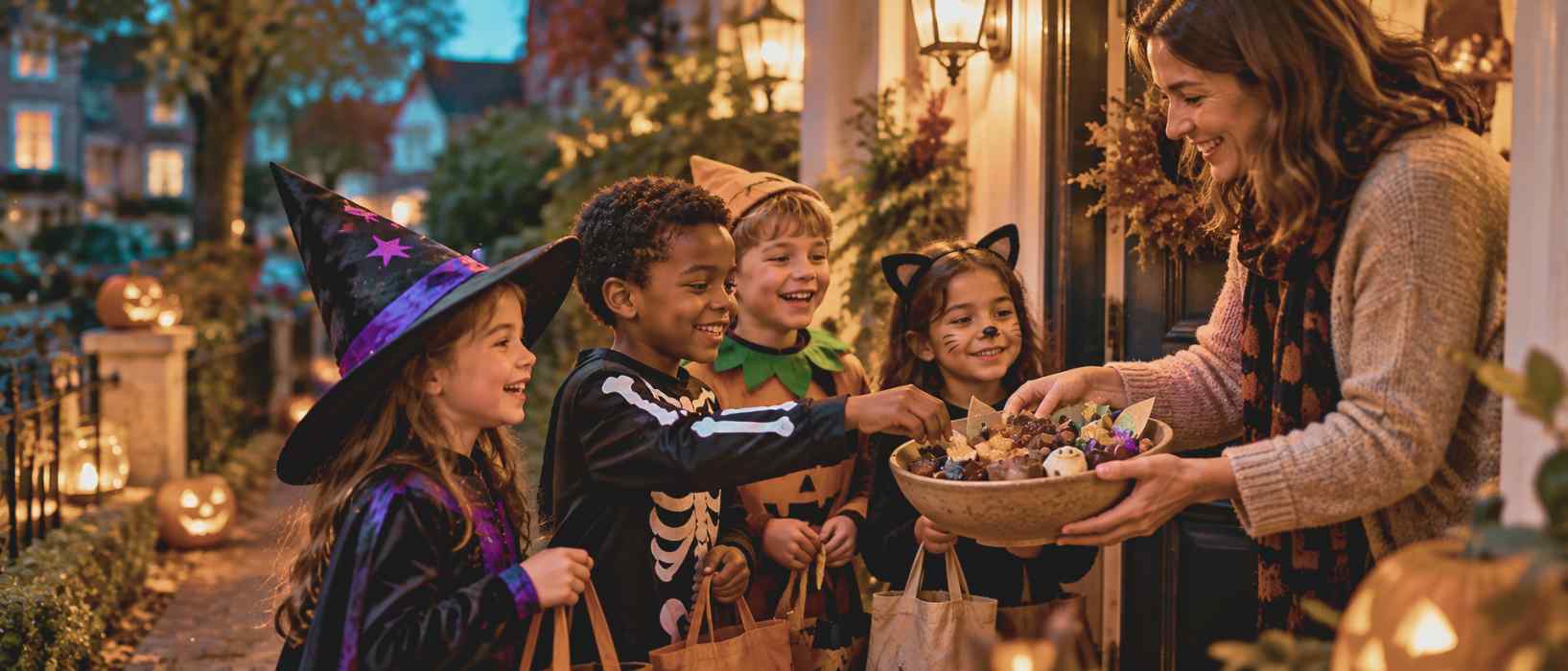
Sustainable Halloween sweets are a useful place to start if you want to keep the fun of trick-or-treating while cutting some of the waste hidden inside the treat bowl. The biggest opportunity is not to remove sweets from Halloween, but to look more closely at how they are sourced, wrapped and handed out.
That is worth doing because Halloween has become a celebration built around small, individually packaged treats. Many conventional sweet and chocolate wrappers are flexible plastics or mixed materials, which can be difficult to recycle through normal household collections. Recycling options are improving, including supermarket collection points and local authority trials, but reducing unnecessary packaging remains simpler than dealing with it afterwards.
This week we are looking at where Halloween treats came from, why the modern sweet bowl has a bigger footprint than it first appears, and how to choose sustainable Halloween sweets without turning a fun tradition into a lecture at the front door.
A Brief History of Sustainable Halloween Sweets
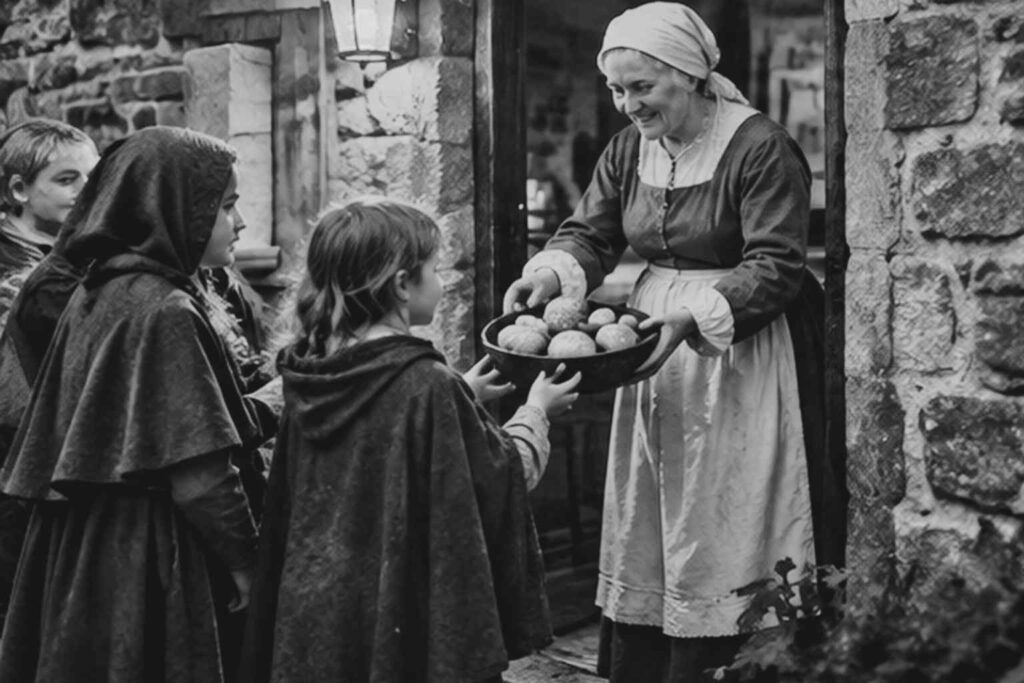
The story of Halloween treats starts long before fun-size chocolate bars. In medieval England, poorer people went “souling” around All Souls’ Day, visiting wealthier households and receiving small soul cakes in return for prayers for the dead. English Heritage says soul cakes are recorded from around 1400, although the custom was already described as old by then. They were closer to small oat-based biscuits than modern cake, and the exchange connected food, community and remembrance.
Elsewhere in Britain and Ireland, guising developed alongside these customs. People, often children, dressed up and went from house to house, where a song, rhyme or performance could earn fruit, nuts, cakes or coins. When Irish and Scottish communities carried Halloween traditions to North America, those doorstep customs began changing again.
The surprising part is that sweets did not immediately take over. Smithsonian records show that American trick-or-treaters in the 1940s and early 1950s might receive homemade biscuits, cake, popcorn balls, apples, coins or small toys. After the Second World War, sugar rationing ended, suburbs expanded, and confectionery companies spotted an opportunity. Pre-wrapped sweets were convenient, easy to hand out and increasingly promoted specifically for Halloween.
By the 1970s, sealed branded confectionery had another advantage: parents increasingly preferred packaged products to homemade treats from people they did not know. In only a few decades, an old exchange involving cakes, fruit and performances had become the familiar bowl of individually wrapped sweets. That history helps explain why packaging is now such a central part of the environmental challenge.
Contact UsThe Environmental Impact of Sustainable Halloween Sweets
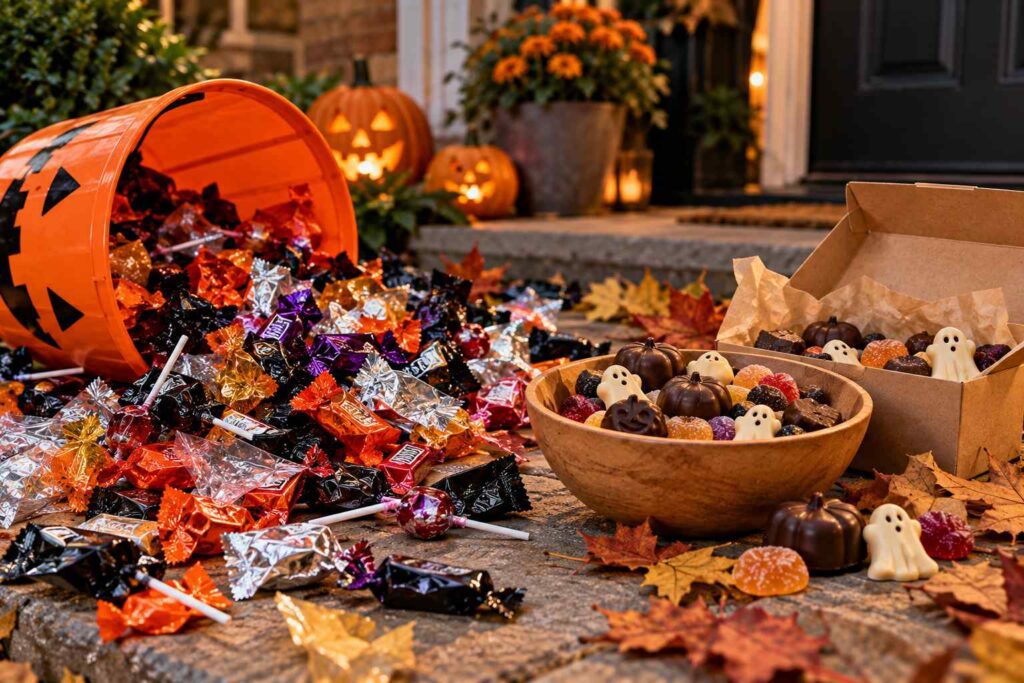
Packaging is the most visible issue. Sweet and chocolate wrappers are usually small, light and designed to keep food fresh, but that can make them awkward to recover. Some councils now accept confectionery wrappers with flexible plastics, while supermarket collection schemes provide another route in many areas. The system is changing, so the recycling instruction on the pack and your local collection rules are more useful than assuming every wrapper belongs in the same bin.
Chocolate brings a less visible set of questions. Cocoa supports millions of livelihoods, yet Fairtrade highlights persistent problems including low farmer incomes, deforestation, child labour and the effects of climate change. The UK Government is also progressing rules intended to tackle illegal deforestation in supply chains for commodities including cocoa and palm oil. Certification is not a perfect guarantee, but recognised schemes such as Fairtrade and Rainforest Alliance can give shoppers more information about standards and sourcing.
There is also a simple quantity question. Buying sustainable Halloween sweets does not mean replacing one oversized plastic multipack with three expensive boxes that nobody finishes. Choosing an amount that is likely to be eaten, sharing larger packs where hygiene and allergies allow, and keeping unopened leftovers for later all help reduce waste.
What to Look For in Sustainable Halloween Sweets
Start with the packaging, and look for clearly labelled paper, card, recyclable or genuinely compostable formats, and follow the disposal instructions rather than relying on words such as “eco” or “biodegradable”. Compostable packaging in particular needs the right conditions, so check whether it is home compostable or requires an industrial collection route.
For chocolate, look beyond the spooky shape. Fairtrade, Rainforest Alliance, traceable cocoa and clear information about where cocoa comes from are all more useful than broad ethical claims without evidence. Palm oil is another area where a simple “free from” message can be misleading: where it is used, credible certified sourcing such as RSPO can be preferable to an unverified alternative oil with its own land-use impacts.
Finally, think about who will actually eat the treats. Vegan options can make Halloween more inclusive and avoid animal-derived ingredients such as gelatine, but vegan does not automatically mean low impact. The strongest sustainable Halloween sweets combine sensible packaging, responsible sourcing, clear ingredient information and something people genuinely want to eat.

Three Sustainable Halloween Sweets Brands to Know
We found three UK businesses taking different approaches, from traceable Halloween chocolate to compostable pick-and-mix packaging. They are useful examples because each tackles a specific part of the problem rather than relying on a vague green claim.
Chococo
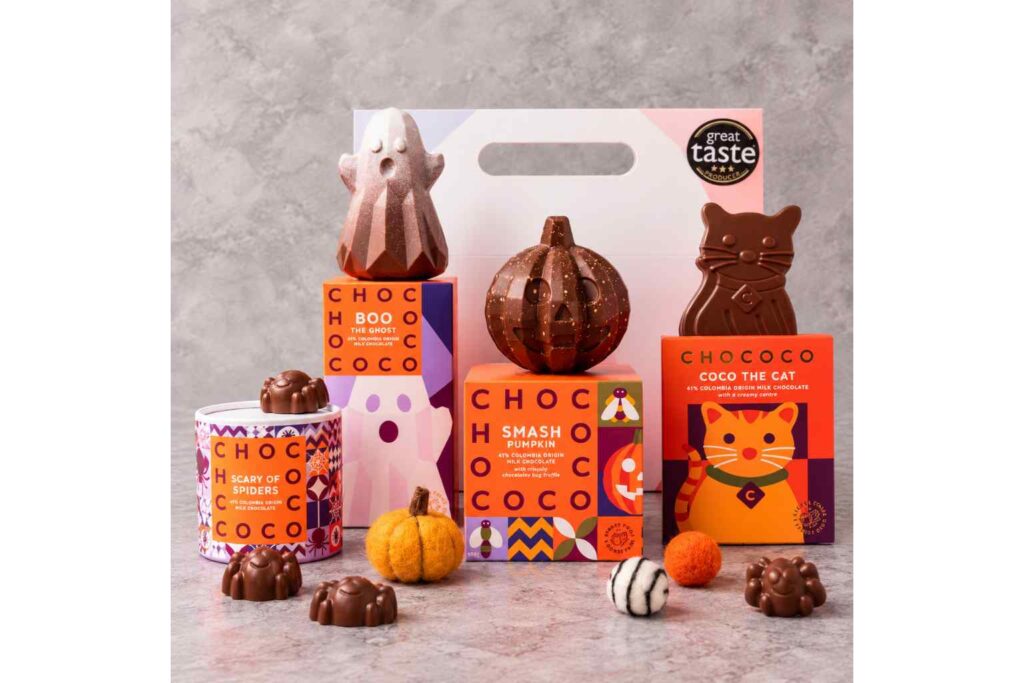
Dorset chocolatier Chococo has a dedicated Halloween range, including its Boo the Ghost chocolates in milk, white, dark and oat m!lk versions. The company says its cocoa is fully traceable and its Halloween products use 100% plastic-free packaging. The dark Boo the Ghost is plant-based, handmade in Dorset and made with 72% Ecuador-origin chocolate, giving people a seasonal treat with unusually clear information about both cocoa and packaging.
Website: Chococo
Use code WELCOME10 for 10% off your first order.
Goupie
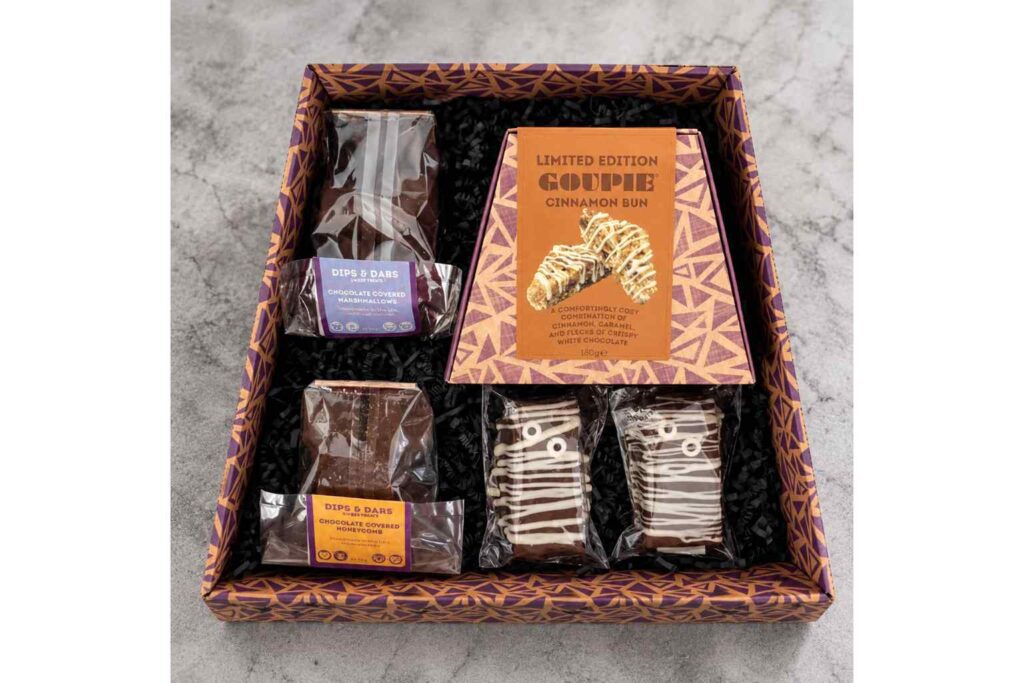
Kent-based Goupie makes vegan, gluten-free chocolate confectionery by hand and has created Halloween-exclusive Goupie Mummies. Each 50g mummy is wrapped in a compostable bag, while the three-pack also uses a kraft box. Goupie says its wider packaging approach uses compostable materials where possible, and its Original recipe includes Fairtrade cocoa and RSPO-certified palm oil. We love this approach, and their chocs look amazing!
Website: Goupie
Use code NEWGG10 for 10% off your first order. Offer lasts six weeks from article publication.
Rubydoobys
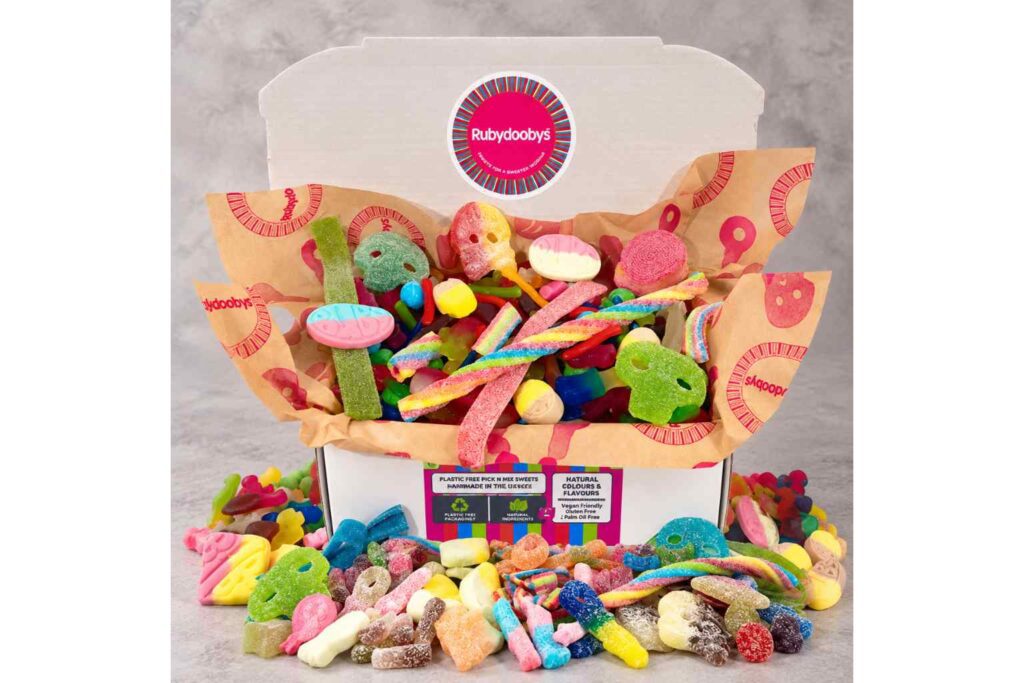
Cornwall-based Rubydoobys specialises in vegan pick and mix, with more than 35 sweets available across its range. Its pouches are described as compostable within around ten weeks, while the remaining packaging is recyclable or biodegradable. Choosing loose pick and mix in a larger pouch can also avoid the pile of tiny wrappers created by individually wrapped sweets, although anyone sharing unwrapped sweets should consider allergies and food hygiene.
Website: Rubydoobys
Sustainable Halloween Sweets: Wrap-Up
Choosing sustainable Halloween sweets is mostly about noticing what has changed since treats first started appearing at the door. Soul cakes and fruit became branded bars and mini bags because they were convenient, safe and easy to share, but that convenience brought a lot more packaging with it.
You do not need to make Halloween joyless to improve the treat bowl. Buy an amount that will actually be eaten, check the wrapper rather than guessing how it should be disposed of, and look for credible sourcing information when chocolate is involved.
The best sustainable Halloween sweets still need to taste good and feel like a treat. The difference is that a little more thought goes into what is inside the wrapper, what the wrapper is made from and what happens to it when Halloween is over.