
Sustainable Lunch Boxes: Introduction
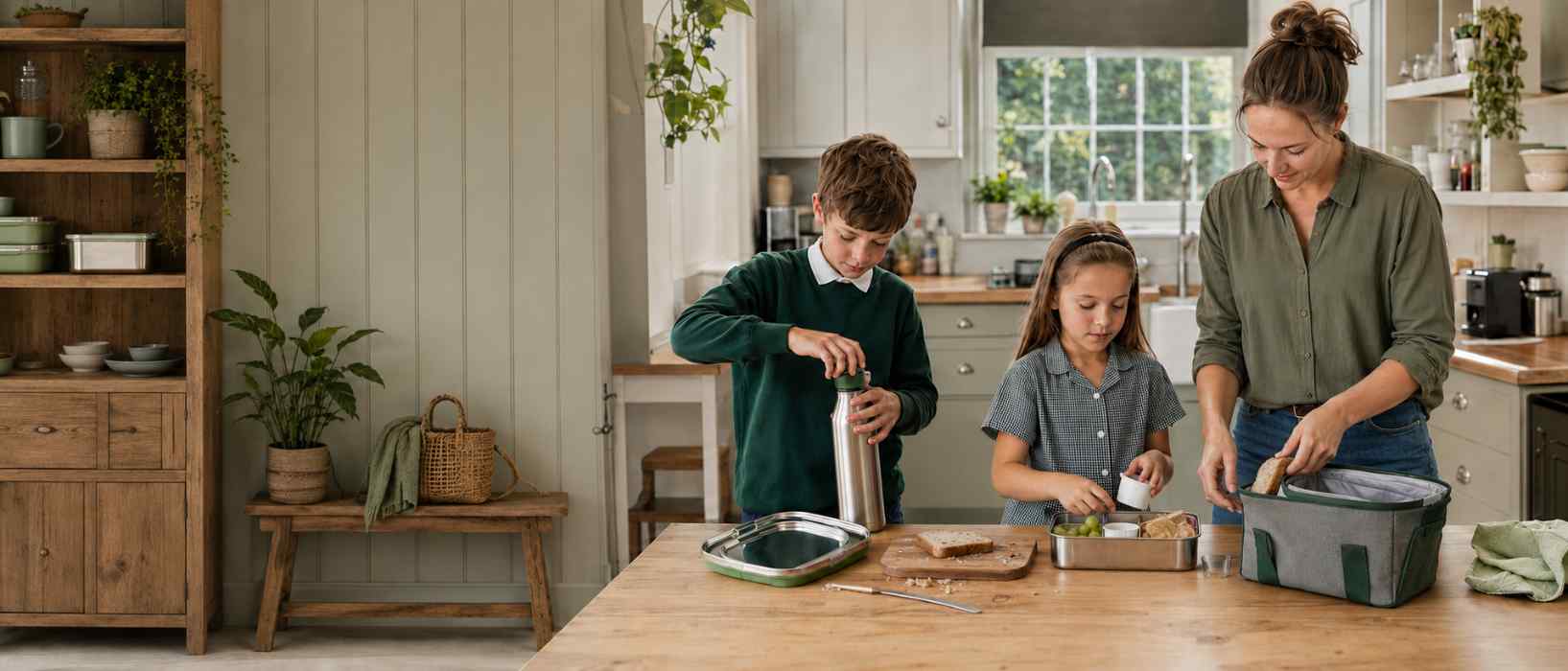
Sustainable Lunch Boxes need to cope with far more than sitting neatly on a kitchen shelf. They are packed in a rush, carried to work or school, knocked around in bags, and expected to keep food fresh without leaking onto books, clothes, or laptops.
Because they may be used hundreds of times, the right size, materials and construction can make a genuine difference to how long they last and how useful they remain. With so many designs and sustainability claims available, choosing well can feel unnecessarily complicated. This week, we take a closer look at this familiar object and the role it plays in everyday life.

A Brief History of the Lunch Box
Portable meals existed long before anybody marketed a dedicated lunch box. Agricultural workers, travellers and soldiers carried bread, cheese and other food in cloth, baskets, leather bags and simple containers.
During the nineteenth century, industrial workers needed stronger protection from coal dust, machinery and demanding workplaces. Metal lunch pails began appearing during the mid-1800s, and miners were early adopters since enclosed tins kept food cleaner. The Museum of History and Industry records a metal lunch pail dating from the 1880s.
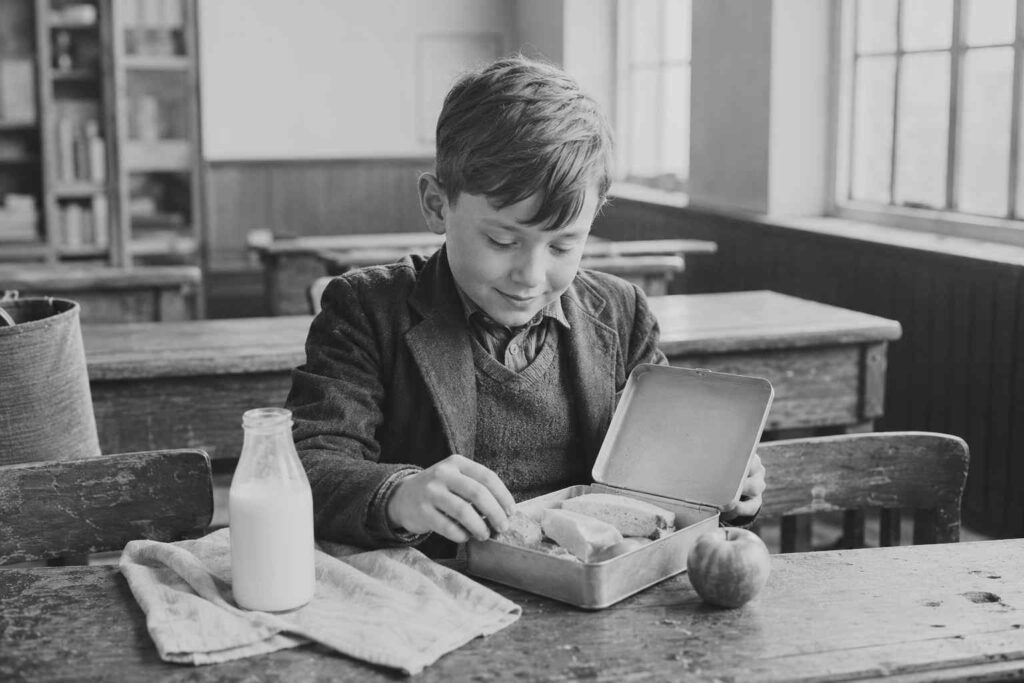
Children often reused household tins before purpose-made school versions became widely available. Illustrated metal boxes later turned practical containers into personal objects. The Smithsonian’s National Museum of American History holds workers’ and children’s lunch boxes spanning the 1890s through the 1980s.
Television helped character designs flourish during the 1950s, and lunch boxes became part of playground culture. Plastic and vinyl models grew common later, offering lighter weight, lower prices and increasingly varied shapes.
Today’s designs include compartment trays, insulated bags, glass containers and stainless-steel boxes. Sustainable Lunch Boxes now revisit an older principle: a portable container should protect food reliably and return for many years.
Get In TouchThe Environmental Impact of Lunch Boxes
Sustainable Lunch Boxes address two connected problems: disposable packaging and short-lived containers. The 2026 Big Plastic Count estimates that UK households alone discard 82 billion pieces of plastic every year. Food and drink packaging forms a large share of that weekly stream.
Plastic carries a climate cost before it becomes waste. The OECD Global Plastics Outlook found that plastics generated 1.8 billion tonnes of greenhouse gas emissions in 2019. This represented 3.4% of global emissions, with production and conversion creating most of the total.
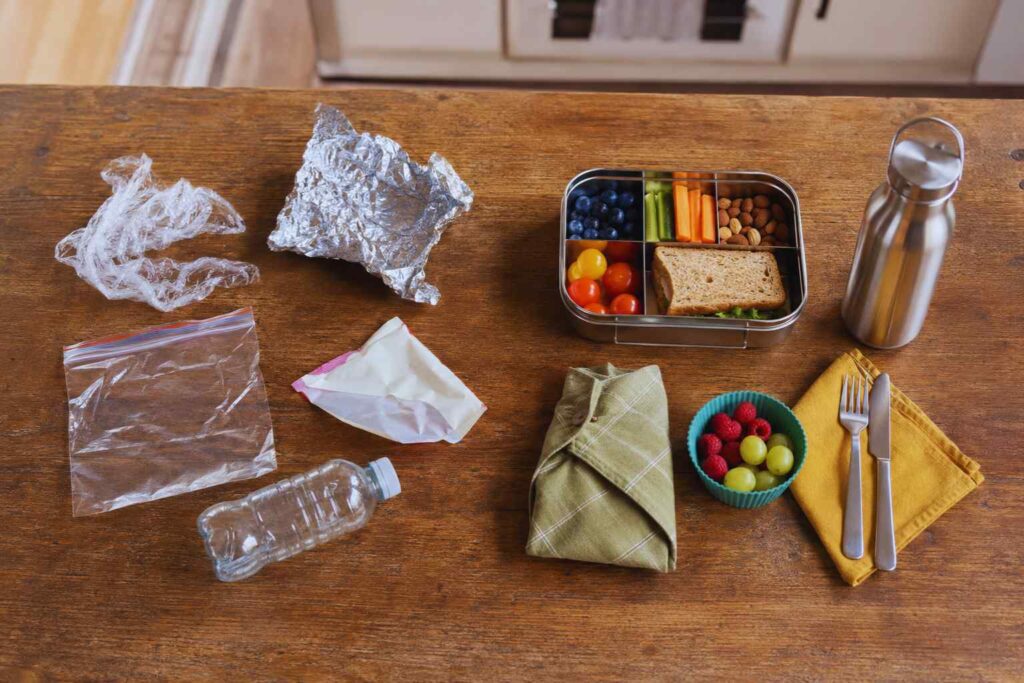
Packed lunches can generate cling film, foil, snack wrappers, disposable cutlery and individual drinks packaging every school day. A dependable reusable system can prevent much of that repeated material use.
Food waste deserves equal attention within this conversation about everyday packed lunches. WRAP found that UK households wasted six million tonnes of food and drink during 2022, equal to 210 kilograms per household. Lunch boxes that match appetite, separate wet foods and keep meals fresh can reduce leftovers returning home uneaten.
Buying a new container still uses materials, manufacturing and transport, and that’s why Sustainable Lunch Boxes create their greatest benefit through repeated use, careful cleaning and repair, rather than through a label alone.
What to Look For in Sustainable Lunch Boxes
Begin with the lunch box already owned, then replace it when damage, poor sizing or unreliable seals prevent daily use. Sustainable Lunch Boxes should suit the person carrying them, rather than forcing every lunch into an inconvenient design.
Check capacity against a normal meal before choosing a particular size or compartment layout. An oversized box adds weight and may encourage overpacking, yet a cramped design can create extra wrappers. Younger children need clips and lids they can open independently, so test them at home before term begins.
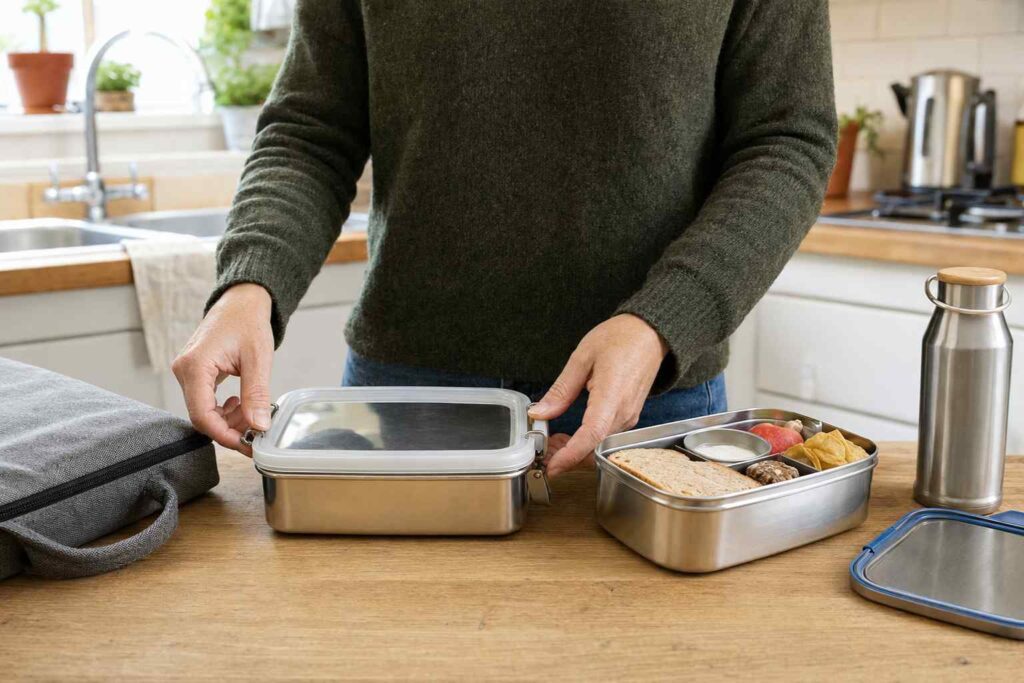
Stainless steel is durable, washable and recyclable, although it costs more and cannot be used in a conventional microwave. Glass resists stains and works well for many adults, yet its weight and breakability limit school use. A sound food-grade plastic box already owned can remain useful for years, so replacement for appearance alone creates avoidable waste.
Bamboo-composite marketing claims require particular care before any product reaches a family kitchen. The Food Standards Agency advises against food-contact products containing bamboo or similar plant fibres, since formaldehyde and melamine can migrate into food.
Look for food-contact compliance, clear care instructions, removable seals, replacement parts and a meaningful warranty. Dishwasher compatibility may support regular use, and leak resistance should match the food carried. Finally, ask whether every component can be cleaned thoroughly, since durability only helps when the product remains pleasant and safe.

Three Sustainable Lunch Box Brands Worth Knowing
Mintie
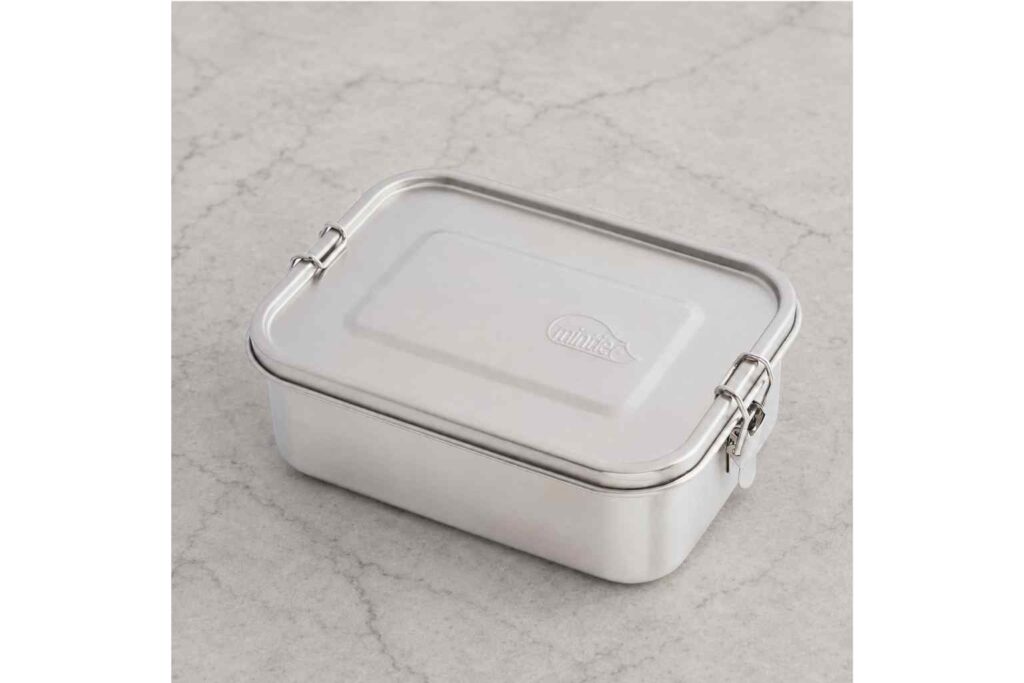
Mintie is a British business offering lunch boxes, bottles and snack pots made from food-grade 304 stainless steel. Its Snug range includes leak-proof designs in several capacities, so families can match the box to appetite and bag size. Products are dishwasher safe, free from plastic linings and backed by a ten-year guarantee. The range gives schoolchildren and adults a practical route away from disposable lunch packaging without demanding complicated daily care.
Head to their website and use voucher code PLAYITGREEN15 for 15% off your first order (offer ends 30.9.26).
A Slice of Green
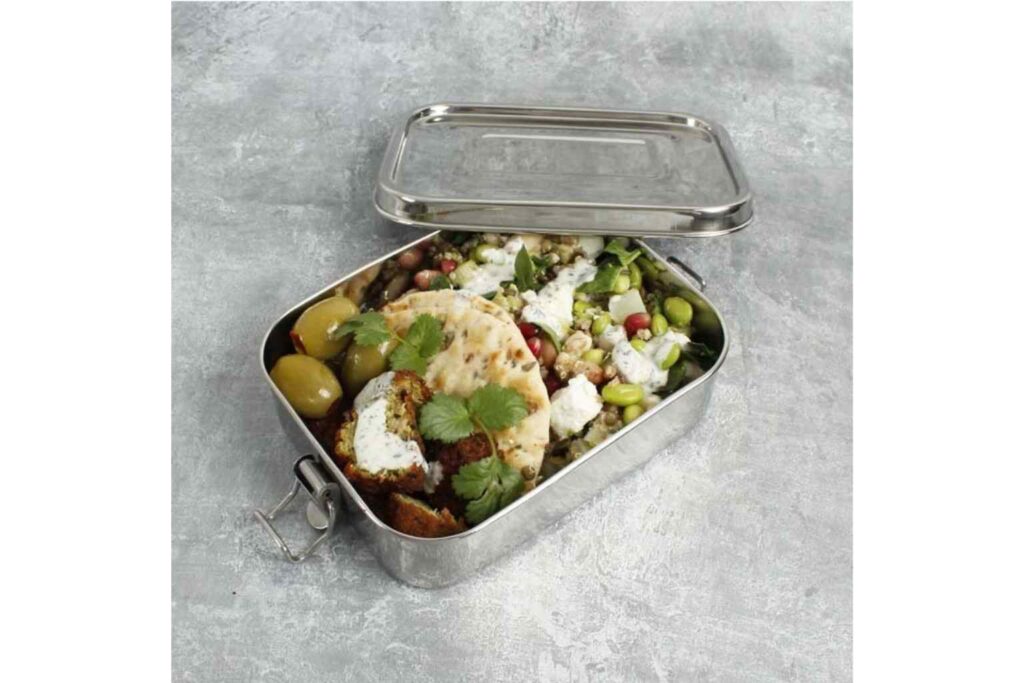
A Slice of Green offers reusable stainless-steel lunch boxes in several shapes, sizes and tiered formats. Many products include smaller containers, which help separate snacks or toppings without disposable wrapping. The company ships every order in plastic-free, fully recyclable packaging and works with producers to remove plastic from incoming product packaging. Its broad, reasonably priced range suits families wanting simple containers that can serve school, work, picnics and food storage.
Head to their website and use voucher code PLAYITGREEN10 for 10% off your first order (offer lasts 6 weeks from publication).
Elephant Box
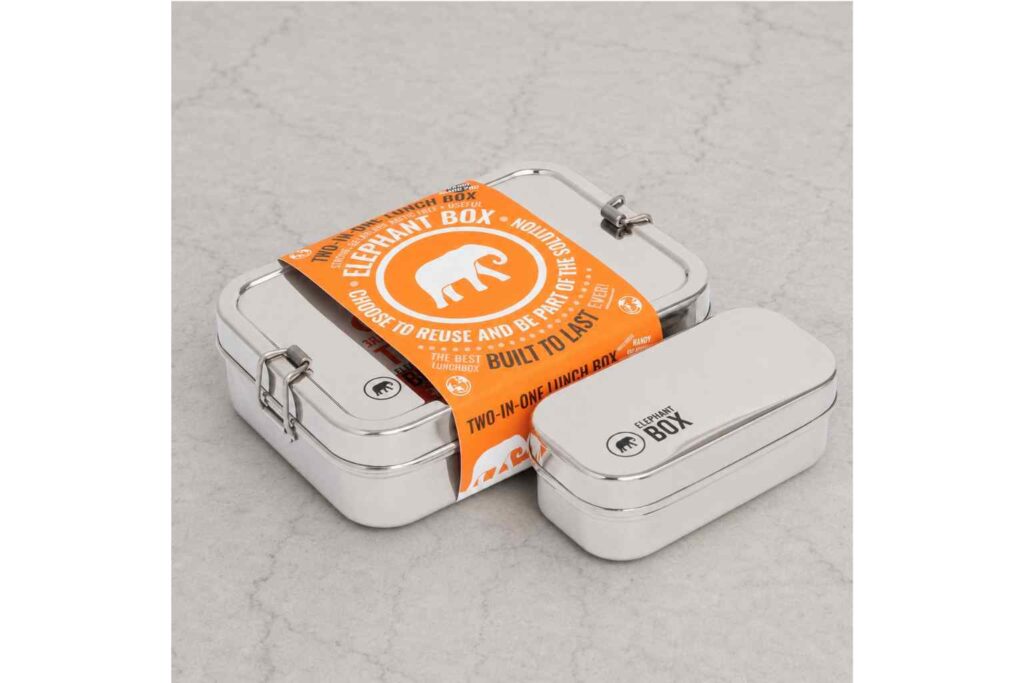
Elephant Box builds food-grade stainless-steel lunch boxes for repeated school, work and outdoor use. Its current support includes spare parts, repair options and a 15-year warranty on stainless-steel products, helping customers keep containers in service. The company uses plastic-free supply-chain packaging, donates one per cent of annual sales through 1% for the Planet and provides clear material information. Several sizes and compartment layouts help buyers avoid choosing one unsuitable box for every appetite.
Head to their website and use voucher code PLAYITGREEN15 for 15% off your first order (offer ends 2nd October 2026).
Play It Green members have a chance to win products from this week’s featured brands – keep an eye out in your weekly newsletter, and if you aren’t a member yet, now might be a great time to join us!
Sustainable Lunch Boxes: Wrap-Up
Sustainable Lunch Boxes work best when they fit real routines and remain useful through hundreds of meals. Start with what you own, then choose replacements around capacity, durability, easy cleaning and available spare parts.
A well-matched box can reduce daily wrapping, protect food and make packed lunches easier for children and adults. It can save money across repeated school terms, particularly when small seals or components can be replaced.
Across the Play It Green community, the practical choices we talk about gain traction when thousands of people repeat them. Share this guide with another parent, colleague or school, then check the cupboard before joining the August shopping rush.
If you enjoyed this tip on Sustainable Lunch Boxes, why not become part of a community creating positive change every day by joining Play It Green?
We help you reduce your footprint, repair the planet, and regive to social causes that matter, all through simple, measurable actions that fit your business.

Everyone wants to see impact, not promises. With Play It Green, your sustainability journey becomes visible, credible, and rewarding.
Join us today and turn good intentions into lasting results.
Sign Up