

Sustainable Pickling: Introduction
Sustainable pickling is a practical food habit that solves several everyday problems at once. It saves money, reduces food waste, and cuts down on packaging, while producing food that lasts longer and supports digestion.
Long before fridges, plastic containers, or global supply chains, people relied on salt, water, and time to preserve food safely. Today, supermarket shelves are full of jars that look traditional, though many no longer reflect how pickling originally worked.
This week’s tip looks at why shop-bought pickles often fall short, and why returning to simple, home methods still makes sense.

A Short History of Sustainable Pickling
Sustainable pickling is rooted in some of humanity’s earliest food knowledge. Long before refrigeration or written recipes, people learned that salt and time could preserve food through periods of scarcity. This was not about preference or trend. It was survival.
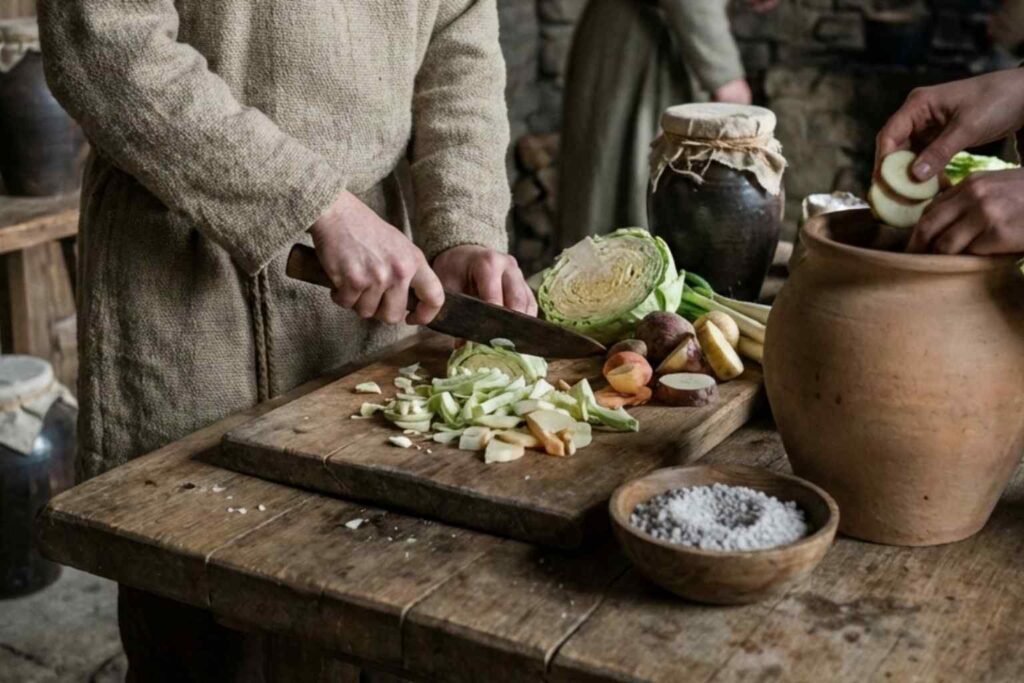
Vegetables were pickled in Mesopotamia over 4,000 years ago. In ancient China, fermentation preserved cabbage, grains, and soy well before modern storage existed. Across Europe, salted and fermented vegetables became winter staples, shaped by climate and local crops. These methods relied on naturally occurring bacteria rather than vinegar, allowing food to preserve itself gradually.
Although people did not understand the science behind fermentation, they benefited from it. Fermented foods improved nutrient availability, supported digestion, and reduced the risk of foodborne illness. Pickling was as much about health as it was about preservation.
These skills were passed down through generations and adapted regionally. Industrial food systems later changed that relationship. Refrigeration reduced the need for preservation skills, and vinegar replaced fermentation for speed and shelf stability. That shift explains why many modern pickles resemble traditional foods but no longer behave like them.
The Environmental Impact of Shop-Bought Pickles
Most supermarket pickles are designed for shelf life rather than sustainability. Many are heat treated to stop fermentation completely, which creates a stable product but removes the living bacteria that traditional pickling depends on.
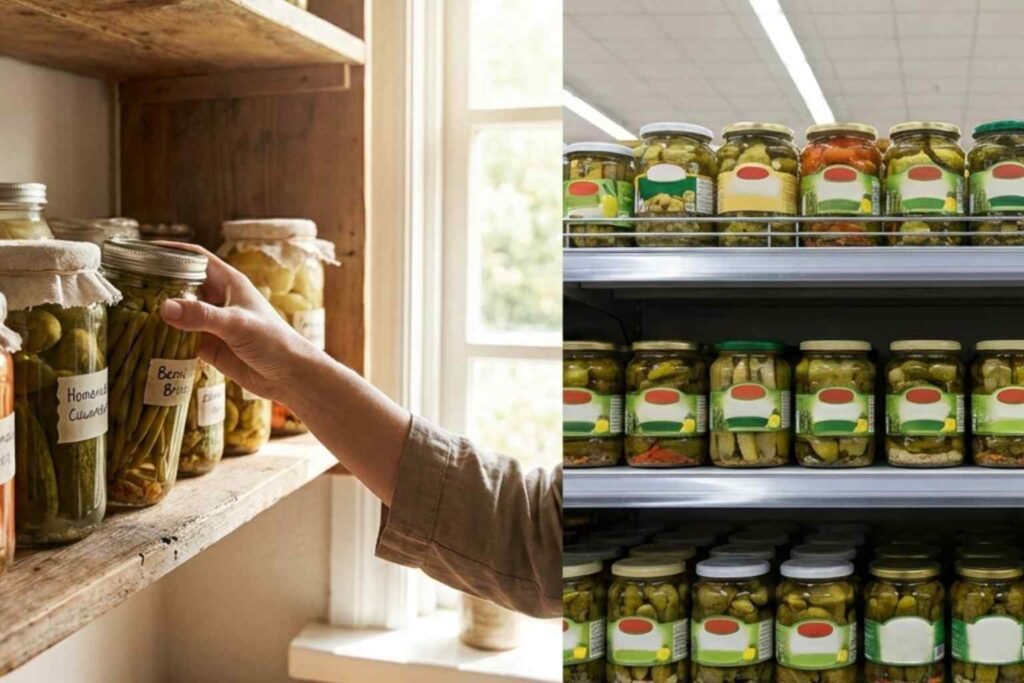
Ingredients often reflect this compromise. Vinegar replaces time. Sugar balances flavour. Preservatives maintain consistency. The result is something that looks pickled without offering the same nutritional or environmental benefits.
Packaging adds further impact. Glass jars require energy to produce and transport, and their mixed-material lids are rarely reused. Chilled pickles and fermented vegetables are commonly sold in plastic tubs, adding to waste streams that recycling systems struggle to manage. Transport then increases the footprint again, with vegetables grown, processed, chilled, and shipped long distances for something that can easily be made at home.
Get In TouchWhy Doing It at Home Makes Such a Difference
Home pickling works with biology rather than fighting it. Vegetables that are slightly soft or surplus become ingredients instead of waste. Cabbage, carrots, beetroot, cucumbers, and even trimmings can all be preserved safely with very little effort.
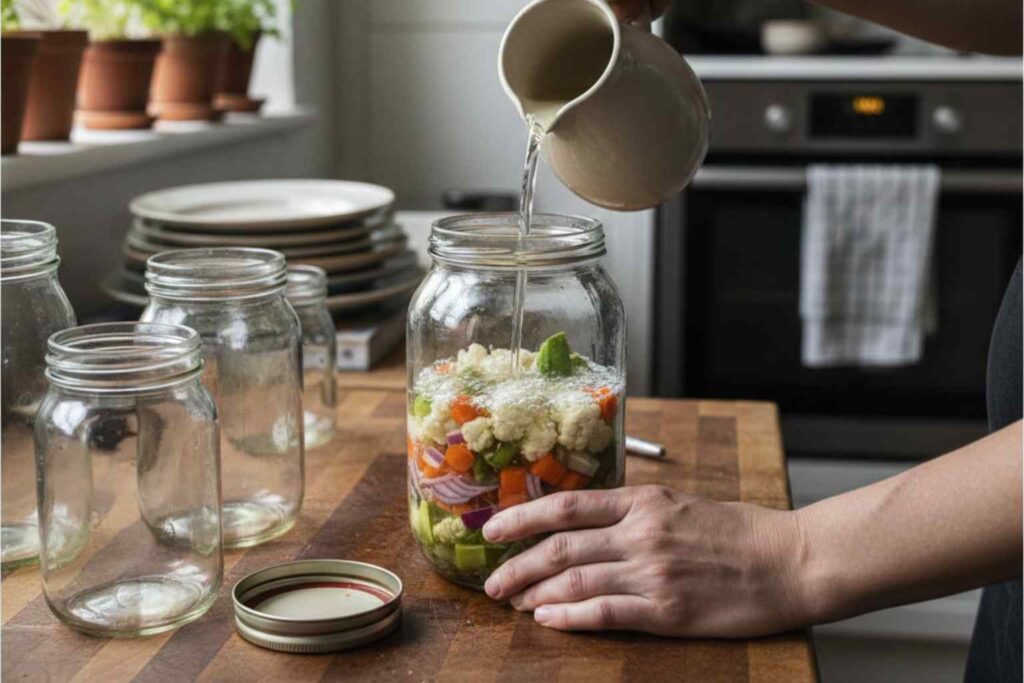
Energy use stays low. There is no cooking and no refrigeration at the start. Fermentation happens at room temperature, driven by time rather than electricity.
Packaging almost disappears. A reused jar can last for years, removing the need for labels, plastic sleeves, or single-use containers. Ingredients also stay simple. Vegetables, salt, and water are enough, which reduces processing, transport, and cost at the same time.
Over time, this approach often changes how people relate to food. Pickling at home makes waste easier to spot and avoid, encourages a closer relationship with seasonality, and shifts value away from packaging and convenience and back towards skill and care.
What to Look For, Whether Making or Buying
If you are making pickles at home, start simply. Sauerkraut and fermented carrots require little more than vegetables, salt, and a clean jar. Reusing jars you already have works perfectly well, and specialist equipment is optional rather than necessary.
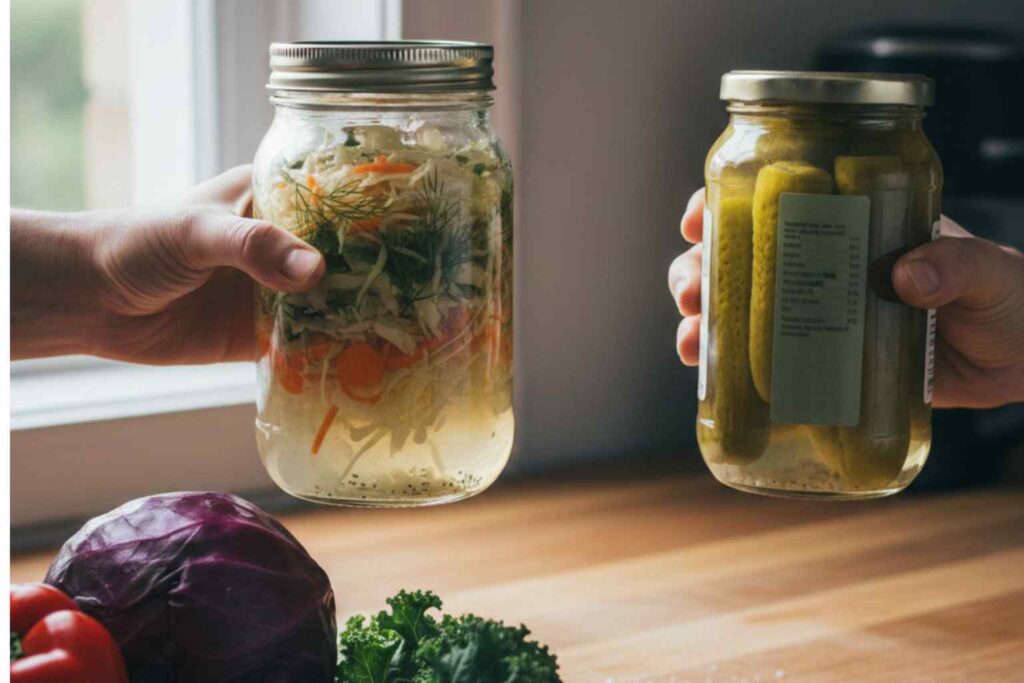
If you are buying pickles, treat them as a reference point rather than a replacement. Look for products stored in the fridge, with short ingredient lists and no added vinegar. Cloudiness and bubbles usually indicate live fermentation rather than a fault.
Local producers often do this better. Shorter supply chains reduce transport and keep methods closer to traditional practices. The closer a product is to something you could make at home, the better it usually is.

Three UK Brands That Reflect Proper Pickling
The Crafty Pickle
Small-batch pickles made using traditional sustainable pickling methods, with a clear focus on flavour, simplicity, and proper fermentation rather than shortcuts. A good reference point for what well-made pickles should look and taste like. Use voucher code PLAYITGREEN15 for 15% off your order!
Loving Foods
UK-made fermented foods using live cultures and careful production methods. Their range shows how fermented vegetables can be both accessible and true to the process, without unnecessary additives. Use voucher code PLAYITGREEN15 for 15% off your first order!
The Cultured Collective
Small-batch, chilled fermented vegetables made with minimal ingredients, showing what proper fermentation looks like when treated as food rather than branding. They do amazing flavoured suarkraut and kimchi!
The Culture Collective Website
Sustainable Pickling: Wrap Up
Sustainable pickling shows how simple skills can quietly reduce waste, cut packaging, and lower food costs, while supporting health at the same time. It brings food preservation back into the home, where it began, and replaces disposable convenience with something more durable.
At Play It Green, this is exactly the kind of change we believe in. Small actions, repeated across a community, create impact far beyond individual effort. Doing it at home delivers the greatest benefit, with buying used only to reinforce good practice rather than replace it.
If you have not tried pickling yet, start small. A jar, some vegetables, and a little time are enough.
Join the Community Making Change
Want to receive weekly tips and discounts like this one on sustainable pickling? With Play It Green, you can join a community that turns good intentions into real, measurable impact.
We help people and businesses take meaningful climate and social action through simple, affordable steps. From Net Zero education and signposting to nature repair and social impact, we make sustainability and positive impact part of everyday life and business. Practical, transparent, and rewarding.
Join Play It Green today for just £5 per person per month and be part of the movement reducing footprints, repairing nature, and regiving to make lasting change.
Sign Up