
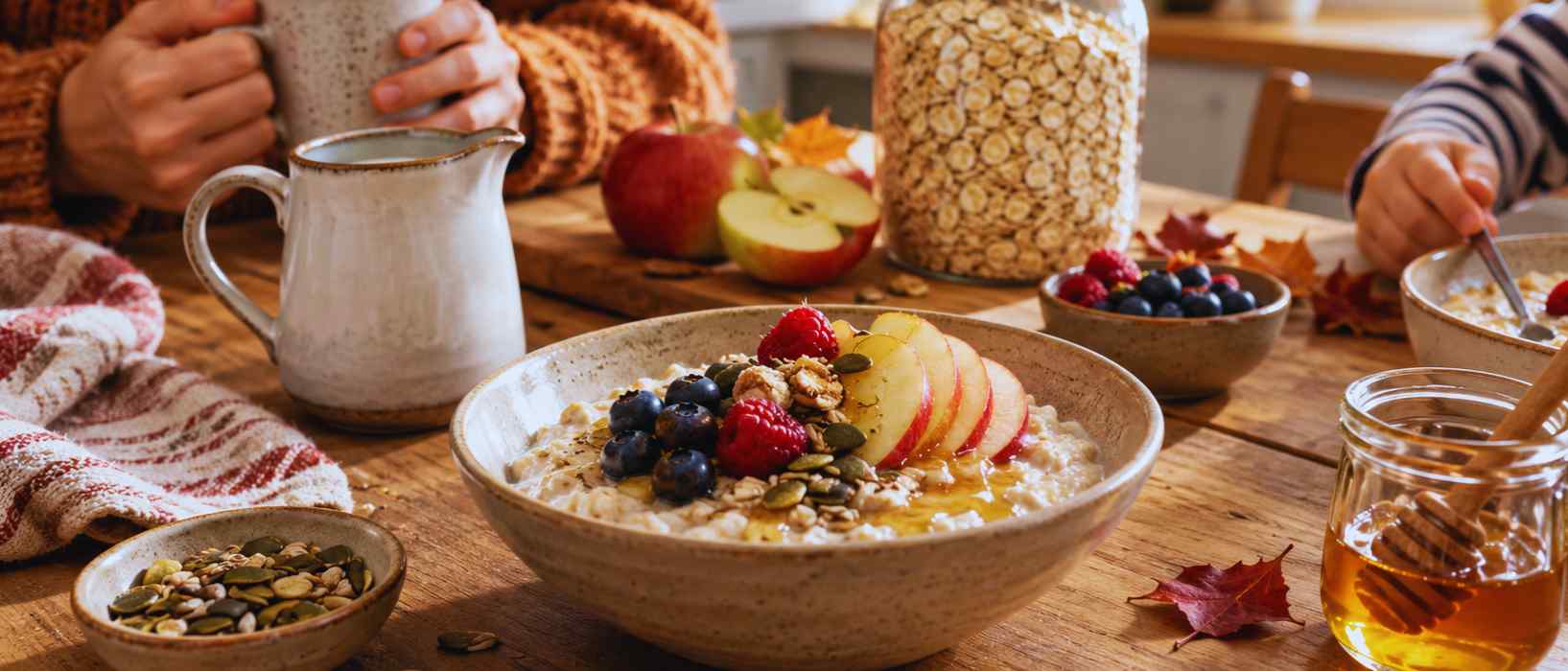
Sustainable Porridge: Introduction
As mornings turn colder, sustainable porridge becomes one of the easiest breakfasts to return to. Oats are affordable, filling, widely grown in Britain and simple to store, yet the environmental footprint of a bowl depends on more than the grain itself.
Milk, toppings, packaging, sourcing and portion size can all change the picture. Sustainable porridge is therefore less about finding a perfect product and more about making a few sensible choices around an already practical staple.

A Brief History of Porridge
Porridge is far older than the breakfast aisle, and people have been cooking crushed grains with water for thousands of years because the method is simple, economical and makes tough grains easier to eat. In Scotland, oats have been part of the diet since at least the Iron Age, helped by their ability to grow in cooler, wetter conditions where other cereals could struggle.
By the seventeenth century, oat porridge, brose and other grain-based dishes were everyday foods across Scotland. Porridge was commonly eaten in the morning and evening, usually savoury rather than sweet, and cooked slowly in one pot over the fire. For working families, it offered a cheap, filling meal from ingredients that stored well and could be grown locally.
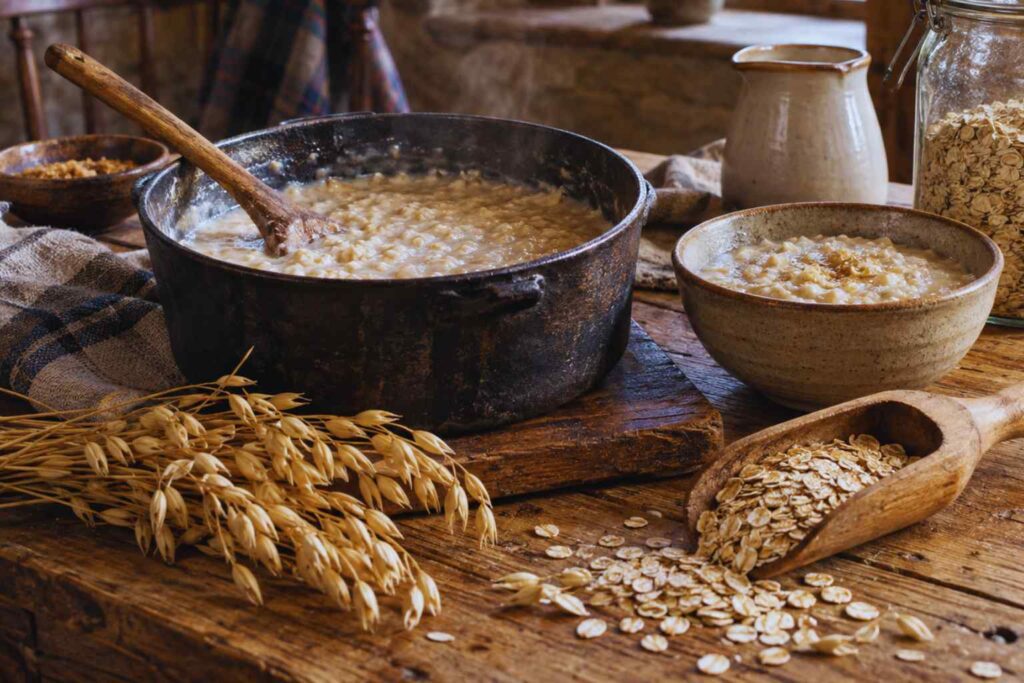
Water-powered mills later made processing oats easier and more consistent. Historic Environment Scotland records that country mills were grinding oats, barley, wheat and peas for local communities right through to the nineteenth century. As industrial milling, transport and packaged cereals expanded, porridge gradually moved from necessity to breakfast tradition.
Today, the basic formula has barely changed: oats, liquid and heat. What has changed is the range of milks, flavours, sachets, toppings and ready-made products surrounding it.
Find Out MoreThe Environmental Impact
Oats are relatively modest in impact compared with many animal-based breakfast foods, although they are not impact-free. Global life-cycle data compiled by Our World in Data puts oatmeal at around 2.5 kg of CO2 equivalent per kilogram (compared to 99 kg in beef). A normal serving uses only a fraction of that amount, so the oats themselves can be a comparatively small part of a bowl’s footprint.
Farming still counts. Fertiliser, field operations, drying, milling and transport all use resources, while yields and farming practices vary. AHDB has highlighted oats as a crop that can work within lower-input UK rotations, and Britain already produces close to one million tonnes in a typical recent year.
Milk can change the calculation considerably. Cow’s milk has a substantially higher average environmental footprint than plant-based alternatives across greenhouse gas emissions, land use and water use. Plant milks are not nutritionally identical, but environmentally the broad comparison is clear. In a bowl using a modest amount of oats and a larger volume of milk, the milk can become the largest part of the climate footprint.
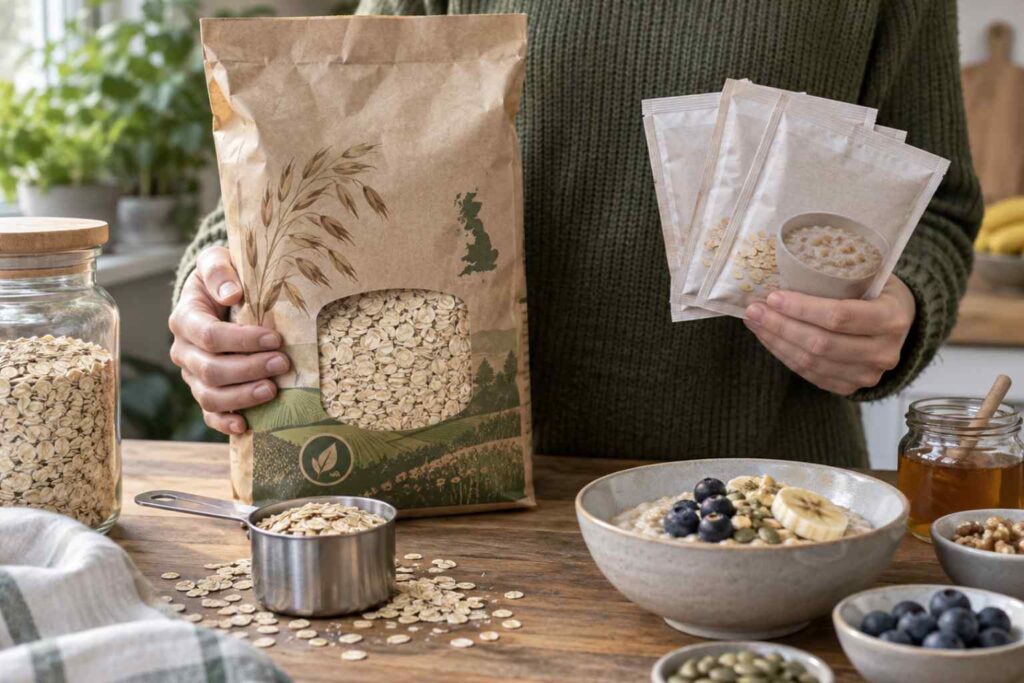
Packaging and waste count too as a large bag of plain oats usually means less packaging per portion than multiple single-serve sachets, while making only what you will eat avoids wasting the food and energy already used.
What to Look For in Sustainable Porridge
When choosing, it’s best to start with plain, 100% oats, as they give you more control over sweetness, portion size and toppings, while avoiding the extra packaging and ingredients often found in flavoured instant formats. If provenance is important to you, look for British-grown oats and brands that explain where their grain comes from rather than relying on vague countryside imagery.
Pack size is another useful clue because Oats keep well when stored dry and sealed, so larger bags can suit households that eat porridge regularly. Recyclable paper packaging is useful where it works for the product, although buying a large pack only helps if you will finish it.
Organic oats can also be worth considering, particularly if you want to support farming that restricts synthetic pesticides and fertilisers, but organic is not a complete sustainability score. Yield, soil management, processing and packaging still affect the overall result.
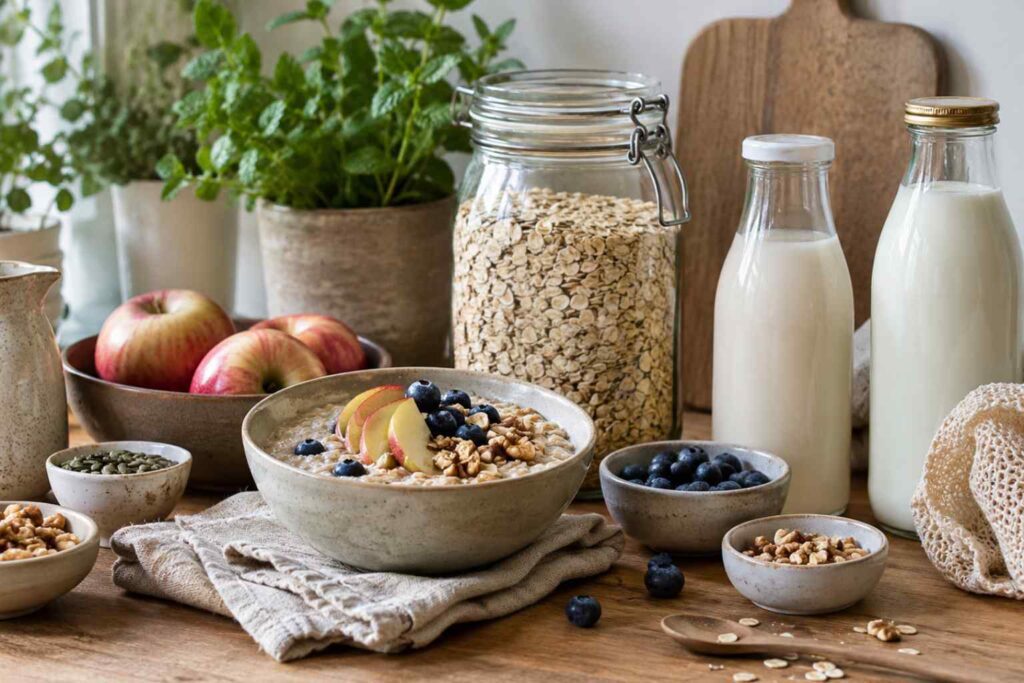
Then look at the whole bowl, as plant-based milks generally have lower environmental impacts than dairy, although their nutritional profiles differ. Then, choose toppings you will actually use, and portion carefully so breakfast does not become another source of food waste.

Three Sustainable Porridge Brands Worth Knowing
Pimhill Farm

Pimhill Farm grows its certified organic oats in Shropshire and has farmed organically since 1949. Its porridge oats are available direct in 850g bags or 5kg sacks, with recyclable paper packaging and UK-wide delivery. The larger size is particularly useful for regular porridge eaters looking to reduce packaging per serving.
Website: https://www.pimhill.com/
Use code OatClub5 for 5% off your porridge oats subscription.
Mornflake

Cheshire-based Mornflake has been milling oats since 1675 and says all its Mighty Oats are grown on British farms. Its porridge range is sold direct online, while the mill uses on-site wind and solar generation. Mornflake’s carbon-neutral milling claim is assessed by ClimatePartner, and its Mighty Oats range uses recyclable packaging.
Website: https://www.mornflake.com/
Use code WELCOME10 for 10% off your first order.
Glebe Farm / PureOaty

Glebe Farm in Cambridgeshire grows and sources British oats from its own land and farmers within 70 miles. Its PureOaty sustainable porridge oats are processed and packed on-site, with production supported by solar panels and biomass. The brand specialises in certified gluten-free oats and currently sells its porridge range directly online.
Website: https://www.glebefarmfoods.co.uk/
Sustainable Porridge: Wrap-Up
Porridge already has many of the qualities we want from a practical autumn breakfast: it is simple, affordable, easy to store and based on a crop widely grown in Britain. That’s why choosing more sustainable porridge does not require reinventing the bowl.
Choosing well-sourced oats, buying an appropriate pack size, thinking about milk and toppings, and cooking the amount you will eat can all reduce unnecessary impact. For something as simple as porridge, those small decisions are really all that is needed.
Create Commercial Value with Play It Green
Play It Green helps businesses make sustainability practical, measurable and commercially sensible.
Our members learn through simple weekly education like this article on sustainable porridge, reduce the business footprint with support and expert signposting, repair nature across land, coast and sea, and create social impact through our 10% revenue giveback to good causes.

That gives your business credible action you can share with employees, customers and other stakeholders, backed by transparent reporting and measurable impact.
If you want to cut costs, reduce risk, attract great people and build stronger customer loyalty through sustainability, including measurement and reduction, nature repair and social impact, speak to Play It Green.
Find Out More