

Sustainable Skin Care: Introduction
Sustainable skin care is the glow-up our planet has been waiting for. For too long, beauty routines have relied on harsh chemicals, plastic packaging and supply chains that leave more scars than smiles. By switching to sustainable products, you can nourish your skin while making choices that protect the Earth.
This week we’ll uncover the fascinating history of skin care, the hidden environmental costs of conventional products, and the qualities that make a routine truly sustainable. We’ll also highlight three brilliant brands proving beauty can be kind.

History
Skin care has been part of human life for millennia. Ancient Egyptians were among the first to develop beauty regimes, using honey, milk, and natural oils to keep their skin supple under the desert sun. Cleopatra famously bathed in milk for its lactic acid properties. In China, rice water and herbal concoctions were treasured for their restorative effects, while the Greeks favoured olive oil and beeswax to protect and soften the skin.

By the Middle Ages, herbal remedies were common across Europe, though access to luxury skin care was reserved for the wealthy. The Renaissance brought more advanced creams and perfumes, and by the 19th century, modern cosmetics were born, with mass production making lotions and potions available to almost everyone.
The 20th century exploded with branded products, from petroleum-based creams to plastic-packaged serums. While this accessibility was a breakthrough, it created new environmental challenges. Today, the focus is shifting again, this time to sustainability. Natural ingredients, eco-friendly packaging, and ethical practices are reshaping the industry to bring beauty back in harmony with nature.
Get In TouchEnvironmental Impact
None sustainable skin care comes with a heavy footprint. Many creams and lotions use petrochemical ingredients taken from fossil fuels. These add to emissions and can remain in the environment long after use. Until recently, exfoliators often contained plastic microbeads. A single tube could release over 100,000 into rivers and seas, harming marine life.

Packaging is another major problem. The beauty industry produces more than 120 billion units every year, most of it plastic. Much of this ends up in landfills or in our oceans. Palm oil, found in countless soaps and creams, is strongly linked to deforestation and loss of wildlife habitats in Asia.
Transport of ingredients and finished products adds another layer of emissions. The result is an industry with a huge environmental impact. Sustainable skin care addresses these issues with natural ingredients, refillable or recyclable packaging and fair supply chains. Choosing greener products helps to reduce waste and protect ecosystems, while still meeting our daily needs.
What to Look For in Sustainable Skin Care
Sustainable skin care begins with ingredients. Choose natural or organic products and avoid parabens, sulphates and other harsh chemicals. Plant oils, butters and botanicals provide effective nourishment without environmental damage. Certifications such as Soil Association Organic, COSMOS Organic and Vegan Society can help guide your choices.
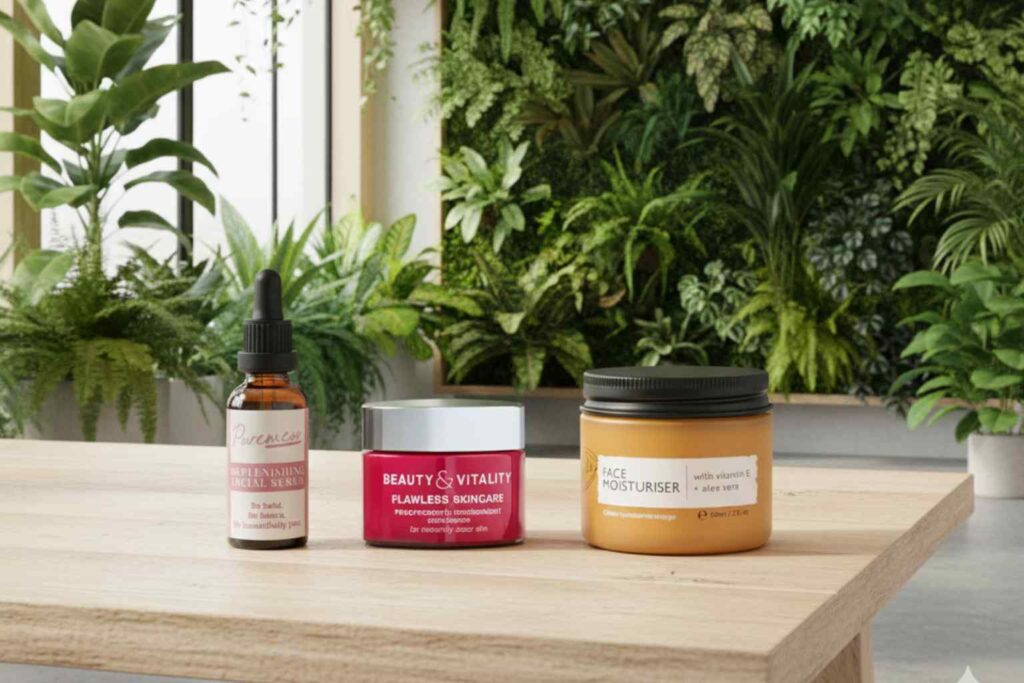
Packaging is just as important. Look for glass jars, aluminium tins or refillable systems. Some companies run return schemes where containers are collected and reused. Compostable or recyclable cardboard adds another sustainable option.
Ethics should guide your choices too. Cruelty-free labels confirm products are not tested on animals. Fairtrade and direct sourcing support farmers and ensure better agricultural practices. Buying from local producers reduces transport emissions and supports smaller businesses.
Longevity is another factor. High quality products often last longer, so you use less and create less waste. A conscious routine means healthier skin and a healthier planet. Every small change in your bathroom can create meaningful impact.

Three Favourite Sustainable Skin Care Brands
UpCircle Beauty
UpCircle Beauty is redefining skin care by transforming food waste into natural products. Repurposed coffee grounds and fruit extracts become effective scrubs and serums. All packaging is recyclable and the brand is cruelty-free and vegan. UpCircle shows how circular thinking can reduce waste and deliver results. Use code PLAYITGREEN15 at checkout for 15% off.
Puremess Skincare
Puremess Skincare produces handmade, small-batch products with a focus on natural ingredients. All items are cruelty-free, plastic-free and packaged sustainably. They make face, body and bath products which combine indulgence with responsibility. Supporting them means backing a cleaner and more ethical beauty industry. Use code PLAYITGREEN15 at checkout for 15% off.
Beauty & Vitality
Beauty & Vitality creates skin care with natural and organic ingredients while avoiding harsh chemicals. Packaging is designed with the environment in mind and sourcing is ethical. Their focus on clean, plant-based formulas makes them a strong choice for people who value both skin health and sustainability.
Sustainable Skin Care: Wrap Up
Sustainable skin care shows that beauty and ethics can go hand in hand. By switching to eco-friendly products, you’re cutting plastic waste, supporting fair practices, and reducing environmental harm, all while keeping your skin healthy and radiant.
Small choices, made daily, add up to powerful change. At Play It Green, our community believes in reducing footprints, repairing nature, and regiving to good causes. Together, we can create ripples that lead to real transformation. Why not let your skin care routine be part of the solution?
Join The Community Making Change
Get more tips like this one on sustainable skin care and integrate net zero action, education, nature repair and social impact into your personal life and business operations. Because making positive change shouldn’t be hard, it should be impactful!
Join Play It Green now for £5 per person per month!
Sign UpWant more info before deciding? Click here.