
Sustainable Slow Cookers: Introduction
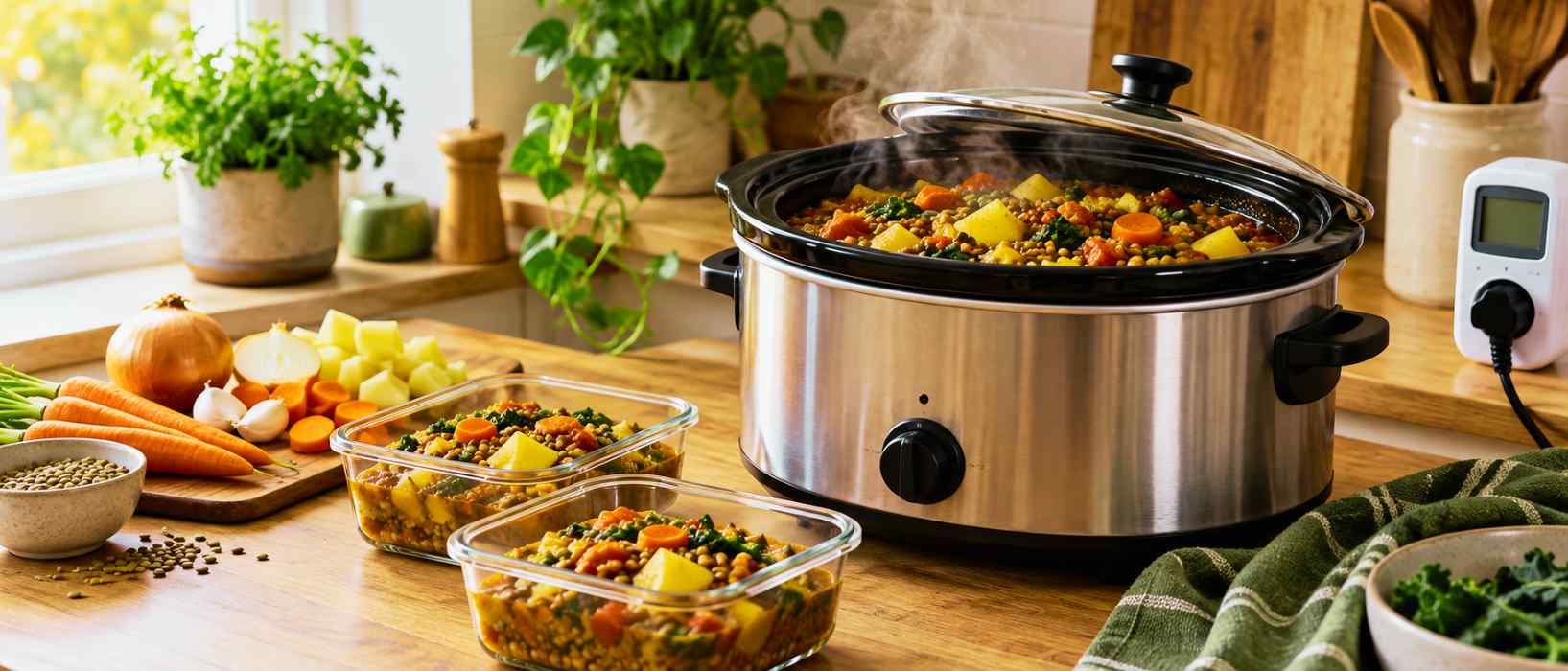
Sustainable slow cookers are often described as energy-saving kitchen heroes, especially when colder weather makes soups, stews and curries more appealing. The useful answer is more balanced, because a slow cooker can be efficient for the right meal without being the best option for every kind of cooking.
A slow cooker heats a small, covered pot over several hours, rather than heating a whole oven cavity. That can make sense for long, gentle recipes, particularly when you cook extra portions and reduce food waste. However, a microwave may be better for reheating one meal, an air fryer may suit crisp food, and a hob can be more practical for quick cooking. Using the right appliance for the job is where the real saving begins.
A Brief History of Slow Cookers
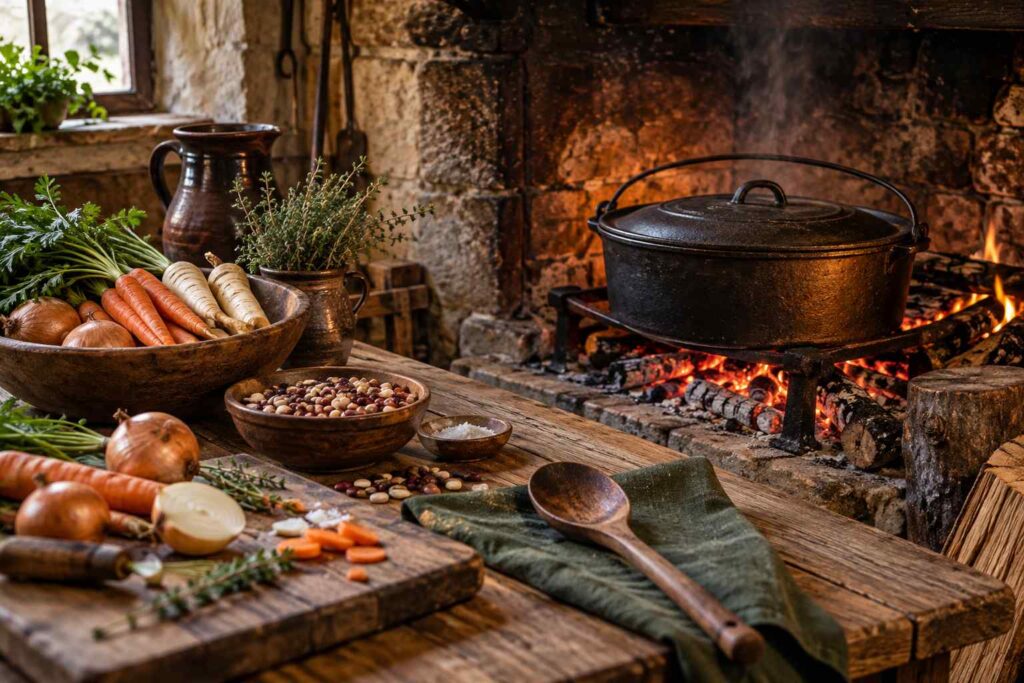
Slow cooking is much older than the modern kitchen appliance. For centuries, people cooked food slowly over fires, in clay pots, in hay boxes and in ovens that held residual heat after bread had been baked. The principle was simple: steady heat and time could turn tougher ingredients into nourishing meals, while using the heat already available as efficiently as possible.
The electric slow cooker became popular in the twentieth century, as more households looked for convenient ways to cook around work, family life and changing routines. Crock-Pot helped popularise the format in the 1970s, and the basic idea has stayed familiar ever since: add ingredients, apply low heat, keep the lid on and let time do the work.
Today, sustainable slow cookers range from simple manual appliances to multi-cookers with searing, steaming and keep-warm functions. That choice can be useful, although the most sustainable option is not automatically the most complicated one. It is usually the appliance that suits the food you actually cook and gets used regularly.
The Environmental Impact of Slow Cookers
The environmental case for sustainable slow cookers starts with energy use, but it should not end there. A typical slow cooker uses far less power while running than a conventional electric oven, although it runs for longer, so the comparison depends on the recipe, the appliance and how much food you cook.
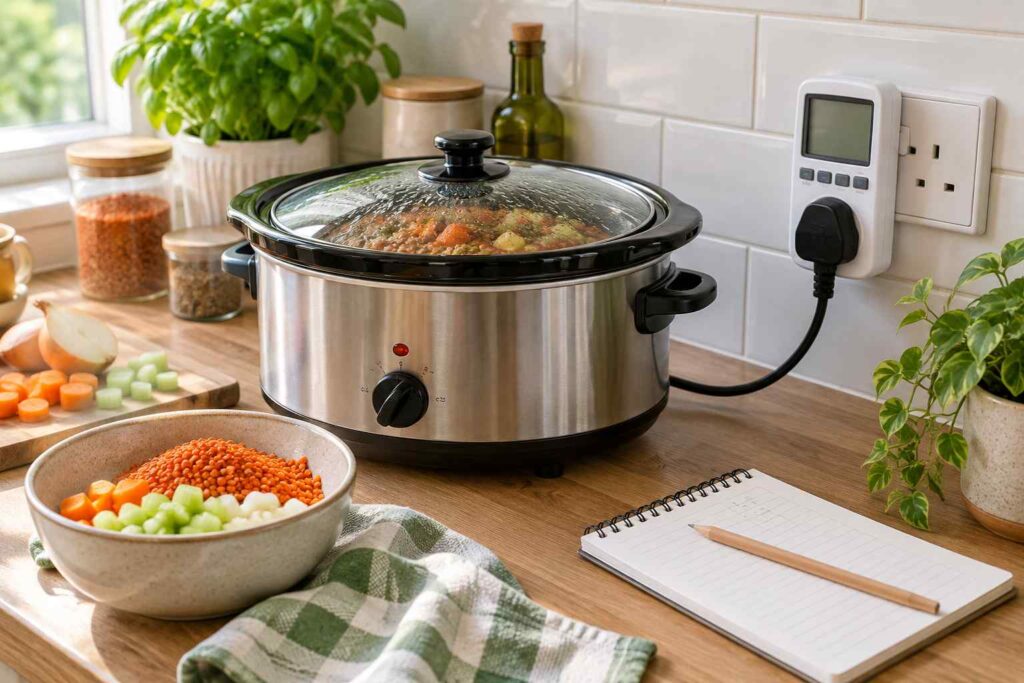
Ofgem’s price cap for 1 October to 31 December 2026 gives an average electricity unit rate of 26.32p per kWh for standard variable tariff customers paying by Direct Debit in England, Scotland and Wales. Using that rate, a 160W slow cooker running for seven hours would use about 1.12 kWh, costing roughly 29p for the cooking session. A 200W model running for eight hours would use 1.6 kWh, costing roughly 42p.
An electric oven is harder to compare because ovens cycle on and off rather than drawing full power continuously. Even so, long oven cooking often uses far more energy because a much larger space has to be heated. For casseroles, stews, chilli and dhal, a slow cooker can therefore make sense, especially when batch cooking helps reduce avoidable food waste.
What to Look For in Sustainable Slow Cookers
Before investing in sustainable slow cookers, check whether you already have an appliance that does the job. A slow cooker sitting unused in a cupboard is not really helping, and a multi-cooker you already own may have a slow-cook setting that works perfectly well.
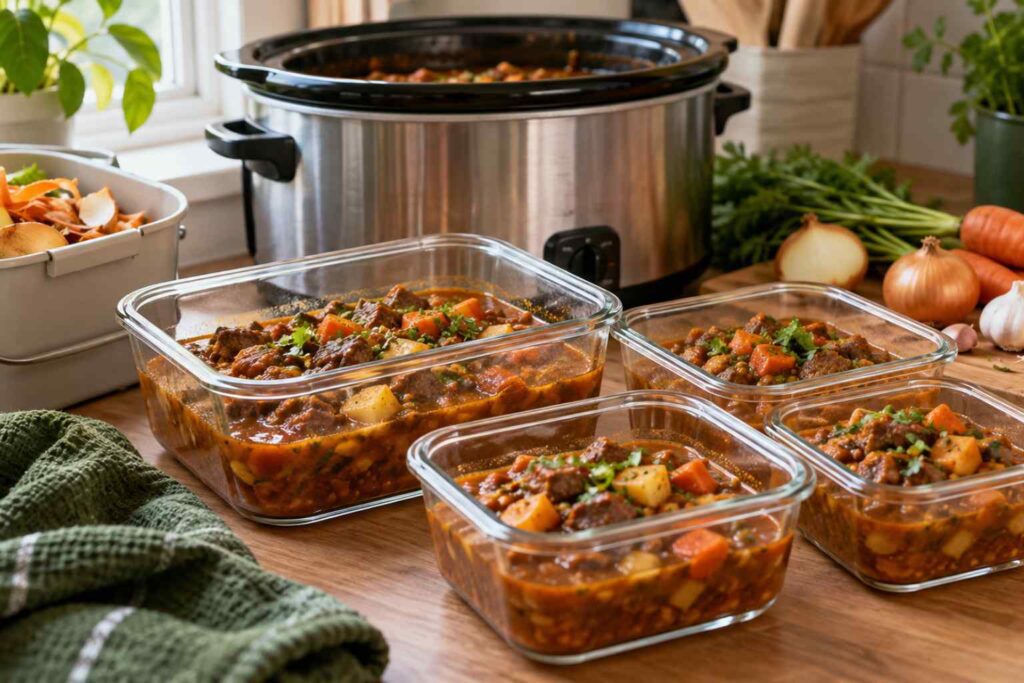
If you do need one, choose the right size for your household. A compact model can work well for one or two people, while larger households may need a bigger pot for batch cooking. Look for clear controls, a removable pot, a lid that fits well and settings you will actually use. A sear or sauté function can also be useful, because browning onions, spices or meat before slow cooking can improve flavour without creating extra washing up.
Food safety should also be part of the decision. Follow the manufacturer’s instructions, cook food until it is steaming hot, cool leftovers quickly and remember that warm mode is for keeping cooked food warm, not cooking raw food from cold. GOV.UK guidance says reheated food should be steaming hot all the way through and only reheated once, so leftovers are usually better reheated separately. For smaller households, a compact slow cooker may be more useful than a large family model.

Three Slow Cooker Options Worth Knowing
Lakeland 1.5L Compact Slow Cooker
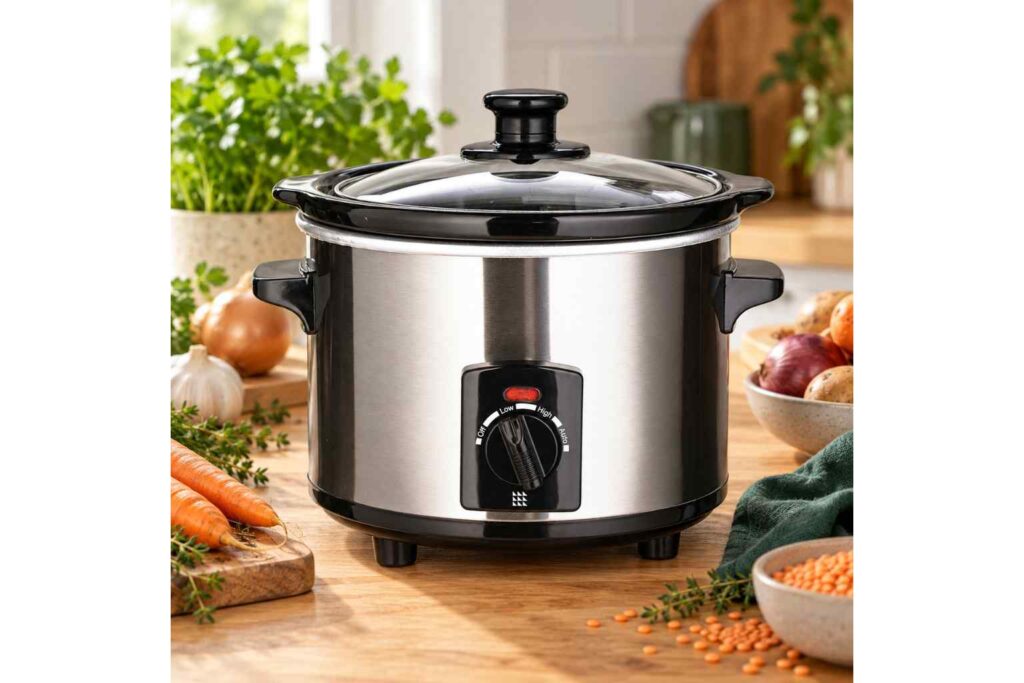
Lakeland’s 1.5L compact slow cooker is designed for smaller households, students or people cooking modest portions. A smaller appliance can be useful if you are cooking for one or two and do not want a larger pot sitting half-empty.
Website: Lakeland 1.5L Compact Slow Cooker
Use voucher code SAVE10 (min spend £30) or SAVE20 (min spend £50), for 10 or 20% off your order, subject to product eligibility.
Crock-Pot 3.5L Sizzle and Stew Slow Cooker
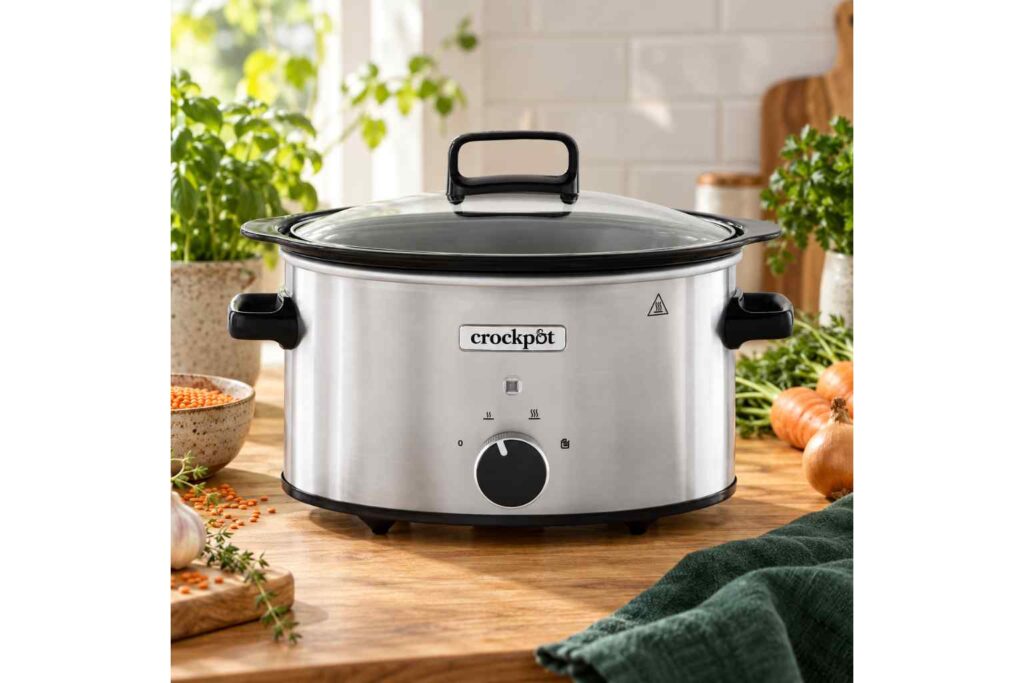
Crock-Pot’s 3.5L Sizzle and Stew model is a more traditional family-sized option, with a removable bowl that can be used for searing before slow cooking. That can make recipes easier because flavour-building and slow cooking happen without needing extra pans.
Website: Crock-Pot 3.5L Sizzle and Stew
Morphy Richards 3.5L Sear and Stew Slow Cooker
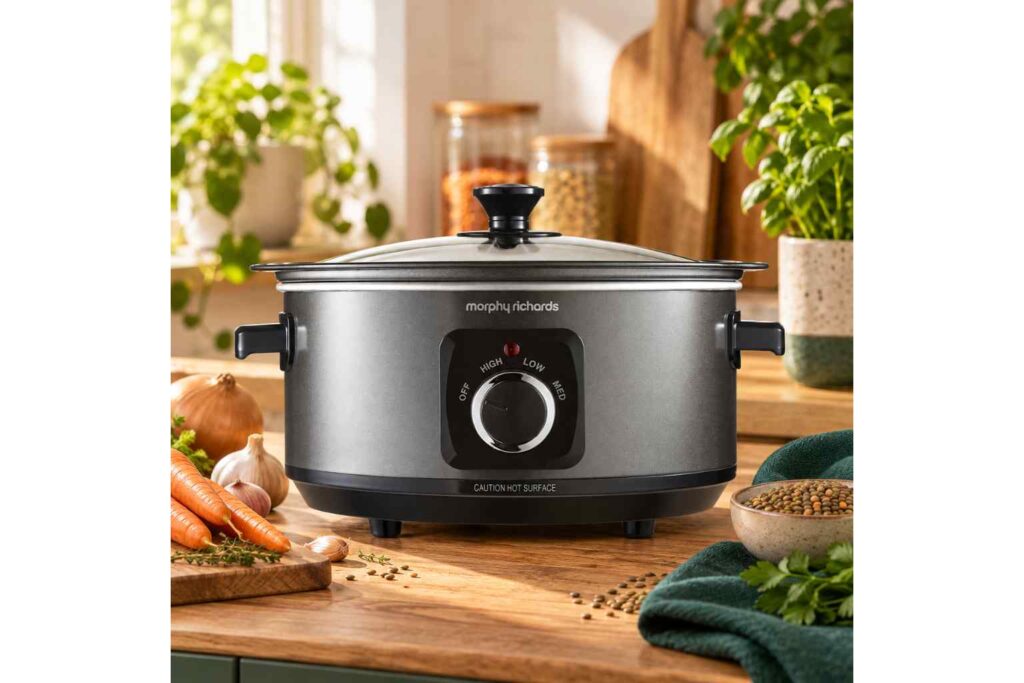
Morphy Richards also offers a 3.5L Sear and Stew slow cooker with a hob-safe cooking pot, making it another practical choice for people who want to brown ingredients first and then slow cook in the same pot.
Website: Morphy Richards 3.5L Sear and Stew Slow Cooker
Use voucher code SOCIAL20 for 20% off your first order.
Sustainable Slow Cookers: Wrap-Up
Sustainable slow cookers are useful when they are used for the right meals. They can reduce energy use compared with long oven cooking, make batch cooking easier and help turn everyday ingredients into several portions, although they are not automatically the cheapest or best option for every cooking task.
The key is to use a slow cooker for food that benefits from time, choose the right size appliance, keep the lid on and make extra portions when it makes sense. At Play It Green, we believe practical sustainability should make everyday decisions easier, and choosing the right appliance for the right meal is a small habit that can save energy, reduce waste and make home cooking feel simpler.