
Sustainable Stationery: Introduction
Sustainable Stationery can make the late-summer return to school and work feel organised without filling another drawer with duplicates. Fresh notebooks, bright highlighters and untouched pencil cases carry a certain appeal, especially when September feels like a reset, yet the greener starting point costs less: check what still works, finish half-used supplies, then replace genuine gaps.
This week’s guide on sustainable stationery covers notebooks, refillable pens, pencils, highlighters, sticky notes, tape and cases across school, home and work. We look past cheerful green packaging to the materials, refill systems and disposal routes that decide whether everyday supplies earn their environmental claims.

A Brief History of Stationery
The word stationery has roots in the fixed stalls, or stations, used by booksellers and writing-material suppliers around St Paul’s Cathedral. London’s Stationers’ Company dates its formation to 1403, when the trade included manuscript sellers, illustrators, binders and suppliers of writing materials.
Paper, ink and binding remained costly for centuries, so people reused scraps, sharpened quills and repaired books. Pencil making later became closely linked with Cumbria after graphite was found in Borrowdale during the sixteenth century. Keswick developed a thriving cottage industry, followed by a pencil factory in 1832.
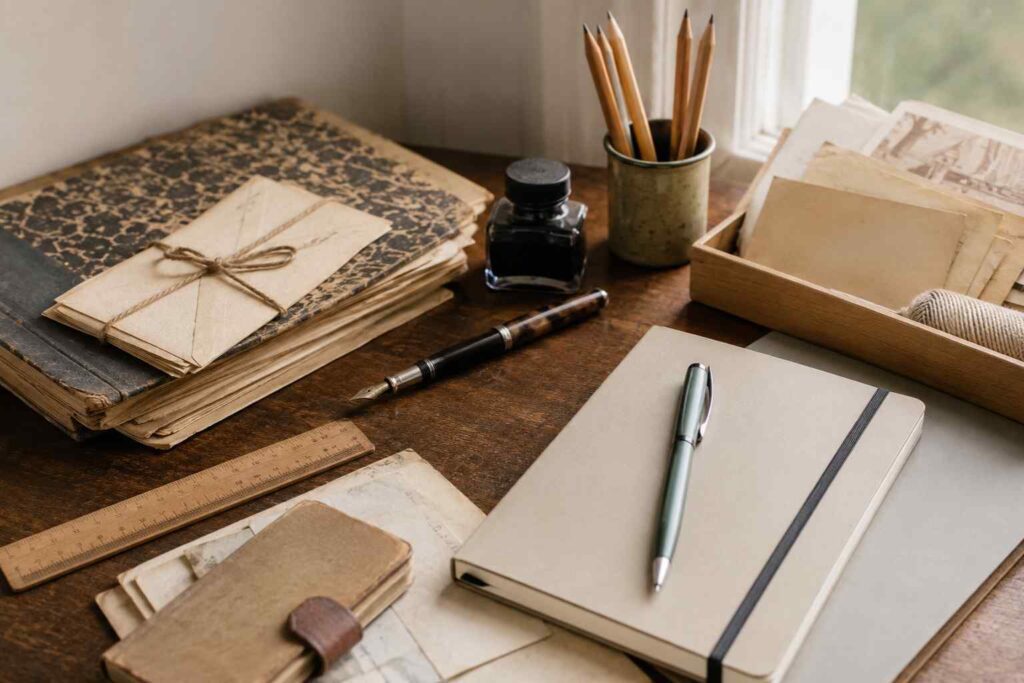
Industrial production changed the desk as schooling, clerical work and growing businesses created demand for standard notebooks, pencils, files and labels. Transparent cellulose tape arrived in 1930, giving homes and offices a quick way to mend paper and seal parcels. Post-it Notes reached US shops in 1980 after 3M turned a low-tack adhesive into a removable note.
Stationery gradually shifted from carefully maintained tools into low-cost, frequently replaced supplies. Sustainable Stationery now asks an older question: can a useful tool earn its place through care, repair and repeated use? That history explains why today’s biggest opportunity sits in how much we buy, how fully we use it and what happens next.
Find Out MoreThe Environmental Impact of Stationery
Sustainable Stationery deals with two large material streams (which mostly end up being waste): paper and plastic. Recycle Now reports that the UK uses about 12 million tonnes of paper each year. Across Europe, 75.1% of paper products were recycled during 2024, according to the European Paper Recycling Council. That strong rate still leaves losses through contamination, coatings, adhesives and items placed in general waste.
Plastic creates a different problem, and the United Nations Environment Programme estimates that humanity produces over 430 million tonnes annually, with two-thirds used for short-lived products. Disposable pens, highlighters, tape dispensers, rulers and plastic cases form a small slice individually, yet schools and workplaces buy them in large, repeated volumes.9
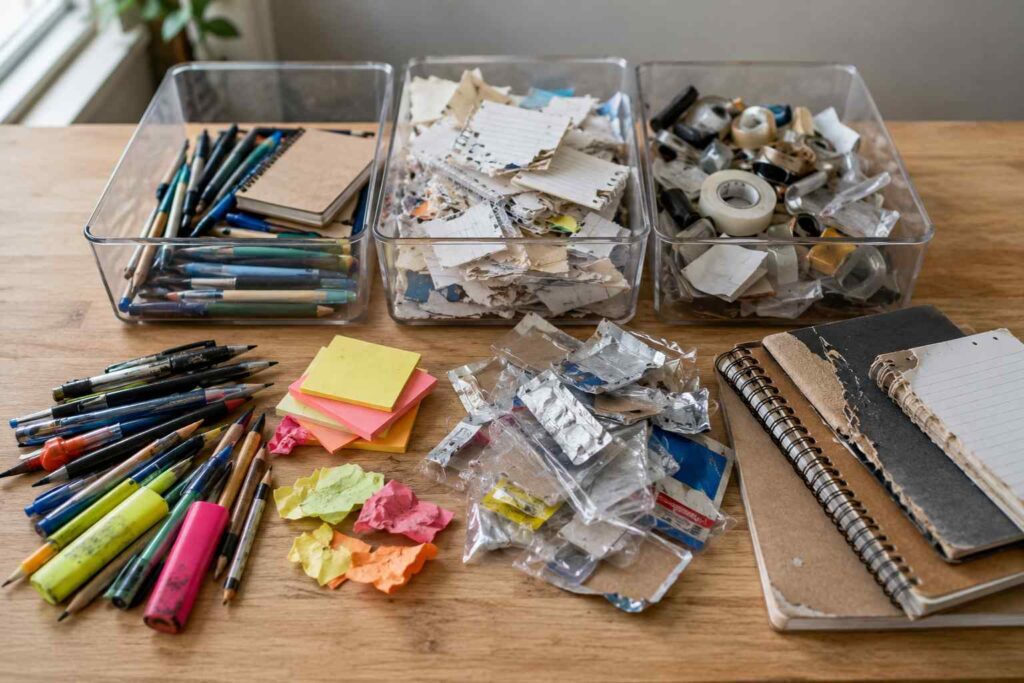
Recycling labels can create false confidence, as Recycle Now states that sticky tape belongs in general waste and loose strands should be removed from paper and card. Its paper guidance excludes sticky notes, labels and paper tape from household paper recycling. Pens and highlighters rarely enter kerbside collections, and the UK’s free national writing-instrument programme closed in December 2024, meaning only paid specialist schemes remain available.
For Sustainable Stationery, the strongest reduction happens before the bin. Using every page, refilling a reliable pen and sharing surplus stock prevent new manufacturing, packaging and deliveries from starting.
What to Look For in Sustainable Stationery
Choosing Sustainable Stationery starts with a stocktake at home, in classrooms and across office cupboards. Gather duplicates, test pens, sharpen pencils and move usable supplies where they are needed. A shared stationery point can stop five teams ordering the same box of markers.
For notebooks, planners and sticky notes, favour clearly stated recycled content. FSC labels offer evidence for forest-based materials: FSC 100% comes from certified forests, FSC Recycled uses verified reclaimed material, and FSC Mix combines certified, recycled or controlled sources. Product-level labels carry far more weight than a general website claim.
Refill systems also need practical checks. You should confirm that refills are sold in the UK, fit one clear model and cost less than replacing the whole item. Refillable pens, mechanical pencils and markers work best when spare parts stay easy to buy. For highlighters and inks, look for water-based, low-odour options with clear ingredient or safety information, whilst wooden pencils should use certified timber and minimal paint.
Choose a pencil case already owned, or a durable fabric design with a repairable zip. Paper-based tape can still contain adhesive that blocks household recycling, so use it sparingly and check local guidance. At work, standardise a short approved range, consolidate deliveries, reject unnecessary promotional pens and ask suppliers about reclaimed packaging, refill availability and take-back routes.

Three Sustainable Stationery Brands Worth Knowing
The Green Stationery Company
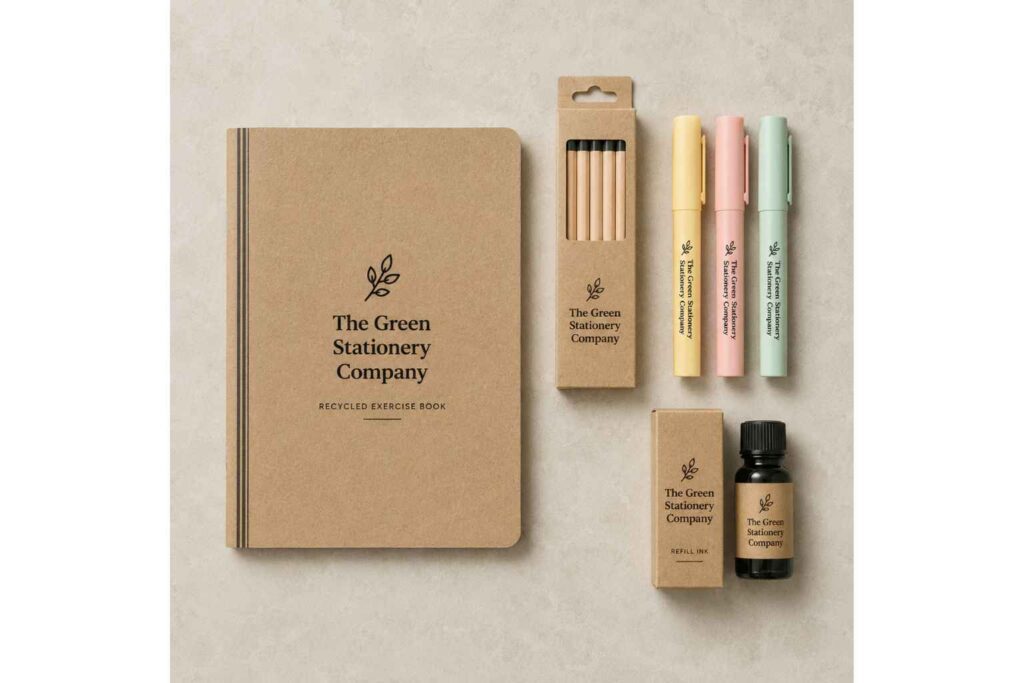
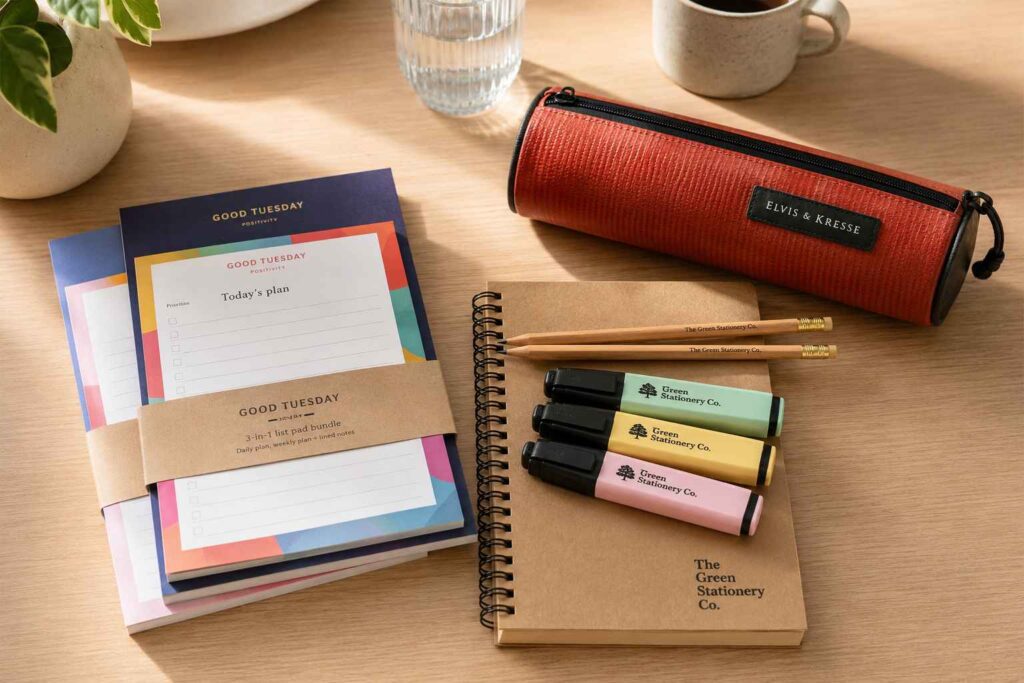
The Green Stationery Company is primarily an office supplies company with over 500 products that have environmental advantages over the standard items. Founded in Bath in 1989, it is the UK’s original recycled-paper and green office supplier. The range includes recycled notebooks and exercise books, refillable markers and highlighters, pencils, adhesives, tape and long-life office supplies. A giveaway bundle can show several realistic changes together, rather than treating one product as the complete answer.
Website: https://www.greenstat.co.uk/
Use voucher code PLAYITGREEN15 for 15% off your first order (offer ends six weeks from publication date).
Good Tuesday
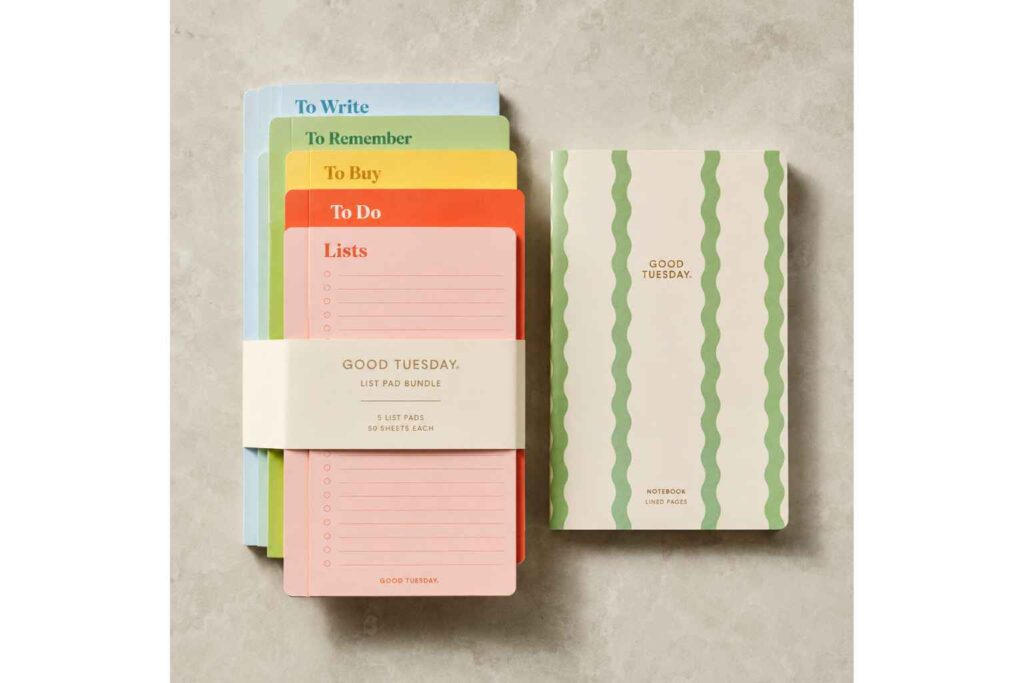
Good Tuesday brings colour and strong environmental evidence to paper goods for school, home and work. The Cornwall-based, female-led business became a certified B Corp in 2024. Every paper product is designed and printed in the UK using 100% recycled paper, and orders leave a plastic-free warehouse in minimal packaging. Its colourful notebooks and list pads make useful everyday supplies, strong product photography and an attractive community giveaway.
Website: https://goodtuesday.com/
Use voucher code PLAYITGREEN10 for 15% off your first order (offer ends 6 weeks from publication).
Elvis & Kresse
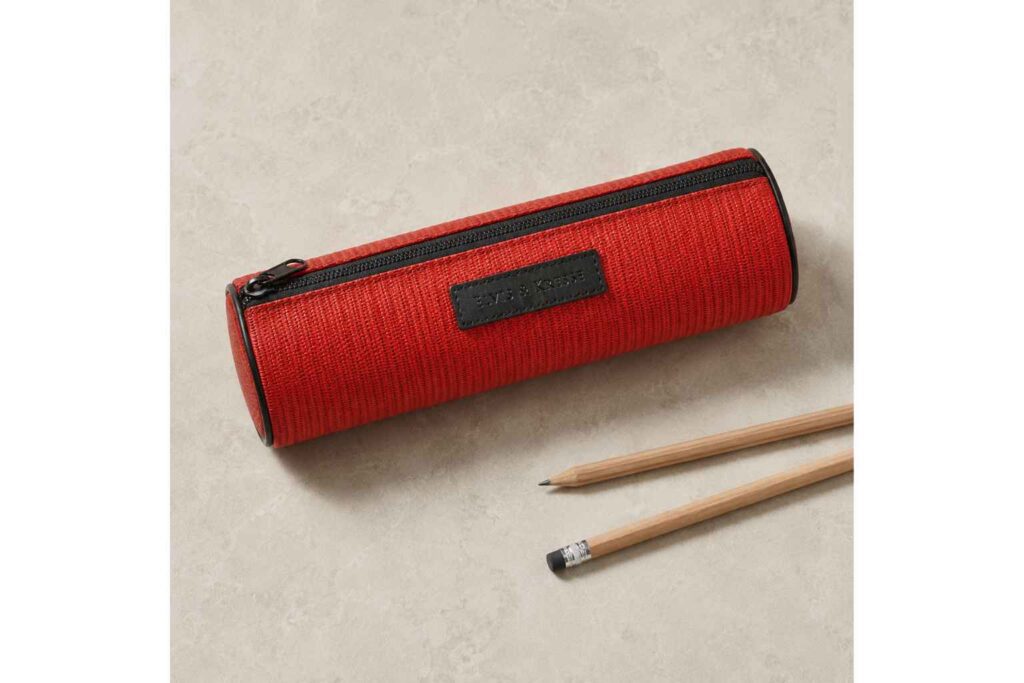
Elvis & Kresse transforms genuine decommissioned British fire-hose into a durable pencil case designed for years of use. It is lined with reclaimed military-grade parachute silk, handmade in small batches and supported by a repair service. The fire-hose collection is vegan-friendly, and 50% of its profits go to The Fire Fighters Charity. Its recognisable reclaimed material and practical purpose make the pencil case a memorable giveaway for school, home or work.
Website: https://www.elvisandkresse.com/products/pencil-case
Use voucher code SEUK for 10% off your first order.
Play It Green members may have a chance to win products from this week’s featured brands – keep an eye out in your weekly newsletter, and if you aren’t a member yet, now might be a great time to join us!
Sustainable Stationery: Wrap-Up
Sustainable Stationery starts with the supplies already waiting in drawers, bags and cupboards. Finish them, share them and keep reliable tools working before adding anything new.
When replacement becomes necessary, recycled or certified paper, accessible refills, durable cases, safer inks and minimal packaging give each purchase a better chance of lasting. Honest recycling guidance matters too, since a paper label or plant-based claim does not guarantee a kerbside bin route.
Across the Play It Green community, small purchasing decisions gain weight through repetition, so please share this guide with a parent, teacher or workplace buyer, then run a ten-minute stationery stocktake before the September orders begin.
If you enjoyed this tip on Sustainable Stationery, why not become part of a community creating positive change every day by joining Play It Green?
We help you reduce your footprint, repair the planet, and regive to social causes that matter, all through simple, measurable actions that fit your business.

Everyone wants to see impact, not promises. With Play It Green, your sustainability journey becomes visible, credible, and rewarding.
Join us today and turn good intentions into lasting results.
Sign Up