
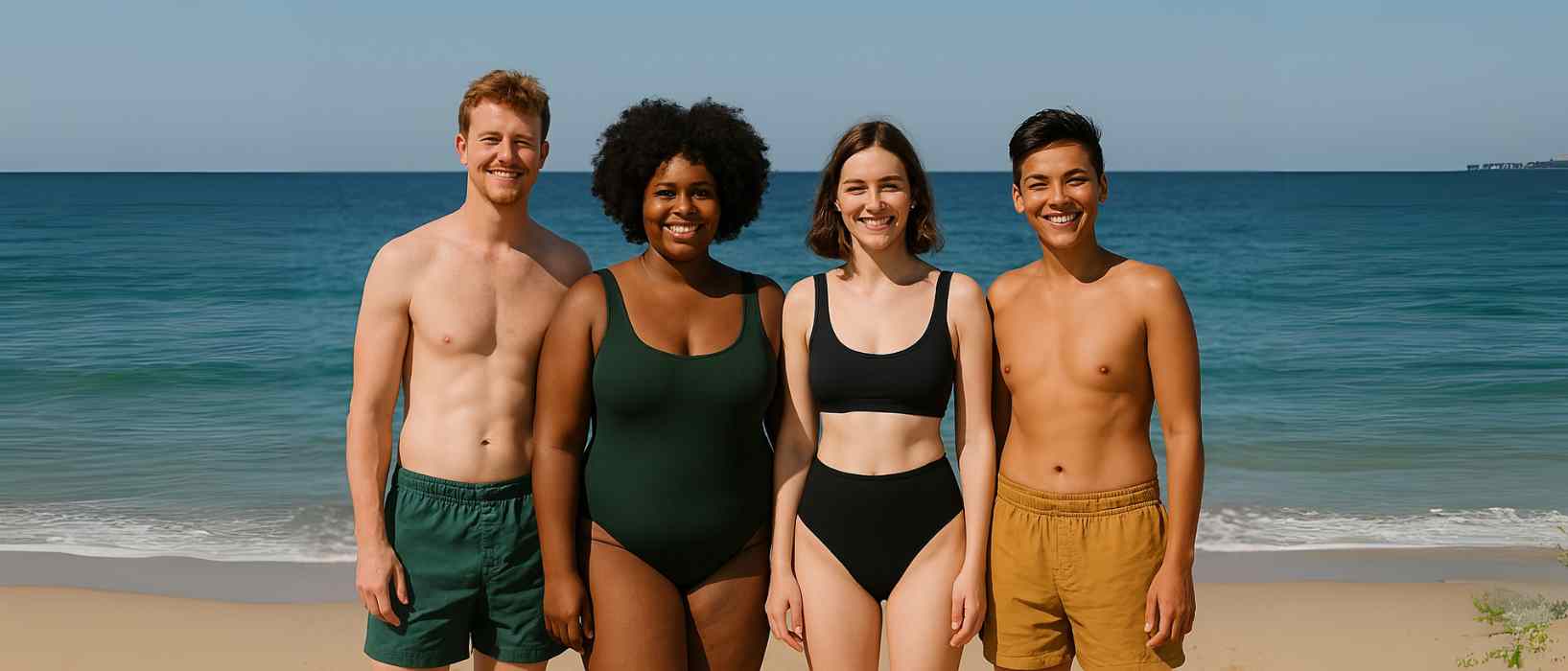
Sustainable Swimwear: Introduction
Sustainable swimwear is the hot trend we didn’t know we needed, but our oceans certainly did. From infinity pools to British beach breaks, we’ve all got our eye on sunshine, but our swimwear might be doing more damage than that dodgy sunburn. Traditional swimsuits are stylish, stretchy, and unfortunately, soaked in plastic. The good news? Eco-friendly alternatives are now making waves in all the right ways.
So, whether you’re planning a poolside snooze or a chilly dip in the North Sea, it’s time to strip off the synthetics and slip into something more sustainable. And don’t worry, planet-friendly doesn’t mean style-unfriendly. These suits can be sleek, supportive, and a statement for change.

A Brief History of Swimwear
Swimwear has been through more changes than the British weather. Thousands of years ago, ancient Greeks and Romans were happy to swim nude, with the odd tunic thrown on for modesty. Fast forward to the 19th century and things got decidedly less breezy. Men wore full-body suits and women were weighed down by layers of fabric, trying not to drown in the name of decency.
In the early 1900s, Australian swimmer Annette Kellerman caused a scandal (and a few arrests) by wearing a fitted one-piece. Shocked? So were the Victorians. But it caught on. Carl Jantzen introduced the first two-piece in 1913, and swimwear started slimming down.

The 1930s saw nylon enter the picture, making suits lighter and quicker to dry. Then came 1946, when French designers Jacques Heim and Louis Réard unleashed the bikini on the world. Modesty took a back seat and beachwear took a bold step forward.
By the 1960s and 70s, we had monokinis, elastane, and swimwear that could actually move with your body. These days, it’s all high-tech fabrics and performance-focused cuts. From full coverage to almost none, swimwear has always reflected society’s shifting attitudes, shaped by culture, innovation and a healthy dose of rebellion.
Ask Play It Green A QuestionEnvironmental Impact of Conventional Swimwear
It might be tiny, but your bikini has a big environmental footprint. Most swimwear is made using nylon or polyester, both synthetic fibres derived from petroleum. Producing these materials is energy-intensive and polluting, releasing greenhouse gases like nitrous oxide, which is 300 times more potent than CO₂. In fact, creating 1 kg of virgin nylon produces nearly 20 kg of carbon emissions.
Worse still, synthetic fibres shed microplastics every time you wash them. These tiny fragments make their way into rivers, oceans, and even our food chain. The fashion industry is responsible for 35% of all microplastics in the sea, and stretchy swimwear is a key culprit.

Fast fashion adds fuel to the fire. Cheap suits are churned out quickly and discarded after a few wears. With poor recycling options for blended materials, most swimwear ends up in landfill. Packaging is another issue. Plastic tags, hangers, and wrappers often aren’t recyclable.
Beyond the fabric, there’s the human cost. Garment workers in low-wage countries often face exploitative conditions, long hours, and unsafe environments. So that “bargain” bikini might be costing more than you think, socially, ethically, and environmentally.

What to Look For in Sustainable Swimwear
Shopping sustainably doesn’t mean giving up style. It means asking a few more questions and supporting brands doing things the right way. Start with fabric: ECONYL® is a game-changer. It’s made from reclaimed fishing nets, ocean plastic, and landfill waste, regenerated into high-quality nylon. Repreve®, made from recycled plastic bottles, is another solid choice. Both reduce reliance on fossil fuels and turn waste into wearables.
Transparency is key. Good brands won’t hide behind vague terms. They’ll tell you where their products are made, how workers are treated, and what’s in their textiles. Look for OEKO-TEX® certified fabrics (free from harmful chemicals), GRS (Global Recycled Standard), and B Corp status for social and environmental accountability.

Think local, too. UK- or EU-made swimwear typically has a lower transport footprint and stronger labour protections. And it’s not just about the fabric. Watch for biodegradable or recyclable packaging, plastic-free tags, and circular initiatives like take-back schemes.
A truly sustainable brand considers the entire lifecycle: from design and production to end-of-life disposal. When swimwear is built to last, made ethically, and doesn’t leave a legacy of plastic, everyone wins. Especially the sea turtles.

Three Favourite Brands for Sustainable Swimwear
Outerknown
Founded by surfing legend Kelly Slater, Outerknown is serious about style and sustainability. Their swimwear line uses ECONYL®, a regenerated nylon made from ocean waste, and their supply chains are built on transparency and ethical practices. With certifications like Fair Trade and circular initiatives such as garment recycling, Outerknown proves you don’t have to compromise on ethics or aesthetics when hitting the waves. Use code WELCOME15 at checkout for 15% off your first order!
Lilja the Label
Based in Finland, Lilja the Label creates dreamy, minimalist swimwear with sustainability at its core. Using ECONYL® and OEKO-TEX® certified fabrics, their suits are ethically produced in small batches to reduce waste. Even their packaging is plastic-free and compostable. If you want eco-luxe that feels as good as it looks, Lilja has you covered, literally. Use code WELCOME10 at checkout for 10% off your first order!
Jessica Rey
Jessica Rey blends timeless elegance with eco-conscious design. Her swimsuits are made in the USA from recycled materials, and the brand champions ethical manufacturing with fair wages and safe working conditions. Each piece is designed to last, both in quality and style. Proving that luxury, and sustainability can all live happily on the same sun lounger. Sign up to their newsletter for 15% off your first order!
Sustainable Swimwear: Wrap-Up
Sustainable swimwear lets you enjoy summer without polluting the very waters you’re splashing in. Whether it’s recycled fabrics, ethical production, or plastic-free packaging, every decision counts. Brands like Outerknown, Jessica Rey, and Lilja the Label show that sustainability and style can go hand in hand—or hand in flipper.
At Play It Green, we believe small swaps can lead to big change. So this summer, let your swimsuit be a statement, not just of fashion, but of values. By choosing sustainable swimwear, you’re helping clean up our oceans, protect marine life, and support ethical businesses.
Be Green Every Day – Play It Green
By partnering with Play It Green, you can integrate sustainable action, education, tree planting, mangrove restoration, seaforestation and social impact into your life and business operations. Whether it’s adding nature repair to your sales process, engaging employees, or strengthening your environmental credentials, the tools and support are there to make it simple.
Sign UpWant more info before deciding? Click here.