
The Cascade Effect: Introduction
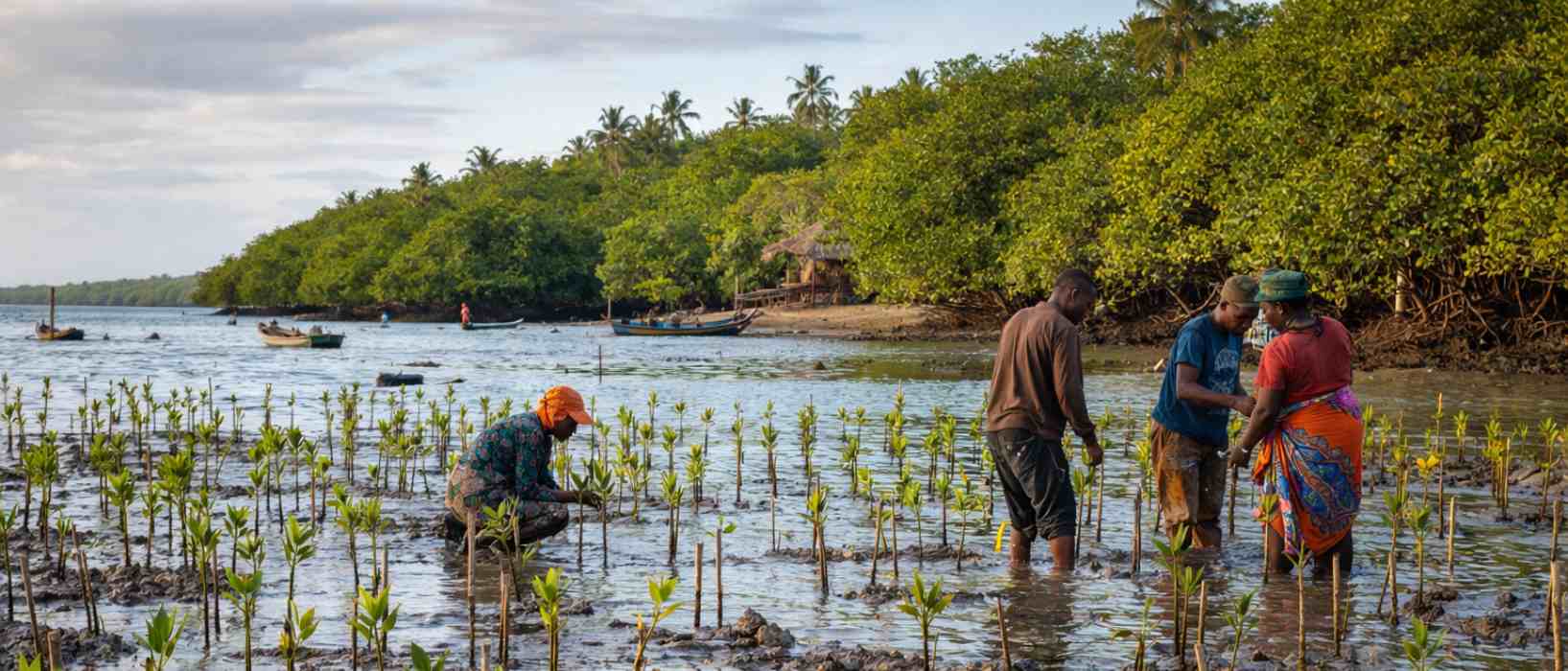
The Cascade Effect is the right phrase for this month’s Nature Repair Report, as our mangrove repair works through stages and not in one instant result. Supported by the Play It Green community, this work is helping damaged coastal systems begin rebuilding over time.
Mangroves are far more than a line of trees by the sea. They protect shorelines, hold sediment in place, create shelter for smaller species and support the young fish and invertebrates that coastal food systems depend on.
That is why this report looks past planting totals. The deeper question is what begins to return when a mangrove system has time, protection and monitoring in place.

Why the Cascade Effect Takes Time
The Cascade Effect does not happen overnight. Restored mangroves can recover important functions, though the process tends to move in steps rather than one straight line back to a natural site.
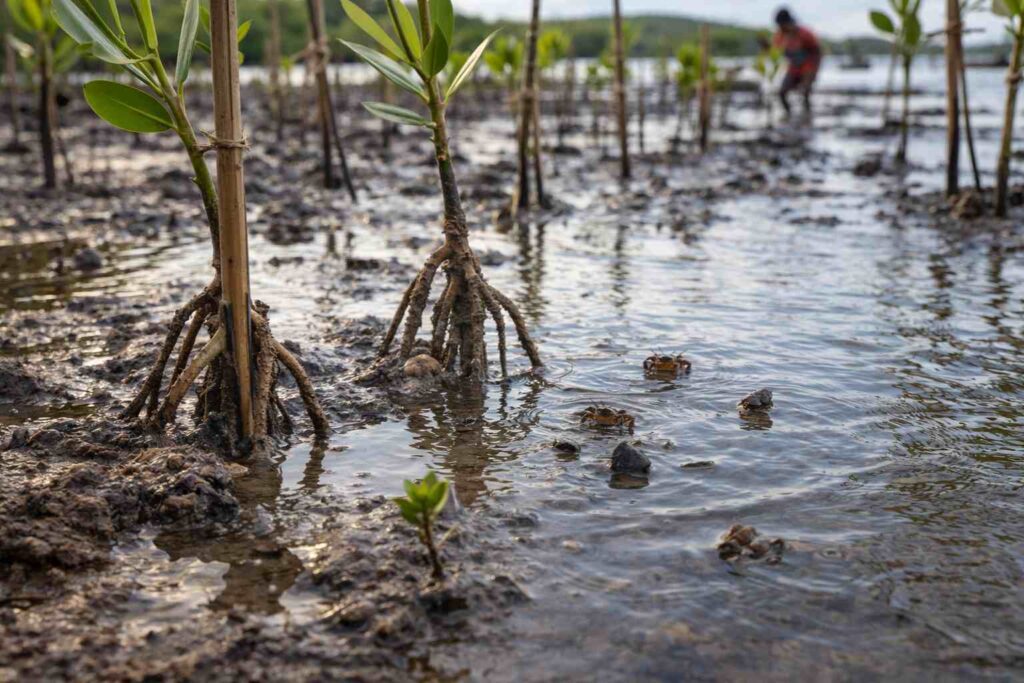
The first changes are often structural as roots begin holding sediment, shallow waters become more sheltered, and the site starts offering cover for smaller organisms. Those early gains matter, even when the wider system is still in recovery.
Over time, those smaller changes can support bigger ones. As habitat improves, the food web has a better chance to rebuild from the ground up. That is a more honest way to describe progress than pretending the whole system is repaired straight after planting.
What the Cascade Effect Can Bring Back
One of the clearest early signs in the Cascade Effect is the return of life close to the sediment and root zone. Molluscs, crabs, worms and other small organisms begin to reappear as conditions improve and the site becomes more stable.
That matters more than it sounds because these smaller species help show the system is starting to function again, and they sit near the base of the wider ecological chain. When they return, the conditions for broader recovery start to improve too.
Birds can be another useful signal as when food sources and shelter improve, bird activity can increase, including species that depend on healthier coastal ecosystems. Fish nurseries can strengthen in the same way, which is one reason mangrove repair matters so much for fisheries over time.
Get In TouchMeasuring the Cascade Effect
Planting data still matters as survival, growth and carbon all have a place in responsible reporting, and they help show whether a project is establishing in the way it should.
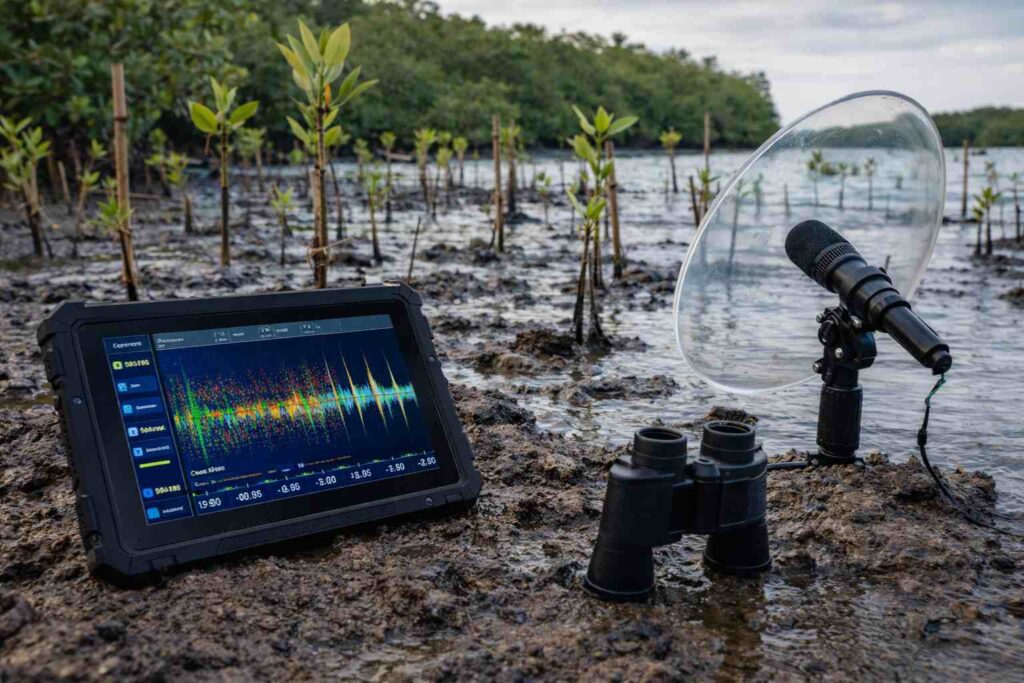
The next step is measuring more than that because if the aim is real nature repair, then monitoring needs to track biodiversity signals, habitat use and the changes that show life is moving back into the system over time.
This is where Cascade Effect reporting becomes more useful. Alongside growth and carbon, tools such as bioacoustic monitoring can help detect bird presence and diversity, giving a clearer picture of ecological recovery as it develops year by year.
Cascade Effect for Coastal Communities
The Cascade Effect is not only ecological because healthy mangrove systems support people, too. This is especially true in coastal areas where fishing, food security and shoreline protection are closely tied to the condition of the ecosystem.
As these systems recover, the benefits can spread into local livelihoods through nursery care, planting, stewardship and the rebuilding of fisheries over time. That makes mangrove repair a social story as much as an environmental one.
Supported by the Play It Green community, this work is helping create the conditions for long-term recovery. It is about giving coastal systems a better chance to rebuild, and giving local communities a stronger place within that recovery.

Our Collective Impact
This month’s report is really about patience and proof. Planting starts the process, but monitoring helps show whether recovery is building in the right direction.
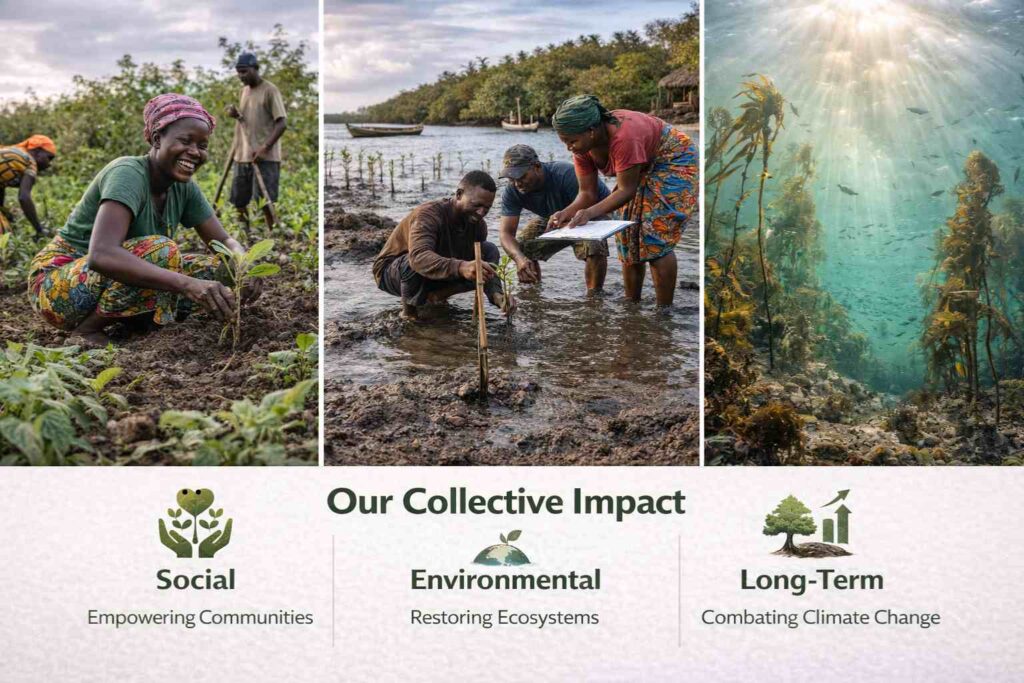
That is why Cascade Effect matters as a way of telling the story because it captures the idea that real nature repair grows through linked stages, with each step creating better conditions for the next one.
The Play It Green community is supporting work that goes far beyond what is planted on day one. It is helping create the conditions for long-term coastal recovery, and the systems now being measured will help tell that story more honestly over the years ahead.
If you enjoyed our article on The Cascade Effect of nature repair, why not become part of a community helping create the positive impact covered in this report?
You will also receive access to all our content in a weekly newsletter, and we’ll help you reduce your footprint, repair the planet, and regive to social causes that matter, all through simple, measurable actions that fit your business.

Modern employees, consumers, and investors want to see impact, not promises. With Play It Green, your sustainability journey becomes visible, credible, and rewarding.
Join us today and turn good intentions into lasting results.
Sign Up