

Sustainable Chocolate: Introduction
As we approach the holiday season, sustainable chocolate is the perfect treat to indulge in while making eco-friendly choices. This week’s Play It Green tip dives into how sustainable chocolate options can satisfy your sweet cravings without compromising the planet. From supporting ethical farming practices to protecting biodiversity, each bite of sustainable chocolate is a step toward a more responsible future. Ready to discover treats that are good for you and the planet? Let’s unwrap the details!

A Brief History of Chocolate
Chocolate’s roots go back over 3,000 years to the Olmec civilisation in present-day Mexico, which is believed to have been the first to cultivate cacao. The Maya and Aztecs also revered cacao, using it in rituals, as currency, and as an energising, bitter drink called “xocolatl.” When Spanish explorers brought cacao back to Europe in the 16th century, sugar was added, transforming it into a sweet treat that spread quickly across the continent.

By the 19th century, industrial advancements allowed companies to mass-produce chocolate, making it accessible to all and turning it into a billion-pound industry. However, this expansion has also had a downside. Massive demand for chocolate has led to issues like deforestation in cocoa-growing regions, with West Africa losing substantial forest areas due to cocoa plantations.
Additionally, child labour and poor working conditions have plagued cocoa production, raising ethical concerns. Today, as awareness grows, sustainable practices such as agroforestry, organic certification, and fair wages are helping reshape the chocolate industry for a more ethical and eco-friendly future.

Environmental Impact of Traditional Chocolate Production
The environmental footprint of chocolate production is surprisingly high. Cocoa farming alone accounts for significant deforestation, particularly in West Africa, where more than 2 million hectares of forest have been lost. Deforestation disrupts ecosystems and wildlife habitats and releases large amounts of carbon dioxide, contributing to climate change.

Additionally, chocolate production is water-intensive; a single chocolate bar can require up to 1,700 litres of water throughout the supply chain. Commonly used pesticides and fertilisers in conventional cocoa farming further strain ecosystems, contaminating local water sources and harming biodiversity. The carbon footprint doesn’t stop at farming—transportation, processing, and packaging chocolate for global markets add to emissions.
A typical chocolate bar can generate around 3 kg of CO₂ emissions, with a larger footprint than some other snack foods. By supporting brands committed to sustainable cocoa sourcing, organic practices, and eco-friendly packaging, consumers can reduce their impact and contribute to a more sustainable chocolate industry.
What to Look for in Sustainable Chocolate
Choosing sustainable chocolate can make a big impact, starting with certifications like Fairtrade, Rainforest Alliance, and Organic, which indicate ethical sourcing and eco-friendly farming. Fairtrade, for instance, ensures farmers receive a fair price, while organic certification means fewer harmful pesticides and fertilisers are used.
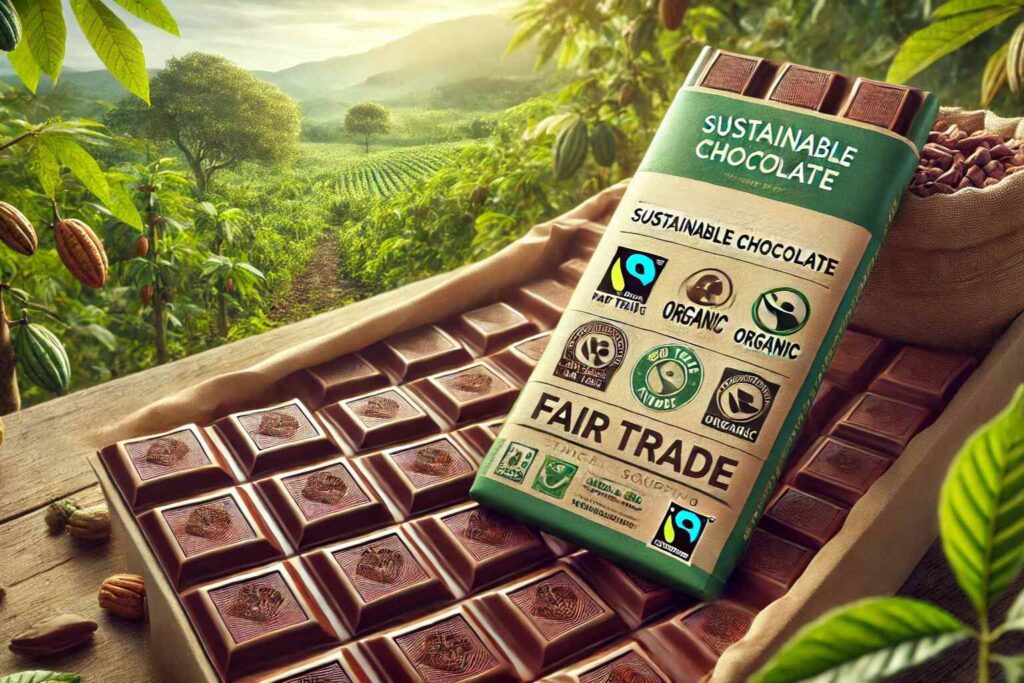
Look for bean-to-bar brands, which offer traceability and often work directly with farmers, guaranteeing quality and fair labour practices. Packaging is another factor—some brands use compostable or recyclable materials to reduce waste, with a few companies embracing zero-waste initiatives. Direct trade is also becoming popular, as it bypasses intermediaries, providing more profit for the farmers and ensuring sustainable practices.
Brands that prioritise agroforestry—integrating diverse crops and trees within cocoa farms—help restore soil health and provide additional habitats for wildlife. By making mindful choices, you’re not only indulging but also supporting a more eco-conscious chocolate industry that aims to sustain our planet for generations.

Favourite Brands for Sustainable Chocolate
Divine Chocolate
Divine Chocolate is unique in that it’s partly owned by cocoa farmers, ensuring they receive a fair share of the profits. Sourced primarily from Ghana, Divine’s cocoa is certified Fairtrade, guaranteeing ethical production standards. They focus on eco-friendly packaging and support initiatives that promote community development. Enjoy rich flavours while supporting farmers directly. Head to divinechocolate.com to see their full range and use code PLAYITGREEN15 for 15% off your first order.
Tony’s Chocolonely
Tony’s Chocolonely is on a mission to make chocolate production 100% slave-free. This Dutch brand combines delicious chocolate with ethical values, ensuring fair wages and humane working conditions for cocoa farmers. Their bold, colourful packaging and unique bar designs make them stand out, while their direct trade approach ensures a more sustainable supply chain. A powerful choice for anyone wanting to make a difference with their chocolate habits. Go to tonyschocolonely.com to see their range and buy in the knowledge you are purchasing sustainably.
Montezuma’s
Montezuma’s offers bold, delicious chocolate while maintaining a focus on sustainability. Based in the UK, this brand uses 100% recyclable packaging and works towards a zero-waste production model. Their chocolate is organic and ethically sourced, aiming to minimise environmental impact at every stage. Montezuma prioritises transparency, offering a wide range of flavours and blends, all crafted with a conscience. Check out their selection to indulge without compromising on sustainability. Use montezumas.co.uk to head to their website and use code PLAYITGREEN10 for 10% off their whole range!
Sustainable Chocolate: Wrap-Up
There you have it—a delightful dive into the world of sustainable chocolate! Brands like Montezuma’s, Tony’s Chocolonely, and Divine Chocolate are leading the way, proving that our favourite indulgence can be a force for good. Whether you’re shopping for yourself or as a thoughtful gift, choosing sustainable chocolate is a simple yet impactful choice. Small actions add up, and by supporting these brands, you’re contributing to a more ethical, environmentally friendly chocolate industry. Ready to make the switch? Explore these options and sweeten your sustainability journey!
Not a member yet?
Click here to sign up!
Learn how to be more sustainable and have an impact whilst on the journey through nature repair and social giving – all for £5 per person per month!