
New Packaging Rules: Introduction
New packaging rules are bringing new responsibilities for UK businesses that use, supply or import packaging. A cardboard box, bottle, wrapper or delivery mailer may look like a simple purchasing decision, but it can now connect directly to reporting, recycling, waste costs and the way packaging is designed.
The system is called Extended Producer Responsibility for packaging, usually shortened to EPR. The principle is straightforward: more of the cost of dealing with household packaging waste is moving towards the businesses that put packaging and packaged goods onto the UK market. The aim is to encourage less packaging and make what remains easier to recycle.
For some businesses, the new packaging rules create formal reporting and financial obligations. For others, there may be no legal requirement, although the direction of travel still makes packaging worth reviewing because material choices, waste and recyclability are becoming more visible in commercial decisions.
What Does EPR Actually Mean?
The new packaging rules in the extended Producer Responsibility mean businesses responsible for packaging can also become responsible for some of the cost of managing that packaging after use. However, producer does not only mean the company that physically made the box, bottle or wrapper.
Responsibility can arise through activities such as supplying branded packaging, packing or filling goods, importing packaged products, supplying empty packaging or selling packaged goods. An importer, retailer, food business, manufacturer, online seller or hospitality group could therefore have responsibilities even if it has never described itself as a packaging producer.
Who Needs to Check the Rules?
The key tests are annual turnover and the amount of packaging your organisation supplies or imports.
For 2026 reporting, businesses generally fall outside EPR obligations if annual turnover is £1 million or less, or if they handle less than 25 tonnes of packaging. Organisations above £1 million turnover that handle at least 25 tonnes can fall into the small producer category, depending on their exact turnover and packaging volume. A business becomes a large producer when it has annual turnover above £2 million and is responsible for more than 50 tonnes of packaging in the UK.
Large producers generally report packaging data every six months, while small producers report annually. Large producers may also have recycling obligations and household waste disposal fees.
Get In TouchWhy Packaging Design Is Becoming a Cost Question
The new packaging rules mean that packaging choices are starting to carry cost implications beyond the original purchase price.
Large producers must assess the recyclability of relevant household packaging using the Recyclability Assessment Methodology, known as RAM. For 2027 reporting, packaging is assessed through real-world recycling stages including collection, sorting, reprocessing and end use. Final ratings are red, amber or green, and those ratings affect the waste disposal fees producers must pay. Red-rated materials attract higher charges than more recyclable alternatives.
That changes the commercial conversation, as the cheapest material to buy may not be the cheapest material to use once waste fees, transport, storage, recycling performance and customer expectations are considered together.
Why It Still Matters Below the Thresholds
Many Play It Green members and wider SME readers will not be legally obligated under the new packaging rules that come with EPR, and businesses should not panic simply because they use packaging.
However, the logic behind the rules is useful far beyond the formal thresholds. If an ecommerce business sends hundreds of products in oversized boxes, it is paying for more cardboard, more void fill, more storage space and potentially more transport weight than it needs. If a food or product business uses several combined materials where one simpler material would work, recycling becomes harder, and customer confusion can increase.
Larger customers increasingly ask for packaging, emissions and waste information through procurement and supplier questionnaires, so a business that already knows what it uses will find those conversations easier.
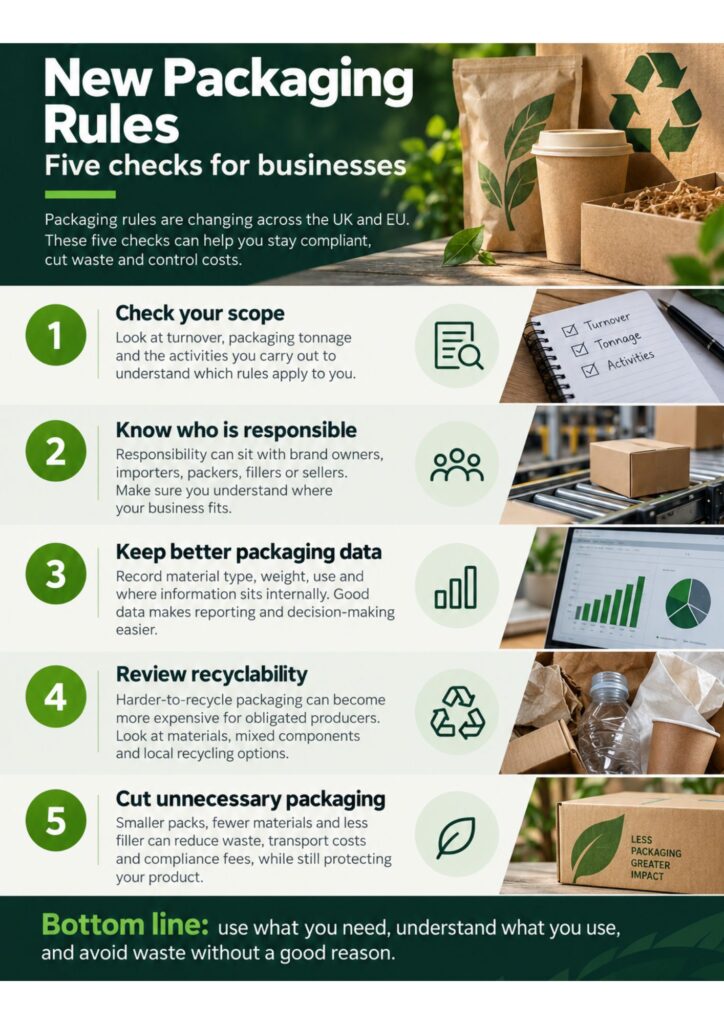
Five Questions to Ask Now
Start with scope: does your organisation meet the turnover and packaging thresholds, and do your activities make you responsible for packaging under the rules?
Then look at ownership, because packaging information often sits across purchasing, operations, finance, warehousing and marketing. Next, review the packaging itself: what materials are being used, can the components be separated, and do suppliers provide clear information about recyclability?
After that, look for avoidable complexity. A smaller box, fewer layers, less filler or a simpler material mix can reduce waste without weakening the customer experience. Finally, keep evidence, because the new packaging rules and customer expectations are becoming more data-led.

New Packaging Rules: Wrap-Up
Packaging used to be treated mainly as a purchasing, branding or delivery decision; however, the new packaging rules increasingly connect that decision with reporting, recycling and cost.
For businesses within the thresholds, understanding the rules and keeping accurate packaging data is essential. For businesses below the thresholds, there is still a useful lesson: reducing unnecessary packaging, choosing simpler materials and understanding what happens after a product reaches the customer can lower waste, support better supplier conversations and potentially reduce costs.
At Play It Green, we believe sustainability works best when it improves everyday business decisions. Packaging is a good example because the environmental and commercial questions increasingly point in the same direction: use what you need, understand what you use and avoid creating waste without a good reason.
Businesses unsure whether they are covered should check the latest PackUK and GOV.UK guidance or speak with an appropriate packaging compliance specialist, because obligations depend on the organisation, the new packaging rules and how products move through the supply chain.
Create Commercial Value with Play It Green
Play It Green helps businesses make sustainability practical, measurable and commercially sensible.
Our members learn through simple weekly content like this article on the New Packaging Rules, reduce their footprint with support and expert signposting, repair nature across land, coast and sea, and create social impact through our 10% revenue giveback to good causes.

That gives your business credible action you can share with employees, customers and other stakeholders, backed by transparent reporting and measurable impact.
If you want to cut costs, reduce risk, attract great people and build stronger customer loyalty through sustainability, including measurement and reduction, nature repair and social impact, speak to Play It Green.
Find Out More