

New SBTi Rules: Introduction
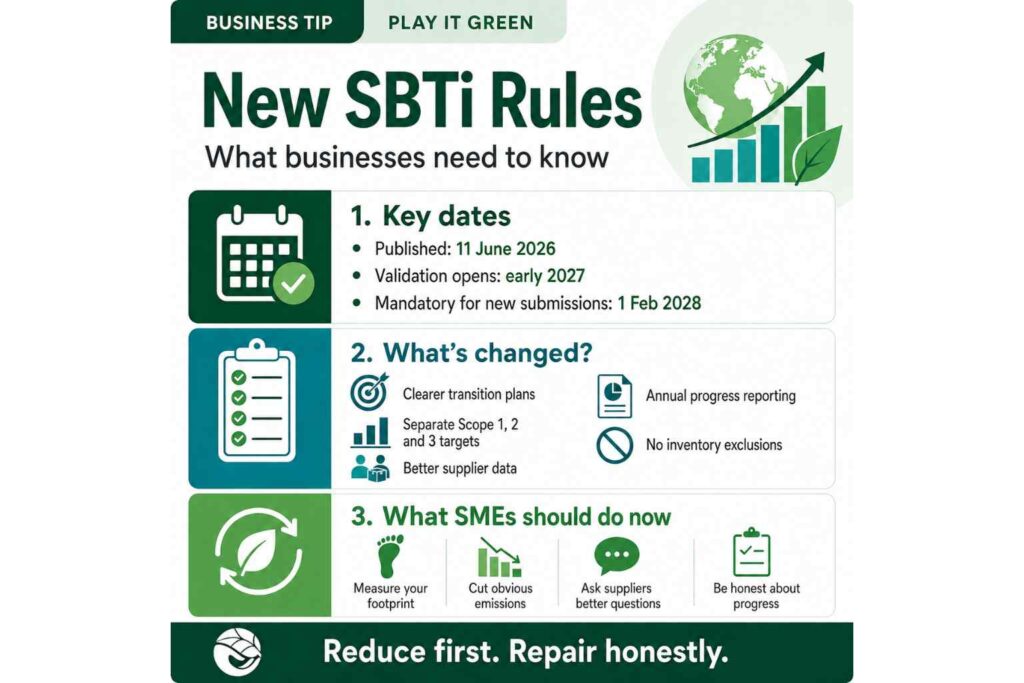
New SBTi Rules raise the bar for business climate claims. The Science Based Targets initiative published Corporate Net-Zero Standard Version 2.0 on 11 June 2026. Version 2.0 can be used for target validation from 1 February 2027, with Version 1 remaining open for submissions until the end of 2027.
For businesses, the update points to better data, clearer plans and claims that can stand up to scrutiny. Larger companies will feel the change first, then the pressure will move through supply chains, tenders and customer conversations.

What Has Changed?
The New SBTi Rules move climate targets closer to normal business planning. SBTi says Version 2.0 has been published to help companies strengthen implementation, demonstrate progress and get more business value from decarbonisation.
That means a net zero plan needs to link to what a company buys, uses, sells and changes. It should connect with energy, transport, buildings, products, purchasing and suppliers.
Many companies still have gaps. Some have a target, but weak evidence, some have emissions data, but limited action and some fund climate projects, but avoid obvious cuts inside their own operations. The new standard makes those gaps harder to ignore.
Scope 1, 2 and 3 Get Sharper
The New SBTi Rules place clearer focus on Scope 1, Scope 2 and Scope 3 emissions.
Scope 1 covers direct emissions, such as fuel used in company vehicles or on-site equipment. Scope 2 covers purchased energy and Scope 3 covers the wider value chain, including suppliers, logistics, waste, business travel, purchased goods and use of sold products.
For many companies, Scope 3 is the harder bit as it often sits outside direct control, so it gets pushed aside. Yet it can make up the largest part of a company’s footprint.
For SMEs, this does not mean building a huge reporting machine overnight. Energy bills, fuel use, waste, travel, packaging, product choices and main suppliers are sensible places to start.
Better Data, Less Guesswork
The New SBTi Rules place more weight on emissions data, reporting and progress assessment. The new standard is part of SBTi’s wider move from target setting alone to delivery and progress.
Good data helps a business spot waste, cut costs and answer questions with confidence, whilst poor data leaves teams guessing. It can turn a simple tender question into a scramble.
A smaller business does not need perfect data on day one, but it does need a clear starting point. Record what you know, record your assumptions, then improve the data over time.
There is a useful test: Could you explain your climate claim to a customer, investor or team member without hoping they move on quickly? If not, tighten the claim.
Carbon Credits Are Not a Shortcut
The New SBTi Rules leave space for climate contributions and high-integrity carbon credits, but they sit next to reduction work, not in place of it. SBTi says Version 2.0 treats these as a complement, not a substitute, to companies reducing their carbon footprint.
Nature repair can support carbon removal, biodiversity, water protection and community benefit. Mangroves, forests, kelp and other verified projects can play a positive role.
The risk comes when businesses use those projects to avoid cutting emissions. Supporting nature is strongest when it backs up reduction work.
A cleaner message is: measure, reduce, repair and report honestly.
Get In TouchWhat SMEs Should Do Now
For SMEs, the New SBTi Rules need a calm and practical response. The starting point is a proper footprint, a clear reduction plan and claims that match the evidence behind them.
Look at the areas most likely to create emissions across your business, such as energy, travel, waste, purchasing, delivery and main suppliers. From there, focus on the cuts that make sense commercially and environmentally, such as reducing energy use, improving waste processes, choosing better products and asking suppliers for clearer information.
A short transition plan can then pull the work together. It should explain what is being measured, what is being reduced, who owns each action, what gets reviewed and what proof is being kept. This does not need to become a monster document, but it does need to be real enough to support tenders, customer questions and internal decision-making.
Play It Green can support businesses through weekly education, signposting, verified nature repair and 10% regiving. We can signpost companies to our partner Catalyst Commercial for footprinting and SBTi-aligned reduction plans and we only offer carbon rebalancing for companies that have an official footprint and a published reduction plan, so the rebalancing sits beside real reduction work rather than replacing it.

The Business Case
The New SBTi Rules connect to tenders, procurement, investment, staff trust and customer confidence.
Larger companies will need better supplier data, so smaller businesses that prepare early can make life easier for buyers. Better climate action can cut waste, reduce risk and make a business more credible.
New SBTi Rules: Wrap-Up
The new SBTi Rules show that climate claims need stronger proof behind them. Net zero language is being tightened, which should help businesses already doing the work and make life harder for those relying on vague claims.
For SMEs, the route is practical: measure your footprint, cut obvious emissions, ask suppliers better questions, keep better records and support verified nature repair in a way that backs up real reduction work.
Businesses that start now will be better placed for tenders, customer questions and future reporting, with cleaner data and more confidence in what they can say. Those that wait will have more catching up to do when the questions start coming.
If you enjoyed the New SBTi Rules article, why not become part of a community creating positive change by partnering with Play It Green and receive these tips weekly straight to your inbox? All whilst planting trees, mangroves and sea kelp and supporting a charity of your choice!
We help you reduce your footprint, repair the planet, and regive to social causes that matter, all through simple, measurable actions that aren’t hard to do.

Modern employees, consumers, and investors want to see impact, not promises. With Play It Green, your sustainability journey becomes visible, credible, and rewarding.
Join us today and turn good intentions into lasting results.
Sign Up