

Supplier Sustainability: Introduction
Supplier sustainability matters far more than many businesses admit, as the biggest share of emissions often sits in the supply chain rather than in offices, company vehicles, or purchased electricity. The Greenhouse Gas Protocol says Scope 3 emissions, which cover indirect emissions across the value chain, are often the largest part of a company’s footprint, and research from CDP and Boston Consulting Group found that supply chain emissions were, on average, 26 times higher than direct operational emissions. Whilst the World Economic Forum adds that in sectors such as transport, food and beverage, capital goods, and construction, Scope 3 can account for more than 90% of total corporate emissions.
Below are 7 steps to help reduce your suppliers footprints and with it your risk.

1. Define clear supplier requirements
The first step to supplier sustainability is to decide what you actually expect from suppliers, then state it properly in contracts, tenders, onboarding, and review processes. That might include emissions data, packaging standards, labour expectations, traceability, energy use, and reporting frequency. Guidance from the Organisation for Economic Co-operation and Development supports this kind of risk-based due diligence across supply chains, which means setting expectations early rather than trying to tidy things up later.
2. Identify the risks that matter most
Once expectations are clear, the next step is to work out where the real exposure sits. In some cases, that will be carbon intensity. In others it may be water stress, modern slavery risk, unreliable sourcing, weak environmental data, or overdependence on one supplier or one region. The point is to focus on the issues that can genuinely affect your footprint and your business. The Organisation for Economic Co-operation and Development describes due diligence as a process that helps companies assess and address real and potential negative impacts in their operations, supply chains, and business relationships, which is a useful way to think about this step.
Get In Touch3. Prioritise critical suppliers
Trying to tackle every supplier at once sounds like a good idea, but it usually leads nowhere. A smarter route is to focus first on the suppliers linked to the biggest emissions, the highest spend, the greatest operational importance, or the clearest risk. That gives the work shape and makes internal buy-in much easier. The Science Based Targets initiative has published supplier engagement guidance built around this logic, with a strong emphasis on targeting the suppliers that matter most and moving them towards credible climate action.
4. Turn findings into action plans
This is where the article stops being theory. Once priority suppliers are identified, there needs to be a plan for what changes next, who owns the work, and when progress will be reviewed. That may involve requesting better emissions data, switching to lower-impact materials, improving logistics, reducing packaging, or asking suppliers to set climate targets of their own. Research from CDP and Boston Consulting Group shows how large the upstream opportunity is, so action plans need to reflect that scale rather than settle for light-touch gestures.
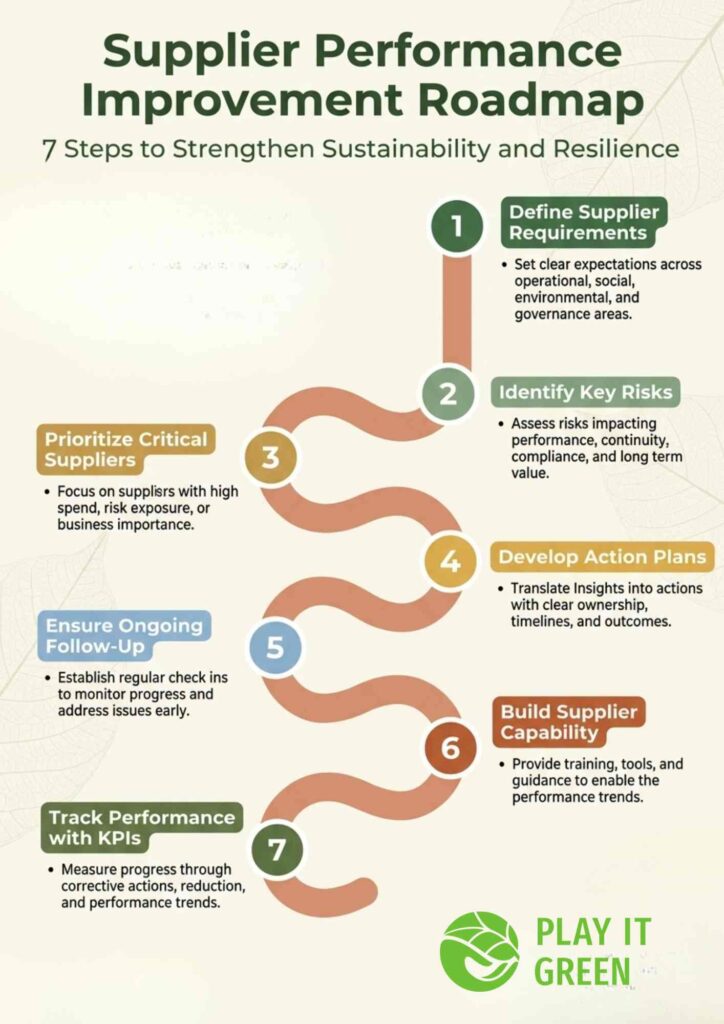
5. Keep follow-up going
A supplier questionnaire sent once a year is not a strategy. Real progress comes from regular follow-up, honest conversations, clear milestones, and a willingness to deal with gaps before they become bigger problems. That matters even more when suppliers are under cost pressure or still building their own sustainability knowledge. CDP’s Supplier Engagement Assessment methodology looks at governance, targets, Scope 3 accounting, and supplier action together, which makes the wider point nicely: good supplier sustainability work is continuous, structured, and visible.
6. Build supplier capability
Some suppliers will move quickly. Others will need support before they can give you decent data or make meaningful changes. That is not a reason to give up on them. It is a reason to help them improve with simple tools, clearer guidance, training, and better communication. The Science Based Targets initiative has made the case that supplier engagement can help companies accelerate decarbonisation across the value chain, which is why capability-building deserves more attention than it usually gets.

7. Track progress with useful KPIs
Measurement matters, though only when it helps people make decisions. Good supplier sustainability metrics might include emissions coverage, supplier response rates, improvement plans in place, renewable electricity uptake, packaging reductions, or the share of key suppliers with climate targets. The World Economic Forum’s Green Procurement Playbook makes the wider business case for procurement teams to link sustainability with performance and value, which is exactly the mindset needed here.
Supplier Sustainability: Wrap-Up
Supplier sustainability deserves far more attention than it usually gets, as this is where many businesses will find the biggest share of their footprint and some of their biggest operational risks. If suppliers shape emissions, resilience, compliance, and commercial strength all at once, then this work cannot sit quietly at the edge of procurement. It needs clear standards, sensible prioritisation, proper follow-up, and support for improvement over time. That is how supplier sustainability becomes more than a reporting exercise and starts delivering real business value.
If you enjoyed this article on Supplier Sustainability, why not become part of a community creating positive change by partnering with Play It Green and receive these tips weekly straight to your inbox?
We help you reduce your footprint, repair the planet, and regive to social causes that matter, all through simple, measurable actions that fit your business.

Modern employees, consumers, and investors want to see impact, not promises. With Play It Green, your sustainability journey becomes visible, credible, and rewarding.
Join us today and turn good intentions into lasting results.
Sign Up