

Sustainability Terms – E Edition: Introduction
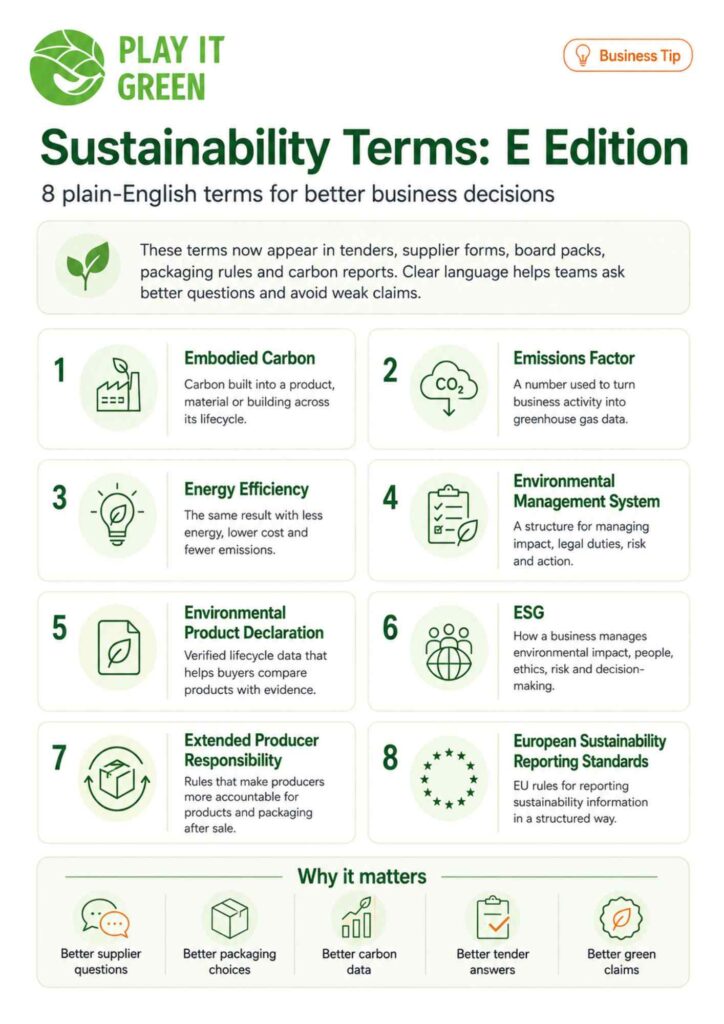
This week, we continue our monthly A-Z guide with Sustainability Terms – E Edition. The guide is for companies that want plain English, not jargon. This month’s terms appear in board packs, supplier forms, building projects, carbon reports, packaging rules and sustainability statements. Some affect compliance, some affect cost, and some affect how customers and investors judge a business.
For this article, we have chosen eight terms that business leaders are likely to hear more often. The aim is simple: explain what each one means, why it matters commercially, and how it links to better decisions.

Embodied Carbon
Our first term in Sustainability Terms – E Edition is embodied carbon, which is the greenhouse gas impact built into a product, material or building across its lifecycle. It can include emissions from raw material extraction, manufacturing, components, packaging, transport, repair, maintenance and end-of-life treatment.
For business, embodied carbon matters during procurement, product design, packaging choices, fit-outs, construction and refurbishment. A product can look low impact during use, yet still carry a high carbon cost from the materials, parts and processes used to make it. The same applies to buildings, where concrete, steel, glass, timber, insulation and transport can create a large carbon footprint before a site is even occupied.
This is why buyers and project teams are asking for better material data, lifecycle assessments and lower-carbon options before signing off on major purchases.
Emissions Factor
An emissions factor is a number used to convert business activity into greenhouse gas emissions. It helps turn real-world data, such as litres of fuel, kilowatt hours of electricity, miles travelled, hotel nights, waste volumes or materials purchased, into carbon figures.
For example, a business may know how much diesel its vans used last month. An emissions factor helps convert that fuel use into a carbon figure for reporting.
This matters as emissions factors sit behind most carbon footprints. Better activity data leads to better reporting, stronger targets and smarter decisions. Poor or outdated emissions factors can create misleading numbers, which can damage trust, weaken tenders, create greenwash risk and send investment into the wrong places.
Energy Efficiency
Energy efficiency means getting the same result with less energy. For a business, that can mean efficient lighting, better insulation, well-maintained heating and cooling systems, refrigeration checks, smart controls, equipment upgrades, or a switching off kit that does not need to run.
It matters as wasted energy is wasted money. Every unit of gas or electricity saved can cut bills, lower emissions and reduce exposure to price spikes. It is one of the most practical starting points for any sustainability plan, since the benefits are often easy to measure.
Good energy efficiency is not about asking staff to work in the dark or freeze in meeting rooms. It is about finding where energy is being wasted, fixing the obvious problems, and then tracking the savings. For many businesses, the best first step is an energy audit, followed by a short action list ranked by cost, payback and carbon reduction.
Environmental Management System
An Environmental Management System, often shortened to EMS, is a structured way for a business to manage its environmental impact, legal duties, risks and improvement plans. It helps move sustainability from good intentions into a clear system of ownership, measurement and action.
ISO 14001 is the best-known EMS standard. It sets out how an organisation can identify environmental risks, set objectives, monitor progress, check performance and keep improving over time.
For smaller businesses, an EMS does not need to start as a huge manual. It can begin with clear responsibilities, simple data tracking, regular reviews and a practical action plan. The point is to make environmental management part of how the business runs, rather than something checked once a year before an audit.
Get In TouchEnvironmental Product Declaration
An Environmental Product Declaration, or EPD, is a verified document that sets out the environmental impact of a product across its lifecycle. It is usually based on a life cycle assessment and follows recognised product category rules, which helps buyers compare products on a more consistent basis.
EPDs are common in construction, interiors, furniture, flooring, packaging and manufacturing, where procurement teams need evidence rather than broad green claims. They can show impacts such as carbon emissions, water use, resource use, waste and energy demand.
An EPD does not prove a product is the lowest-impact choice. It proves that environmental data has been measured and checked using a recognised method. For business, that makes EPDs useful in tenders, supplier selection, design choices and greenwash risk control.

ESG
ESG stands for Environmental, Social and Governance. It is a way to assess how a business manages environmental impact, people, ethics, risk and decision-making.
For business, ESG matters as investors, lenders, customers and procurement teams use it to judge risk and credibility. Strong ESG needs evidence, not a badge or a slogan. That means clear policies, reliable data, fair treatment of people, sound governance and honest reporting.
The useful test is simple: can the business prove what it does, track progress and link its actions to risk, value and trust?
Extended Producer Responsibility
Extended Producer Responsibility, or EPR, is a policy approach that makes producers take more responsibility for products and packaging after sale. It often affects businesses that make, import, fill, sell or supply packaged goods.
In the UK, packaging EPR is changing how packaging data is collected and how waste costs are shared. Affected businesses may need to measure packaging by material, weight and use, then report that data. Fees can make poor packaging choices more expensive.
For business, EPR turns packaging from a back-office task into a commercial issue. Lighter materials, easier recycling, reuse, refill models and cleaner supplier data can reduce risk and improve margins. It is a clear example of sustainability moving into finance, procurement and product design.

European Sustainability Reporting Standards
Our final term in Sustainability Terms – E Edition is the European Sustainability Reporting Standards, or ESRS, are the rules used by companies covered by the EU Corporate Sustainability Reporting Directive. They set out what sustainability information must be reported and how that information should be presented.
ESRS uses double materiality. This means companies look at two sides of the same issue: how sustainability risks affect the business, and how the business affects people and the planet. The standards cover climate, pollution, water, biodiversity, workers, communities, consumers and governance.
For UK businesses, ESRS can still matter through European customers, parent companies, investors, lenders, supply chains and tenders. The practical message is simple: vague statements are no longer enough. Businesses need organised data, clear ownership and evidence that can stand up to checks.
Sustainability Terms – E Edition: Wrap Up
The Sustainability Terms – E Edition shows how much business language is shifting from broad intent to measured action. These eight terms sit across carbon reporting, buildings, products, packaging, energy use, management systems and regulation.
The best move is to spot which terms affect your organisation now, then turn that knowledge into practical action. Learn the language, gather the data, cut waste, ask better supplier questions and make claims that can stand up to scrutiny. That is far better than nodding through a meeting and hoping nobody asks what an EPD is.
If you enjoyed the Sustainability Terms – E Edition, why not become part of a community creating positive change by partnering with Play It Green and receive these tips weekly straight to your inbox? All whilst planting trees, mangroves and sea kelp and supporting a charity of your choice!
We help you reduce your footprint, repair the planet, and regive to social causes that matter, all through simple, measurable actions that aren’t hard to do.

Modern employees, consumers, and investors want to see impact, not promises. With Play It Green, your sustainability journey becomes visible, credible, and rewarding.
Join us today and turn good intentions into lasting results.
Sign Up