
The Three Pillars of Sustainability: Introduction
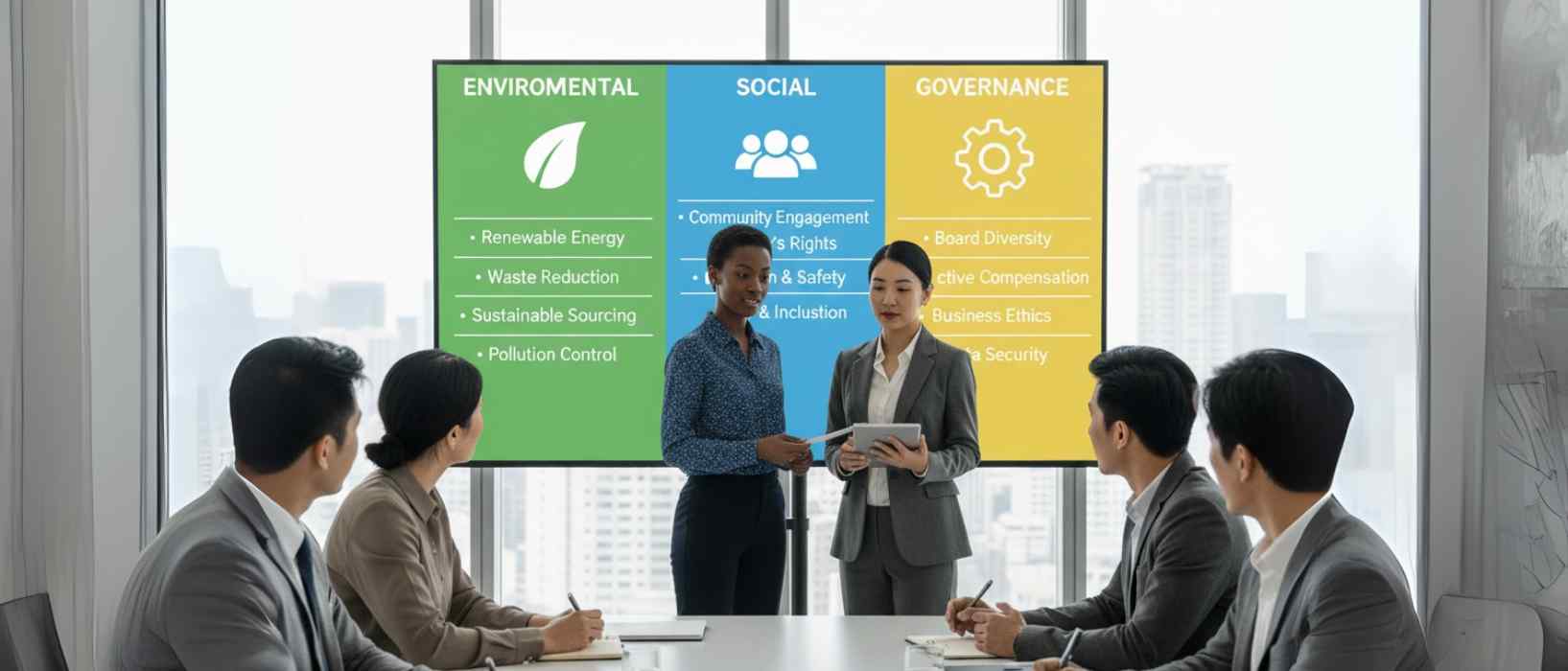
The Three Pillars of Sustainability (ESG) are environmental, social, and governance. Together they provide the framework for how businesses approach sustainability, resilience, and long-term growth.
Each pillar focuses on different priorities, but the real strength comes when they are treated as connected. Environmental health underpins stability, social responsibility creates trust and inclusion, and governance ensures accountability and ethical decision-making.
Miss one, and the whole structure weakens. This week’s Business Tip explores each pillar, what it means in practice, and why it matters for your business.

Environmental Pillar
The environmental pillar the first of the three pillars of sustainability and is the foundation of sustainability. It covers the ecosystems and natural resources that all businesses depend on. When environmental health breaks down, supply chains collapse, raw materials become scarce, and costs rise.
Climate change alone is projected to cut global GDP by up to 18% by 2050 if left unchecked, according to Swiss Re research. That’s not a distant problem; it is already affecting energy prices, agriculture, and logistics. Companies acting now are adopting science-based climate targets, cutting emissions in their operations and supply chains, and switching to renewable energy.
Efficiency measures often deliver savings, with McKinsey estimating that resource efficiency could save the global economy $2.9 trillion each year by 2030. Circular models are another opportunity, where products and materials are reused or recycled rather than discarded, reducing both waste and dependency on finite resources.
Repairing nature, such as planting trees, mangroves and sea kelp, not only balances impacts but protects the stability that markets need to function.

Social Pillar
The social pillar is the second of the three pillars of sustainability and focuses on people, who provide the workforce, customers, and trust that businesses rely on. Companies ignoring social priorities risk reputational damage, disengaged staff, and difficulty attracting talent. Deloitte found that 77% of millennials consider a company’s social impact before deciding where to work, showing how this affects recruitment and retention.
Key actions include ensuring safe and dignified working conditions, embedding equity and inclusion, and investing in education and skills. These measures do more than prevent harm; they strengthen communities and improve resilience in uncertain times. Businesses that embed international human rights standards and fair treatment practices also protect themselves from litigation, supply chain disruption, and consumer backlash.
In today’s connected world, transparency is expected. Social value is no longer a “nice to have”, it is an expectation that influences purchasing decisions and loyalty. Research from PwC shows that 76% of consumers will stop buying from companies that treat employees or communities poorly. Businesses that invest in social responsibility directly improve both performance and long-term resilience.
Ask Play It Green A QuestionGovernance Pillar
The governance pillar is the third of the three pillars of sustainability and focuses on how businesses are led, managed, and held accountable. Strong governance creates the trust and stability that allow environmental and social actions to succeed. It includes transparency in decision-making, ethical leadership, and clear accountability at every level.
Weak governance has been at the heart of some of the biggest corporate scandals in recent decades, costing billions in lost value and damaging reputations. Investors and regulators now demand higher standards, with frameworks such as the Task Force on Climate-related Financial Disclosures (TCFD) and new EU Corporate Sustainability Reporting Directive (CSRD) requiring clear and consistent reporting.
Practical actions include embedding ESG into board agendas, linking executive pay to sustainability outcomes, and creating channels for whistleblowing and stakeholder feedback. Strong governance also requires companies to address diversity at leadership level and to ensure that sustainability commitments are independently verified, not just stated. Businesses that invest in governance find they reduce risks, strengthen investor confidence, and make environmental and social measures more credible.

The Three Pillars of Sustainability: Wrap Up
The Three Pillars of Sustainability give businesses a clear route to resilience and long-term success. Environment, social responsibility, and governance cannot be treated in isolation – they work together to reduce risks, build trust, and create value. Companies that act across all three find themselves better prepared for regulation, more attractive to investors, and more trusted by customers and staff.
At Play It Green, we make ESG simple by helping businesses reduce their footprint, repair nature, and regive to good causes. If you want support to grow through sustainability and social impact, get in touch with our team today.
Join the Community Making Change
You can receive weekly education like this business tip on The Three Pillars of Sustainability, repair the planet and support a good cause montly by joining Play It Green for just £5 per person per month.
Whether it’s adding nature repair to your sales process, engaging and educating employees, or strengthening your environmental credentials in a clear and measured way, we make it simple, transparent and cost effective.
Sign Up