Skip to content
Circular ROI: Introduction
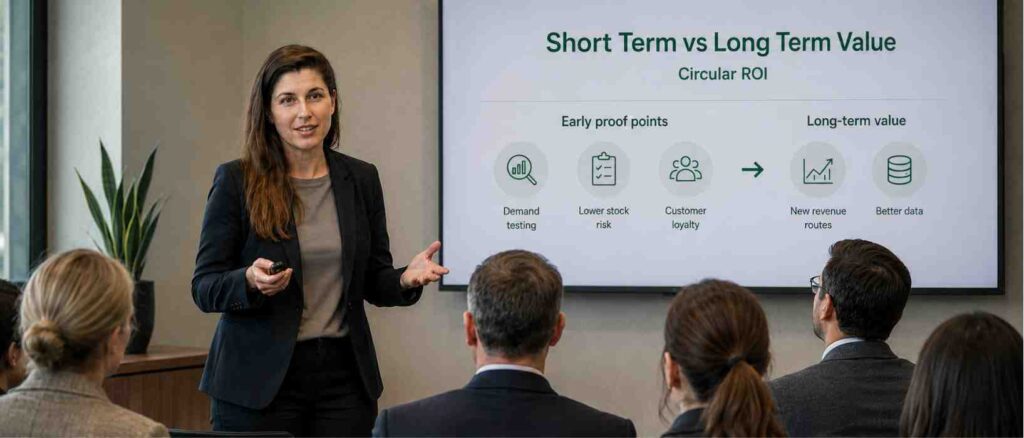
Circular ROI sits at the centre of this guest Business Tip from Rachel Sheila Kan, founder of Real Circularity™ and Circular Earth. Her latest piece looks at a problem many organisations face when they start circular work: they say they want long-term change, then judge it with short-term, linear thinking.
Rachel’s view is clear. Short-term thinking is linear, and long-term thinking is circular, and that changes how businesses assess value, risk, progress and return.
Circular work can create attention, curiosity, staff pride, customer engagement and new commercial options before the full Circular ROI matures. It can still be measured, but it needs the right measures across the right period.

The Short-Term Trap
Many organisations want circular change, then expect it to behave like a standard product launch.
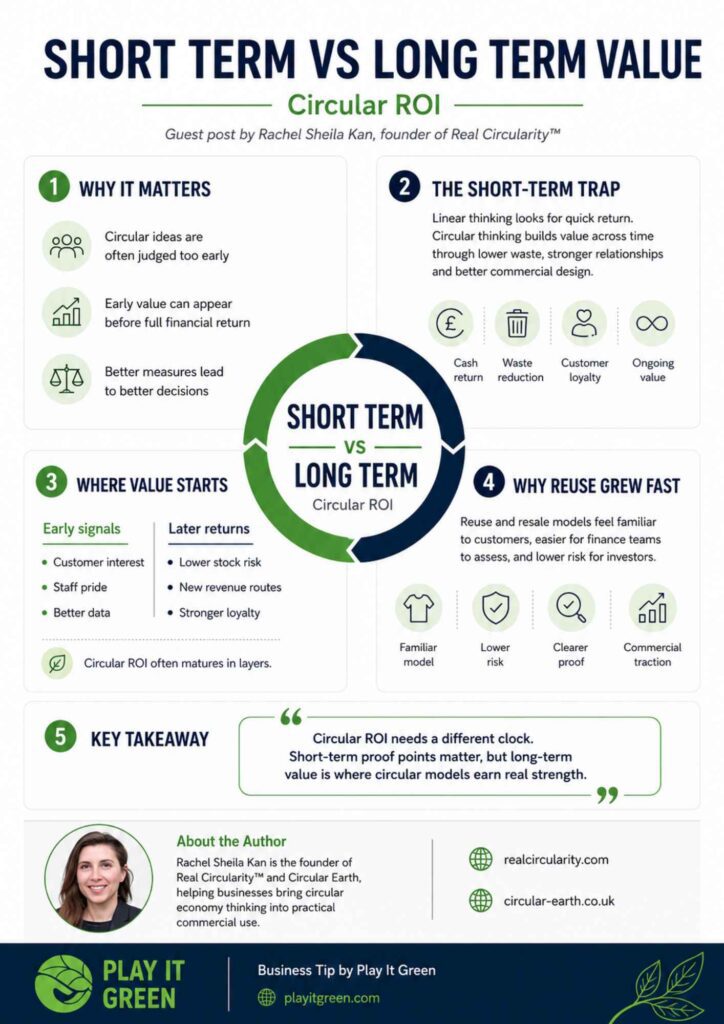
A linear model asks how quickly a business can make something, sell it and see a cash return. A circular model asks how value can keep moving, how waste can fall, how customer relationships can deepen and how income can last beyond the first sale.
This pattern is happening across agency projects and conversations with brands, from start-ups to global businesses. There is too little urgency around meaningful change, yet too much pressure for instant proof. The Circular ROI, unfortunately, can be judged after only a few months, then dropped before the real value has time to appear.
Why Circular Value Takes Time
Circular ROI often begins with value that does not fit neatly into a quarterly spreadsheet.
It can give customers a reason to care, staff a reason to feel proud and partners a reason to pay attention. It can create useful data, build loyalty and show that a brand is willing to try something more serious than another throwaway campaign.
Over time, stronger commercial returns can grow from that base. Businesses can reduce inventory exposure, lower waste, create resale or repair income, test demand earlier and open fresh routes to revenue. Rachel calls this architected value, and the phrase fits. Circularity is about designing value so it can move through a system, rather than relying on one sale and hoping for the best.
Why Reuse Has Grown Fast
Reuse has become one of the clearer commercial entry points for circular business.
Branded resale and reuse models are familiar to customers. Finance teams can see the risk more clearly, and investors often prefer models with shorter return periods. Companies like Vinted have helped to prove that businesses can create huge value without selling brand-new products.
The result is a crowded red ocean of resale and reuse offers. Reuse still has value, but it is not the only circular idea worth backing.
Rachel spotted this cultural shift nearly twenty years ago, around the time vintage moved from niche interest into accepted culture. She hopes that the next wave of circular models with great circular ROI does not take another twenty years to gain traction.
The Next Wave
There is most excitement from circular models that are still being tested, shaped and refined.
Pre-order systems can validate demand before production starts, decentralised brands can share value in new ways, whilst upfront customer commitment can reduce inventory risk and help brands avoid producing goods nobody wants.
This moves circularity from waste reduction into better demand testing, lower overproduction and stronger customer involvement. Producing fewer unwanted goods is good for cash, storage, waste, margin and sanity.
Proof Points Inside Longer Change
Businesses do not need to choose between short-term wins and long-term ambition.
A reuse pilot can show demand, a small pre-order collection can give finance a reason to keep backing the idea and a limited test can prove that customers are ready to participate. These smaller tests create learning, confidence and internal permission.
Circularity will not be solved in a quarter, but that does not mean businesses should wait for perfect certainty. The practical path is to start small, test demand, learn honestly and keep building.

Circular ROI: Wrap-Up
Circular ROI needs a different clock, not lower standards, so businesses should still expect discipline, evidence and commercial sense. But what Rachel is asking in her latest article is for leaders to judge circular work across the right period, with the right measures.
The smartest circular models can create early momentum and deeper commercial value over time. They reduce waste, invite customer participation, lower risk and open fresh routes to revenue.
About the Author
Rachel Sheila Kan is the founder of Real Circularity™ and Circular Earth. She works with businesses to bring circular economy thinking into practical commercial use, connecting brands, manufacturers, innovators, supply chain experts and strategic partners.
Find out more:
https://realcircularity.com/
https://www.circular-earth.co.uk/
If you enjoyed this article on Circular ROI, why not become part of a community creating positive change by partnering with Play It Green and receive these tips weekly straight to your inbox?
We help you reduce your footprint, repair the planet, and regive to social causes that matter, all through simple, measurable actions that fit your business.

Modern employees, consumers, and investors want to see impact, not promises. With Play It Green, your sustainability journey becomes visible, credible, and rewarding.
Join us today and turn good intentions into lasting results.