
Eco-Friendly Sunglasses: Introduction
Summer is nearly here, and so is the perfect excuse to invest in a new pair of eco-friendly sunglasses. While your sunnies might make you look cool, the wrong pair could be warming the planet. Thankfully, sustainable shades are more stylish and accessible than ever.
With materials that won’t end up in landfill and brands with ethical backbones, eco-friendly sunglasses are the future of summer fashion. So, whether you’re heading to the beach, the park, or just out to your local coffee shop, it’s time to throw some shade responsibly.

A Short History of Sunglasses
Sunglasses might scream modern style, but they’ve actually been around for centuries. The Inuit used flattened walrus ivory goggles with narrow slits to block the glare of the sun off the snow, a far cry from your Ray-Bans. In ancient Rome, Emperor Nero watched gladiator fights through polished gems. In 12th-century China, sunglasses made from smoky quartz weren’t just for the sun, they were also used to hide emotions in courtrooms.

The first real step toward modern sunglasses came in the 18th century, with tinted lenses to treat vision impairments. By the 20th century, sunglasses had gone full celebrity. Hollywood stars made them glamorous, and the invention of polarised lenses in the 1930s made them practical. Aviators became iconic, and brands like Ray-Ban and Oakley boomed.
But as fast fashion took hold, sunglasses became cheap, plastic, and disposable. Most were designed for trends, not longevity. With billions sold every year, this accessory became a major contributor to landfill and marine waste. Now, as environmental awareness grows, sustainable sunglasses are ready to reclaim their spotlight.
The Environmental Cost of Conventional Shades
Most conventional sunglasses are made from virgin plastic, often derived from petroleum. They’re cheap to make, but they come at a high cost to the planet. Over three billion pairs are sold globally each year, and many are broken, lost, or dumped in under a year. A single pair can take up to 450 years to degrade, shedding microplastics that pollute soil and waterways.
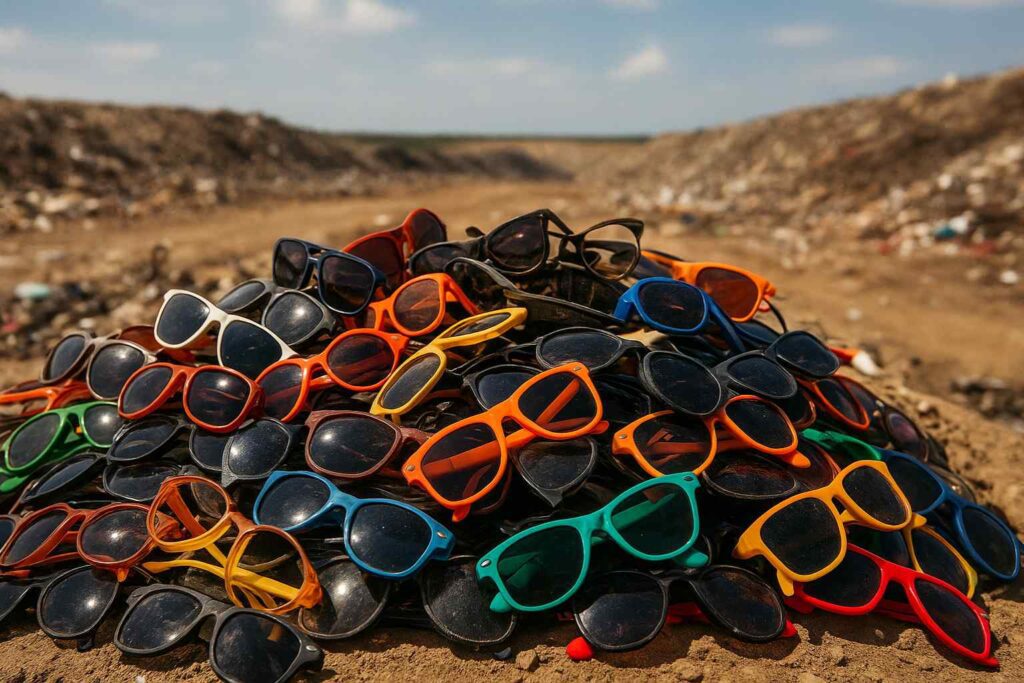
Plastic lenses and frames aren’t recyclable in standard systems, which means nearly all of them end up in landfill or incineration. Add in carbon-heavy production, toxic dyes, energy use, and shipping emissions, and it’s clear these small items create a big environmental headache. And let’s not forget the packaging, most come wrapped in non-recyclable plastic or foam.
Some manufacturing also takes place under poor labour conditions, adding an ethical concern to the mix. Fortunately, sustainable alternatives are emerging with clever materials, better processes, and full-circle responsibility. Eco-friendly sunglasses reduce waste, emissions, and social harm, without sacrificing style or UV protection.

What to Look For in Eco-Friendly Sunglasses
If you want to keep your look fresh and your conscience clear, there are a few things to check before picking your next pair of eco-friendly sunglasses. Materials come first. Look for frames made from recycled ocean plastics, bio-acetate (a plant-based plastic alternative), FSC-certified wood, or recycled metals.
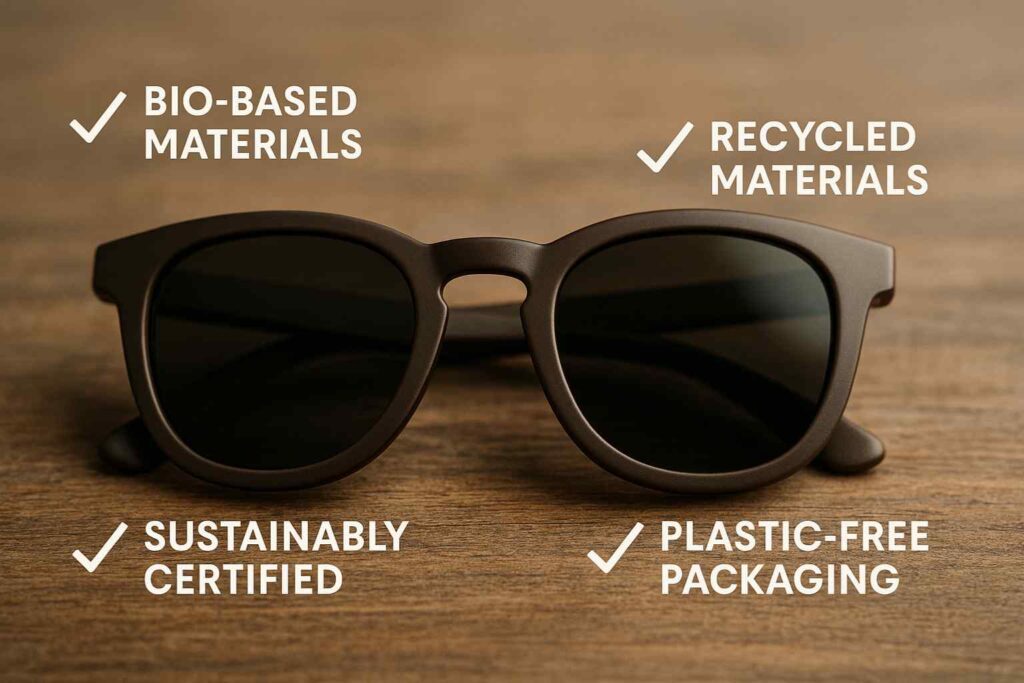
These not only reduce waste but also avoid reliance on fossil fuels. Some brands go even further, developing lenses from castor oil-based polymers or offering interchangeable parts for longevity. Certifications matter too. B Corp status, climate-neutral certifications, or third-party verifications for recycled content show genuine commitment beyond marketing. Investigate the brand’s end-of-life solutions, can you recycle the product? Will they repair or replace it? A lifetime guarantee, like the one offered by some top brands, signals true sustainability.
Responsible packaging should also be on your radar: compostable, recyclable, or made from post-consumer waste. Bonus points for brands supporting social or environmental causes. Sustainability is never just about the product, it’s about the full story behind it.

Three of Our Favourite Eco-Friendly Sunglasses Brands
Union of Surf
Union of Surf Union of Surf makes plant-based sunglasses that pop with colour. Their Bells Orange pair is bold, lightweight, and fully UV400-protective. They support ocean conservation and use minimal, recyclable packaging. Head to their website and use code PLAYITGREEN15 at checkout for 15% off your first order.
Nomad Eyewear
Nomad Eyewear crafts frames from recycled ocean plastic and removes one kilo of waste per sale. Affordable, stylish, and socially conscious, they’re ideal for everyday impact. Check out their sunglasses and use code PLAYITGREEN15 for a 15% discount off your order!
SunGod
SunGod’s sunglasses are carbon neutral, made from recycled materials, and come with a lifetime guarantee. Built for active lifestyles, their customisable designs balance durability with sustainability. Sign up to their mailing list for 10% off your first order.
Wrap-Up
Eco-friendly sunglasses let you see summer through a greener lens. With over three billion plastic pairs sold each year, switching to a sustainable option can make a real difference. Whether you prefer sleek performance wear, laid-back beach vibes, or budget-conscious impact, there’s a planet-positive pair out there for you.
These brands are just the start. By supporting companies that prioritise recycled materials, ethical practices, and climate action, you’re taking a stand with every pair you wear. At Play It Green, we believe in collective change through individual action. So this summer, shade your eyes, not your values, and keep your footprint firmly in the sand, not the supply chain.
Join The Community Making Change – Play It Green
By partnering with Play It Green, you can integrate sustainable action, education, tree planting, mangrove restoration, seaforestation and social impact into your life and business operations. Whether it’s adding nature repair to your life or sales process, engaging in sustainability education, or strengthening your environmental credentials, the tools and support are there to make it simple.
Want more info before deciding? Click here.