

Eco-Friendly Sponges: Introduction
Eco-Friendly sponges are an easy way to keep your home spotless while reducing plastic waste and pollution. Most kitchen sponges are made from synthetic materials that can take centuries to break down, contributing to the global plastic crisis.
Thankfully, greener alternatives made from natural fibres and compostable materials are making a comeback. Let’s explore the fascinating history of sponges, the hidden environmental damage caused by common sponges, and what to look for when choosing a sponge that loves the planet as much as you do.

A History of Sponges
Natural sponges have been cleaning companions for thousands of years. The Ancient Greeks and Romans harvested sea sponges from the Mediterranean, using them not only for washing but also for medical and cosmetic purposes. Cleopatra is said to have used sea sponges as part of her beauty routine. These sponges were valued for their softness, durability, and natural absorbency.

In the 20th century, World War II accelerated the invention of synthetic sponges. Scientists developed foam sponges from petrochemical plastics such as polyurethane. These synthetic sponges were cheaper to produce, consistent in quality, and quickly replaced natural sponges in most households. Today, around 90% of kitchen sponges are made from these plastics that do not biodegrade.
However, rising concerns about plastic pollution have sparked renewed interest in natural and plant-based sponges. Alternatives made from cellulose (wood pulp), hemp, and loofah fibres are biodegradable and compostable, breaking down within months instead of centuries. Considering that the world produces over 300 million tonnes of plastic waste annually, these natural options offer a cleaner path forward.
The Environmental Impact of Traditional Sponges
Synthetic sponges are more harmful to the environment than many realise. Made from plastic polymers, they can persist in landfills for hundreds of years. Even more concerning, each time you rinse a synthetic sponge, it sheds microplastic particles that flow into waterways. Scientists estimate that over 8 million tonnes of plastic enter the oceans every year, polluting marine habitats and harming wildlife.

Microplastics from sponges and other sources have been found in every ocean and in 100% of sea turtle species studied. They disrupt marine food chains and ultimately enter the human food system. The average kitchen sponge can release millions of these tiny plastic pieces during its lifetime.
Additionally, manufacturing synthetic sponges relies heavily on fossil fuels, contributing to greenhouse gas emissions. The carbon footprint of synthetic cleaning products is significant and comparable to driving hundreds of miles.
In contrast, natural sponges made from cellulose or sustainably harvested sea sponge decompose within 3 to 6 months in compost, returning nutrients to the soil instead of polluting the environment. Choosing eco-friendly sponges can cut plastic waste, reduce carbon emissions, and help protect delicate ecosystems.

What to Look For in Eco-Friendly Sponges
When choosing an eco-friendly sponge, look for natural materials like cellulose, hemp, loofah, or sustainably harvested sea sponge. Cellulose sponges, made from wood pulp, are highly absorbent and break down quickly in compost. Loofah sponges come from dried gourds and provide gentle scrubbing without synthetic fibres.
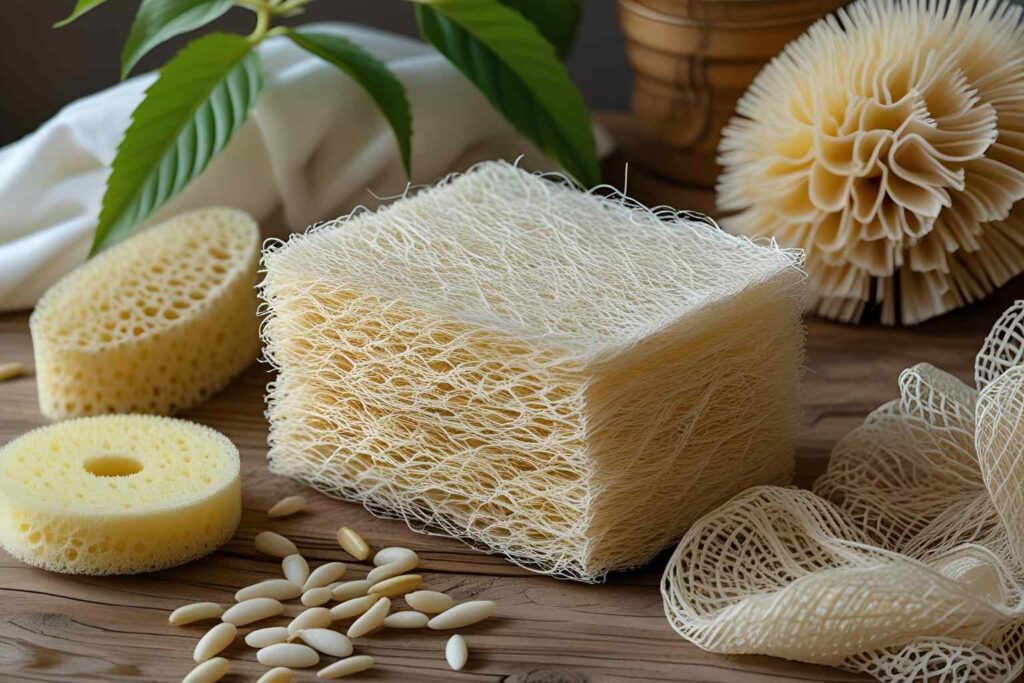
Avoid sponges that include plastic scrubbers or fillers as these reduce compostability. Certifications such as FSC (Forest Stewardship Council) for plant fibres or guarantees of sustainable harvesting for sea sponges can be a helpful guide.
Packaging is also important. Opt for brands that use recyclable, minimal, or compostable packaging to avoid adding unnecessary waste.
Consider durability and versatility. Some eco-friendly sponges can be washed and reused several times, reducing replacements. Supporting brands that prioritise transparency and ethical manufacturing helps ensure your purchase supports sustainable business practices.

Three Favourite Eco-Friendly Sponge Brands
Composty
Composty’s sponges are made entirely from natural, biodegradable materials like cellulose and coconut fibres. Their sponges are fully compostable and come packaged without plastic, making them ideal for zero-waste kitchens. Composty’s commitment to reducing landfill waste makes it easy to switch to a greener cleaning routine.
Head to their website and use code PLAYITGREEN10 for 10% off your order (offer lasts for all of July 2025)!
The Seep Company
The Seep Company make sponges from loofah and wood pulp cellulose. Their natural sponges are soft, durable, and antimicrobial, providing a plastic-free option for kitchen use. They ensure harvesting is gentle on marine ecosystems, supporting ocean health.
Head to their website and use code PLAYITGREEN15 for 15% off your order (offer finishes 4/10/25)!
Re:gn
Re:gn offers natural dish sponges made from sustainable materials designed to be compostable and durable. Their products focus on reducing plastic waste while providing effective cleaning solutions. With eco-conscious packaging and a commitment to sustainability, Re:gn makes it easy to switch to greener sponges for your kitchen. Sign up to their mailing list for 10% off your first order.
Eco-friendly sponges: Wrap-Up
Switching to eco-friendly sponges is a simple way to reduce plastic pollution, save fossil fuels, and cut down on landfill waste. Everyday cleaning can become an act of kindness towards the planet without compromising on performance.
At Play It Green, we believe that small choices add up to big change. Join our community in making sustainability a natural part of your daily routine, one sponge at a time.
Ready to scrub smarter and greener? Check out our favourite brands and make the swap today.
Join The Community Making Change – Play It Green
By partnering with Play It Green, you can integrate sustainable action, education, nature repair and social impact into your life and business operations.
Want more info before deciding? Click here.