
Eco-Friendly Gardening: Introduction
Eco-Friendly Gardening begins with the unseen world beneath our feet, where soil health sets the stage for a thriving garden. As spring approaches, garden centres stack compost and bedding plants, but few of us consider how our gardens truly function.
There are 23 million private gardens in the UK, covering more land than all the country’s nature reserves combined. This means that everyday gardening decisions, repeated millions of times, shape far more than kerb appeal. They influence soil carbon, pollinator survival, and water systems across entire neighbourhoods.

A Brief History of Gardening
Gardening has always reflected societal values, from ancient Mesopotamia’s irrigated gardens to today’s eco-friendly practices. These were engineered systems designed for food security, carefully managing water in regions where survival depended on it.
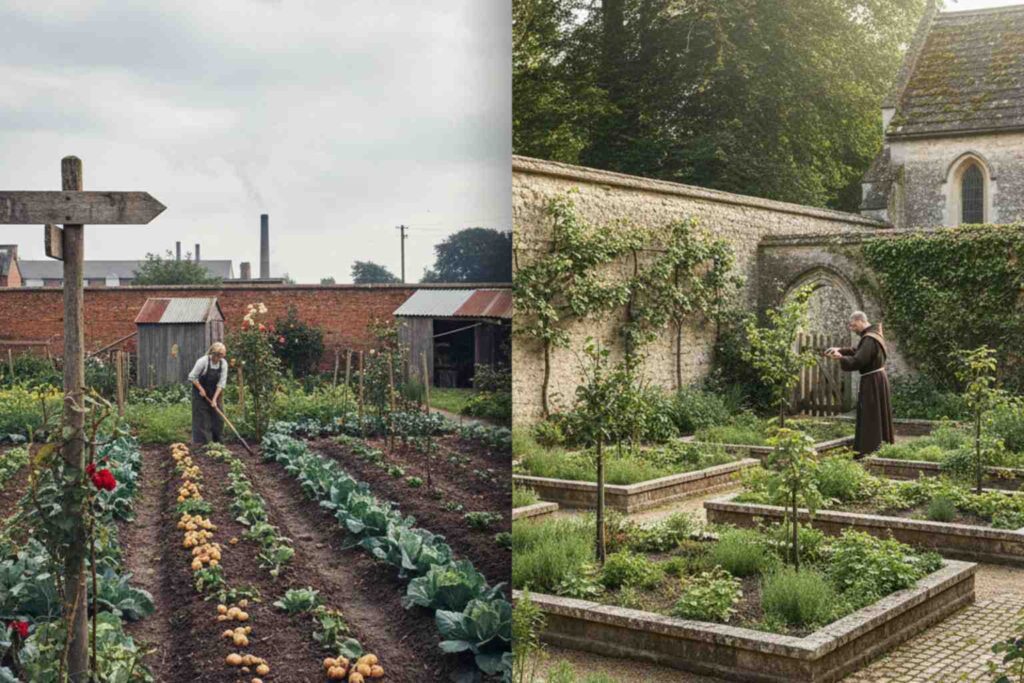
The Romans spread orchards, kitchen plots, and enclosed courtyards across Europe, embedding composting and soil enrichment into domestic life. In medieval Britain, monastery gardens rotated crops, reused organic waste, and cultivated medicinal herbs with precision. In these times, roductivity and stewardship were closely linked.
The ornamental lawn arrived much later. From the 17th century onwards, expanses of grass that produced nothing became visible markers of wealth. Land that did not need to grow food signalled status and control.
The Second World War disrupted this idea. Under the “Dig for Victory” campaign, more than 1.4 million allotments were cultivated, and countless lawns were converted into vegetable beds and gardens became practical assets once more.
Post-war industrial chemistry changed the trajectory. Synthetic fertilisers, peat compost, and pesticides simplified gardening, gradually shifting it away from the soil-based systems that Eco-Friendly Gardening now seeks to restore.
The Environmental Impact of Conventional Gardening
As we move from historical practices to modern-day gardening, the environmental impact of conventional methods reveals the urgent need for change.
UK peatlands store an estimated 3 billion tonnes of carbon, more than all the forests in Britain combined. Peat forms slowly, accumulating at around one millimetre per year. When peat is extracted and dried, stored carbon is released into the atmosphere. Around 80 per cent of the UK’s peatlands are now damaged through drainage, agriculture, and extraction.

Insect populations have fallen sharply, with a German study reporting a decline of over 75 per cent in flying insect biomass over 27 years in protected areas. Pollinators underpin crop production and wild ecosystems, yet pesticide exposure and the loss of flowering habitat in domestic spaces contribute to their decline.
Artificial grass adds pressure, manufactured from fossil-fuel-based plastics that block soil life, prevent natural drainage, and shed microplastic fibres. It can become significantly hotter than living turf, increasing surface temperatures in urban areas.
Across 23 million UK gardens, these decisions scale quickly, impacting biodiversity, carbon storage, and water systems, making none Eco-Friendly Gardening a significant environmental issue.
What to Look For in Eco-Friendly Gardening
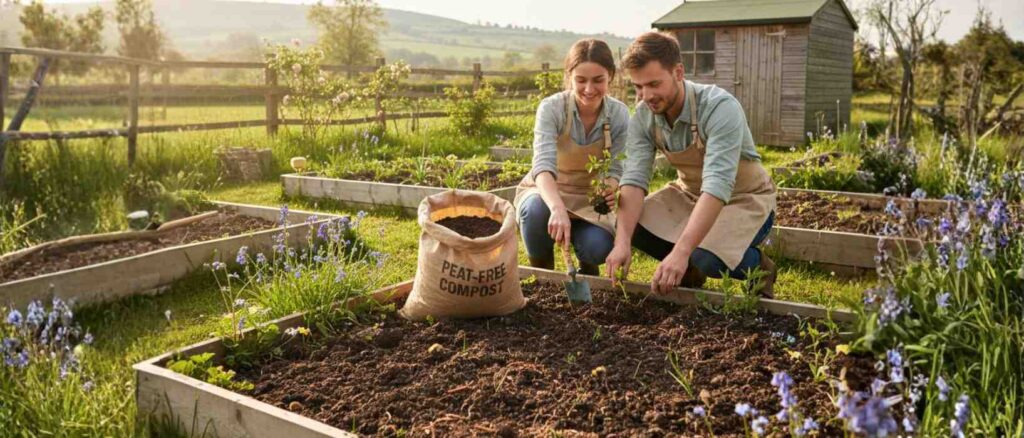
To make Eco-Friendly Gardening a feasible goal, consider it as a series of practical adjustments rather than a complete redesign. Start with compost, choosing peat-free blends that protect carbon-rich peatlands while building healthier soil in your own beds. Modern peat-free mixes perform reliably, and most suppliers now label them clearly.
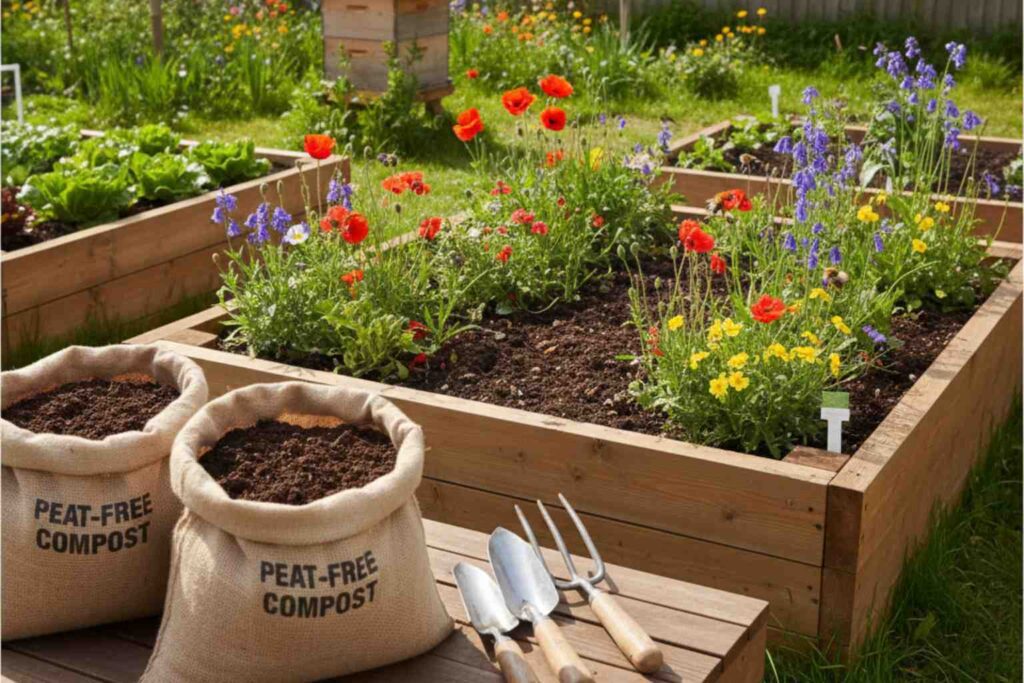
Keeping living soil intact is also crucial. Maintenance concerns are better addressed by reshaping part of a lawn into planting beds, which supports biodiversity far more than installing artificial turf that prevents worms, fungi, and microbes from functioning beneath the surface. Allowing sections of grass to grow slightly longer through the season also provides shelter for insects without making the garden unusable.
Native planting supports pollinators more effectively than ornamental imports. Wildflowers, shrubs, and hedgerow species adapted to local conditions provide nectar and habitat throughout the year. Composting kitchen scraps, mulching beds, and avoiding routine chemical sprays help soil organisms recover, improving structure and water retention naturally.
Eco-Friendly Gardening succeeds when changes are made steadily and with clear intent, gradually transforming our gardens into sustainable ecosystems.

Three of Our Favourite Eco-Friendly Gardening Brands
Dalefoot Composts
Dalefoot Composts produces peat-free compost made from sheep’s wool and bracken, materials that improve soil structure and moisture retention without extracting carbon-rich peat. Protecting peatlands prevents the release of long-stored carbon and supports healthier growing conditions at home. Switching to peat-free compost is one of the simplest ways to reduce gardening’s footprint.
Get free seed compost with every order using code SEED0721.
Seedball
Seedball is a UK-based company focused on supporting pollinators through simple, accessible planting. Their seed balls contain native wildflower seeds wrapped in nutrient-rich clay and compost, designed to protect seeds until conditions are right for germination. Packaging is plastic-free, and quantities are suited to small gardens, balconies, and urban spaces. For households looking to increase biodiversity without overcomplicating the process, Seedball offers a straightforward starting point.Seedball also make corporate branded seedballs!
Use code PLAYITGREEN15 for 15% off.
Burgon & Ball
Burgon & Ball designs durable garden tools intended for long-term use. Solid materials and thoughtful construction reduce the cycle of replacing cheap plastic-handled alternatives each season. Investing in quality tools supports a more considered approach to gardening and cuts unnecessary waste.
Eco-Friendly Gardening: Wrap-Up
Eco-Friendly Gardening emphasises incremental changes that, over time, lead to significant environmental benefits, promoting a sustainable future. Soil choice, planting choice, and tool choice all influence how a garden functions beneath the surface. When millions of households make small adjustments, the collective effect extends far beyond individual fences.
At Play It Green, we advocate for practical and repeatable changes, as these are the most effective in achieving sustainable gardening practices. Protecting peatlands, supporting pollinators, and avoiding unnecessary plastic in our gardens are achievable shifts. Eco-Friendly Gardening is simply about treating soil, bees, and green space with the respect they quietly require.
If you enjoyed this tip on eco-friendly gardening, why not become part of a community creating positive change every day by joining Play It Green?
We help you reduce your footprint, repair the planet, and regive to social causes that matter, all through simple, measurable actions that fit your business.

Everyone wants to see impact, not promises. With Play It Green, your sustainability journey becomes visible, credible, and rewarding.
Join us today and turn good intentions into lasting results.